Centre appoints ex-IB chief Dineshwar Sharma as interlocutor for J & K
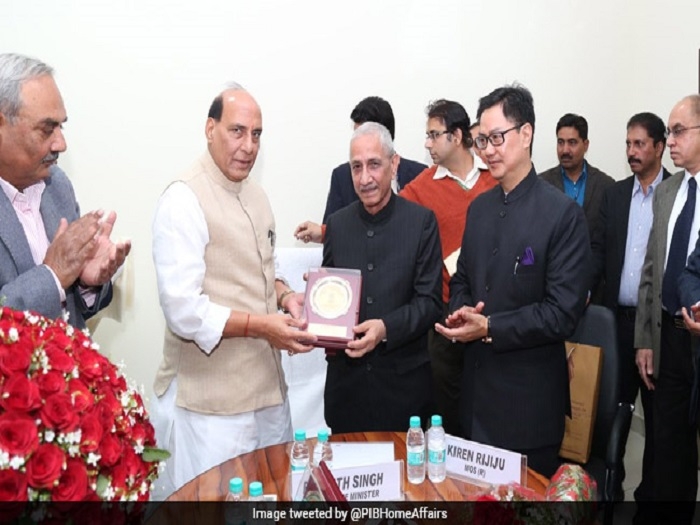
Sharma a Bihar born, 1976 IPS batch Kerala Cadre, has a wide range of experience from handling separatism and insurgencies to domestic and regional politics. He has also worked with National Security Adviser (NSA) Ajit Doval during his earlier stint as IB chief.
During his distinguished career, he has served in J&K, Kerala, Uttar Pradesh, Nagaland and Manipur and as Additional Director and Special Director in the Intelligence Bureau in the Headquarters. He has in-depth understanding of security related matters and considerable knowledge and experience of issues relating to Jammu and Kashmir.

A third-generation police officer, Dineshwar Sharma, 63, retired in December 2016 after leading the domestic spy agency, the Intelligence Bureau, for two years.
Sharma will initiate a sustained interaction and dialogue to understand the legitimate aspirations of the wide cross sections of society, particularly the youth in Jammu and Kashmir and communicate them to the State Government and the Centre.
Home Minister Rajnath Singh has clarified that there was no restrictions on him in holding dialogue. “As a representative of the government of India, Dineshwar Sharma will initiate a sustained interaction and dialogue to understand legitimate aspirations of people in Jammu and Kashmir,” the Home Minister said.
The move comes in the wake of various steps taken by Prime Minister Narendra Modi to address the needs of the people of Jammu and Kashmir. It may be recalled that during his visit to Srinagar on November 7, 2015, the Prime Minister had announced a package of Rs 80,068 crore for the overall development of the State. He has also met the leaders of political parties from time to time and received suggestions with regard to the issue of peace and development in J&K.
In continuation of this process, in his address to the nation on 15th August this year, Prime Minister Narendra Modi had mentioned that, “Neither by bullet, nor by abuses but by embracing can we solve the problem of Kashmir”.
The newly appointed interlocutor Dineshwar Sharma later called on Union Home Minister Rajnath Singh and discussed with him about the future roadmap for dialogue.
Chief Minister Mehbooba Mufti welcomed this initiative from the Central Government. “Dialogue is necessity of the hour and the only way to go forward”, she said. Former Chief Minister Omar Abdulla said that he would keep and ‘open mind’ and wait to see the results of the dialogue process.
Abdulla described the launching of dialogue by the Centre as a ‘resounding defeat’ of those who loudly advocated only ‘hardline’ policy and use of force as only solution to disturbances in Jammu and Kashmir.
In 2010, the Manmohan Singh government had appointed a group of three interlocutors led by former editor of Times of India and eminent journalist Dilip Padgaonkar who had given their final report in a year. But most recommendations that called for review of laws that give security forces immunity from prosecution without the government’s approval and allow detention of people for years on suspicion, were not accepted.
Rajnath Singh explained the government’s decision to go for the former intelligence chief as its interlocutor, saying the centre wanted someone who did not have any political affiliations as he would be most-suited to reach out all individuals and organisations concerned.