World recalls 1st Indian Nobel Laureate Rabindranath Tagore who evoked ‘universal love and patriotism’ through his rich literature
Mumbai, May 7: “You can't cross the sea merely by standing and staring at the water” remembering the great Rabindranath Tagore who was ‘versatile’ human. Rabindranath Tagore the writer of our National Anthem was a great humanist, painter, patriot, poet, playwright, novelist, story-teller, philosopher and educationist.
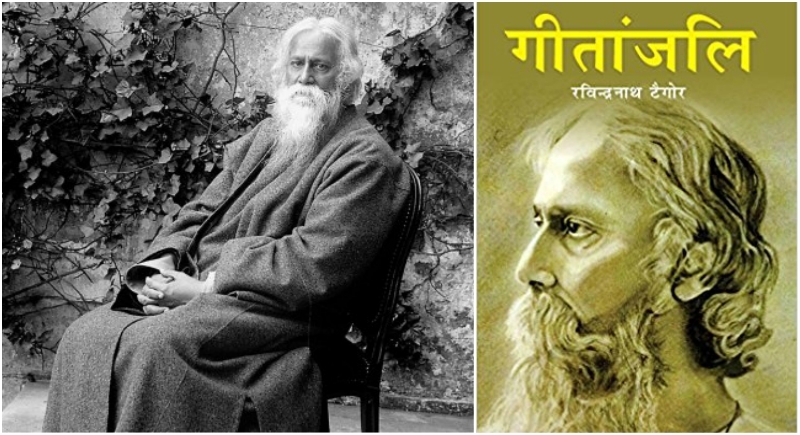
Born on 7th May 1861, Rabindranath Tagore had that cliché to write with versatility. At the age of eleven, he developed the quality of writing beautiful verses and he could describe any event with clarity.
He chiefly wrote in Bengali. Rabindranath Tagore collection of stories entitled Galpaguccha portrays the poverty, illiteracy and backwardness of the people so well and effectively. The other well-known poetry collections include Sonar Tari, Chitra, Kalpana and Naivedya. His plays include Chitrangda and Malini, Gora, Raja and Rani, Binodini and Nauka Dubai are his novels.
Rabindranath Tagore was awarded the Nobel Prize for literature on 13th November 1913 for his collection of so beautiful and lyrical poems called Geetanjali. He was the first Indian to get this honour.
Geetanjali was published in 1910. He also composed puravi, the evening songs and the morning songs. He wrote on many subjects-social, political, cultural, religious, moral etc.
His interests served on the platforms of ‘relationships and motherland’. He was against divisions, boundaries and discrimination on the basis of territory, geography, race etc. He believed in the oneness of life and its expression. He tried his best to bring the people of the world close to another through his message of love, brotherhood, peace and poetry.

He wrote, “My country that is forever India, the country of my forefathers, the country of my children, my country has given me life and strength.” And again, “I shall be born in India again.