Andes Action: A classic example of reforestation by local community with global support
Total Views |
Andes, December 24: This is a fantastic story of a mega forest restoration project by the local community in Andes. The project named Andes Action, powered by Global Forest Generation, is scaling up a time-tested, 19-year, community reforestation model.
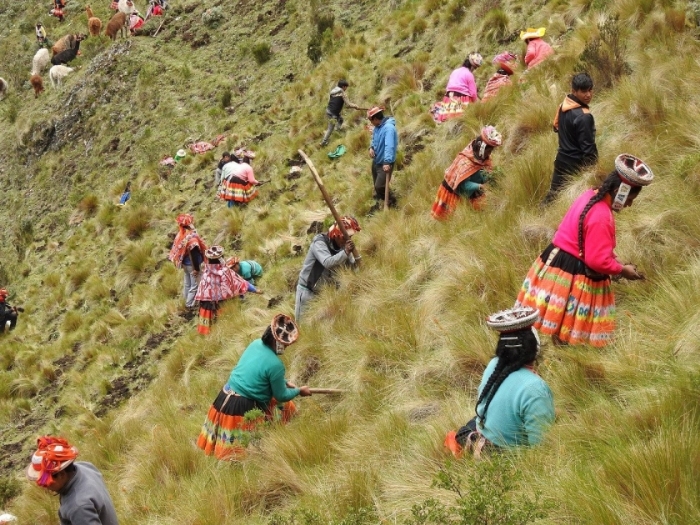
The project has resulted in the planting of over 3 million native trees, including 1.5 million polylepis. Restoring forests which grow just below the (retreating) glaciers is a cost-effective solution for long-term climate resilience.
Growing at altitudes of up to 5,000 metres, polylepis forests, comprising 28 recognized shrub and tree species endemic to the mid- and high-elevation regions of the tropical Andes, are a significant origin of the flow of water into the headwaters of the Amazon. Crucial to fighting climate change, they absorb mist from the clouds, transforming dry, eroded landscapes into wetlands and habitat for threatened species.
Due to decades-long deforestation for fuel wood and grazing, only 500,000 hectares remain across the Andes. Now High Andean communities, mainly Quechua-speaking Inca descendants, are coming together to bring them back and restore their watersheds.
Andes Action on-the-ground leaders forge ties with the communities which focus their ancient Inca tradition of ‘Ayni’ (close to reciprocity) on reforestation for mutual benefit. On-the-ground conservation leaders harness ancient Incan traditions in local communities to bring the model to scale.
“We are in the process of building the infrastructure to make individual projects and the whole initiative investable. This is a requirement to scale up implementation and impact significantly. We are planting 1 million trees in the next planting season (2020–2021) but across the initiative there is potential for 10 million trees per year or more,” says Florent Kaiser, Executive Director of Global Forest Generation.
Over the next 25 years, Andes Action aims to protect the remaining 0.5 million hectares of critically important native polylepis forests in six South American countries (Argentina, Bolivia, Chile, Colombia, Ecuador and Peru) while reforesting an additional 0.5 million hectares.