Even Nehru would be pleased with Modi for Triple Talaq Law: Arif Mohd Khan
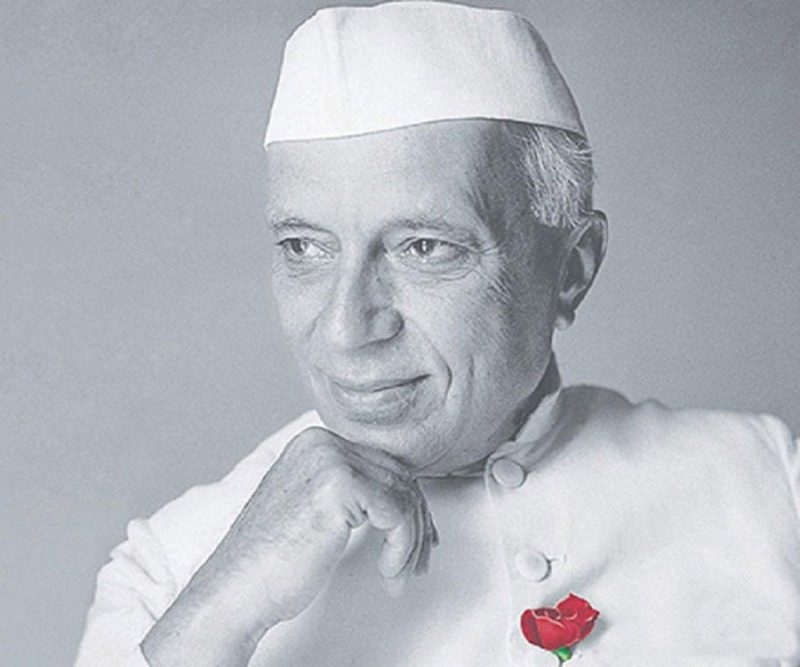
New Delhi, Apr 24: The former Union Minister and a prominent Muslim political face in India Arif Mohammad Khan has patted Prime Minister Narendra Modi on the Triple Talaq law and even said that the late Prime Minister Pandit Jawaharlal Nehru would be pleased with Prime Minister Narendra Modi for this law.
And here is Congress President Rahul Gandhi the great-grandson of Pandit Nehru who promised to repeal the Triple Talaq law if his party is voted to power, apparently in an attempt to placate the Muslim vote bank that is drifting away from its traditional Congress base. What an irony!
The BJP had passed the triple talaq bill in the Lok Sabha twice, in 2017 but it was stalled by the so-called secular and left-liberal parties that enjoy majority in the Upper House forcing the government to issue an ordinance twice! It may also be mentioned here that Muslim Rashtriya Manch (MRM), a social reform movement amongst the Muslims has been at the forefront in demanding abolition of this inhuman, outdated and cruel practice that belittled the Muslims women in the eyes of the society.
In an interview Khan, who had parted ways with the then Prime Minister late Rajiv Gandhi, grandson of Pandit Nehru, on the issue of Congress party’s sudden U-turn on the Supreme Court verdict in Shah Bano case, said “after politics, people will see the importance of Triple Talak Law and thank Modi for it, Nehru too would be pleased with Modi”.
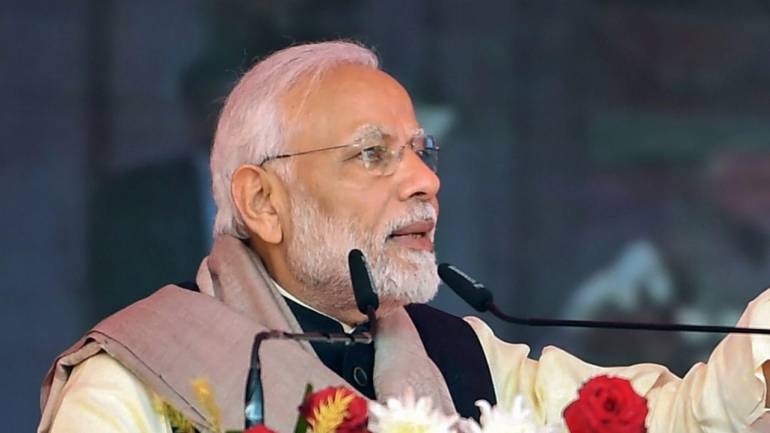
The members of the All India Muslim Personal Law Board (AIMPLB) had declared that in spite of the apex court judgment the practice shall continue. However, the after the Modi government had declared triple talaq a punishable offence by promulgating an ordinance, not a single case of triple talaq was reported.
Justifying the BJP stand to approach Muslim voters with their achievement in triple talaq issue, Khan said that there was nothing wrong in this. “What is wrong with appealing evan to a section of people on the basis of something very humanitarian and fair that the government has done, he asked.
Advising people not to politicize everything Khan further said that when the political dust and din is over, then the people would realize the importance of this law which hs liberated the Muslim women from the evil practice of triple talaq and they will only thank Narendra Modi for this historical decision.
Recalling an incident of 1950s Khan said that the Chief Correspondent of the Guardian Taya Zinkin had asked Pandit Nehru as to what he considered his greatest achievement and Nehru replied: “I was able to secure rights for my Hindu sisters which denied to them for centuries”.
And when she asked him about his greatest disappointment Panditji replied: “I was not able to do the same for Muslim sisters”.
Quoting this, Khan said: “I am sure Panditji, wherever he may be, would be immensely pleased with Narendra Modi for having accomplished what he had dreamed for”.
“'Nehru’s great regret was not being able to emancipate Muslim women. He’d be very pleased with Narendra Modi today”, Khan said.
Khan also took a dig at the opposition parties for stalling the triple talaq bill in the Rajya Sabha. What the opposition did under the influence of AIMPLB to stall the triple talaq bill revived my memories of the Shah Bano case when the then Rajiv Gandhi Government used the brute majority in the parliament to reject the Supreme Court verdict that had awarded a paltry sum of Rs 300 to that destitute woman divorced by triple talaq by her prosperous lawyer husband, he said.
Commenting on his idea of secularism the former Union Minister said that in the Indian context the meaning of secularism is not anti-religious as perceived in the western world but an all inclusive concept rooted in ancient wisdom and way of life that proudly declared “Eakm Sad Viprah Bahudha Vadanti” (The Truth is one, Wise men describe it variously). Quoting Swami Vivekananda he said we do not believe in tolerance but we accept and respect diverse traditions and religions.
Since time immemorial we believed that diversity can be a source of national strength and that all people should not be confined to one single interpretation of the Supreme Reality. The Indian tradition strongly believes in the freedom of the individual to seek the Truth in the way that suits his persona and this tradition is deeply rooted in the Indian way of life which is nothing but the true secularism.
Even the long spells of foreign invasions have failed to break the continuity of Indian way of life, Khan said adding that we should have every reason to be confident that this way of life has enough strength to withstand the attacks. We should not be hankering after creating sensational news for political reasons.
Commenting on the incidents of lynching for beef rumors Khan said that such incidents were definitely unfortunate but blamed the colonial legacy of divide and rule followed by the rulers of Independent India. He said that the British never accepted that India was one nation, they held that it was a conglomeration of religious and social and ethnic communities and groups.
The former minister said that the Indian freedom movement had recognized and believed that the religious and social varieties created no obstructions in making India one nation. But unfortunately, the same communities and castes continued to be centre point of our politics today and the nationality of citizens is eclipsed due to this. We are reaping what we had sown, he said.
Stating that violence was the mere symptom and not the disease Khan said that the disease is hatred and communal divide. We must find cure to this by removing otherness through education and reformist policies. Once this is done the symptom will definitely vanish.
Emphasizing the need to promote Indian values which accept and respect diversity and pluralism Khan said that at present the different communities are not the rival communities, but they supplement and complement each other in the task of nation building.