Japan, Australia sign defence deal to counter China's influence
Total Views |


Tokyo, November 18: In a bid to counter China's growing influence in the South China Sea and over the Pacific island nations, Japanese Prime Minister Yoshihide Suga and his Australian counterpart Scott Morrison have signed a landmark defence deal to facilitate more joint operations and exercises on each other’s soil.
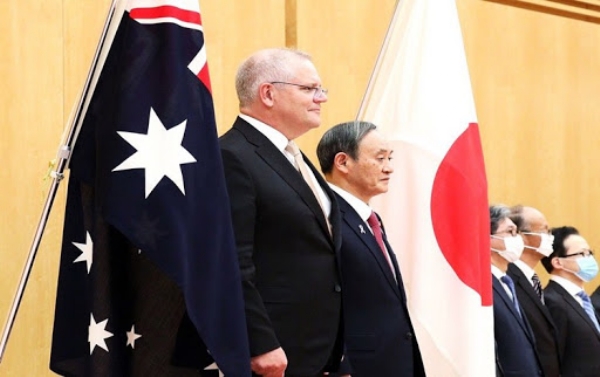
The Reciprocal Access Agreement (RAA) pact was signed during a high-level meeting between Japanese Prime Minister Yoshihide Suga and his visiting Australian counterpart, Scott Morrison.
Reciprocal Access Agreement (RAA) comes weeks after foreign ministers of the Quad alliance, which includes the US and India, met in Tokyo. Officials have spent six years negotiating the agreement, which will provide a legal and administrative framework for both forces visiting the other country.
The pact allows Japanese and Australian troops to visit each other's countries and conduct training and joint operations. Australian Prime Minister said that the treaty will strengthen their security ties and facilitate cooperation between defence forces.
The joint statement said, the two sides also agreed on the need for a framework to allow the Japanese military to protect Australian forces if needed.
Japanese Prime Minister Yoshihide Suga tweeted saying that he was pleased that the Japan-Australia Facilitation Agreement, which they had been negotiating to take the security and defence cooperation of both countries to a new level, has reached a general agreement. He further promised to work closely with the Australian Prime Minister to realize a "free and open Indo-Pacific."
Morrison is the first foreign leader to meet Suga in Japan since his long-serving predecessor. Speaking about the agreement he said, "It will form a key plank of Australia's and Japan's response to an increasingly challenging security environment in our region amid more uncertain strategic circumstances."
Moreover the two leaders "expressed serious concerns" about the situation in both seas, and "reconfirmed their strong opposition to any coercive or unilateral attempts to change the status quo and thereby increase tensions in the region".
The agreement has opened up a new chapter of advanced defence cooperation between Japan and Australia. It also marks a significant milestone for Japan, which has not struck a pact on a foreign military presence since the Status of Forces Agreement it signed with the United States 60 years ago