75 years to Hiroshima and Nagasaki bomb attack!
Total Views |


Hiroshima, August 06: Well, nobody has to forget what happened to Japan 75 years ago. Japan on Thursday marked 75 years since the world's first atomic bomb attack, with the coronavirus pandemic forcing a scaling back of ceremonies to remember the victims. Survivors, relatives and a handful of foreign dignitaries attended this year's main event in Hiroshima to pray for those killed or wounded in the bombing and call for world peace.
On 6 August 1945, a US bomber dropped the uranium bomb above the city, killing around 140,000 people. Three days later a second nuclear weapon was dropped on Nagasaki. Two weeks later Japan surrendered, ending World War Two. Early on Thursday, Japan's Prime Minister Shinzo Abe and the mayor of Hiroshima joined bomb survivors and descendants in the city's Peace Park.
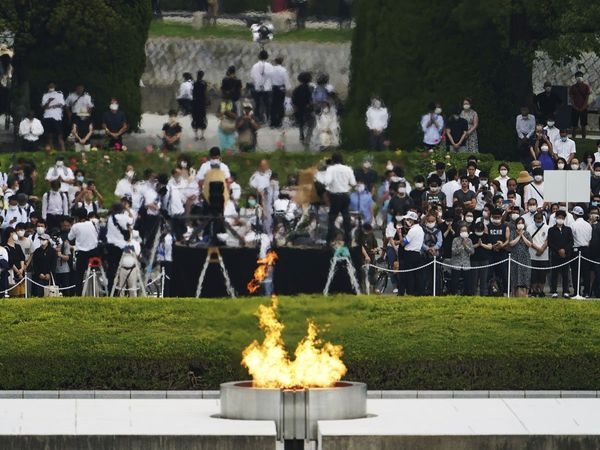
The park is usually packed with thousands of people for the anniversary, But attendance was significantly reduced this year, with chairs spaced apart and most attendees wearing masks. Speaking afterwards, Hiroshima mayor Kazumi Matsui warned in an address that the world must come together to face global threats, like the coronavirus pandemic, and to warn against the nationalism that led to World War II.
"We must never allow this painful past to repeat itself. Civil society must reject self-centred nationalism and unite against all threats," he said. Humanity must unite against threats to humanity and avoid repeating our tragic past, Matsui added, making an annual call for a world without nuclear weapons.
Japan marks 75th anniversary of Hiroshima atomic bombing.
— AFP News Agency (@AFP) August 6, 2020
"We must never allow this painful past to repeat itself. Civil society must reject self-centred nationalism and unite against all threats" - Hiroshima mayor https://t.co/XQcsdJmv9g pic.twitter.com/7Zxy8bUgLC
The historical assessment of the bombings remains the subject of some controversy. The United States has never apologised for the bombings, which many see as having ended the war. Japan announced its surrender just days later on August 15, 1945, and some historians argue the bombings ultimately saved lives by avoiding a land invasion that might have been significantly more deadly. But in Japan, the attacks are widely regarded as war crimes because they targeted civilians indiscriminately and caused unprecedented destruction.
In 2016, Barack Obama became the first sitting US president to visit Hiroshima, where he offered no apology but embraced survivors and called for a world free of nuclear weapons. Hiroshima and Nagasaki were key stops on Pope Francis's first trip to Japan last year, where he denounced the "unspeakable horror" of the attacks.