In a historic first, 2 women officers to operate helicopters from Indian Navy warships
Total Views |


New Delhi, Sept 22: In yet another landmark decision defining gender equality in Indian Armed Forces, two women officers have been selected to join as ‘Observers’ (Airborne Tacticians) in the Indian Navy’s helicopter stream. They are the first set of women airborne combatants who would be operating from warships.
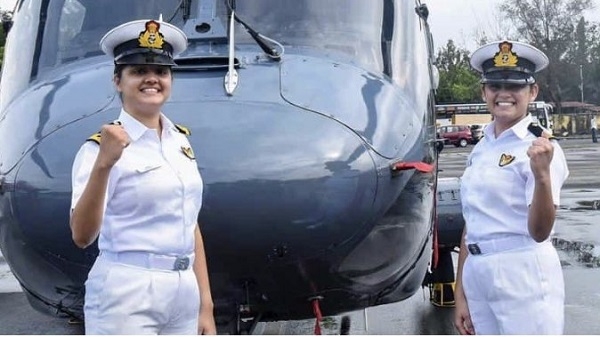
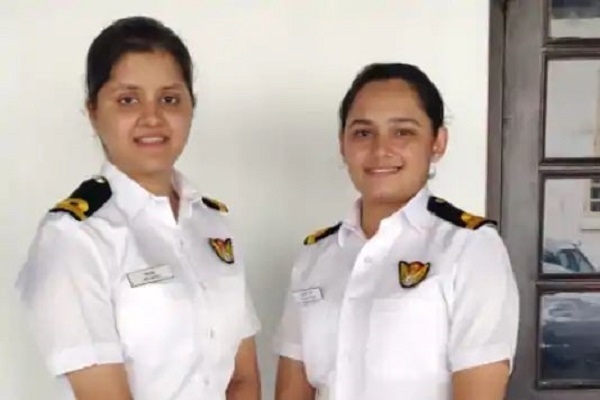
Earlier, entry of women was restricted to the fixed-wing aircraft that took off and landed ashore. However, Sub Lieutenant (SLt) Kumudini Tyagi and SLt Riti Singh would be breaking the barrier. They will operate from the deck of warships. These officers would serve on-board Maritime Reconnaissance and Anti-Submarine Warfare aircraft of the Indian Navy and Indian Coast Guard.
Women Officers in Helicopter Stream of Indian Navy https://t.co/P6kS9W7gen pic.twitter.com/zLJ1nZtzSZ
— A. Bharat Bhushan Babu (@SpokespersonMoD) September 21, 2020
The two are a part of a group of 17 officers of the Navy, including four women officers and three officers of the Indian Coast Guard, who were awarded ‘Wings’ on graduating as ‘Observers’ at a ceremony held on Monday at INS Garuda, here, a Defence statement said. The group comprised 13 officers of Regular batch and four-woman officers of Short Service Commission batch. The ceremony was presided over by Rear Admiral Antony George, Chief Staff Officer (Training) who presented the awards and coveted wings to the graduating officers.
Sub Lieutenant (SLt) Kumudini Tyagi & SLt Riti Singh become the First Women Officers In Helicopter Stream Of #IndianNavy pic.twitter.com/V3UyYSHONk
— PRO (Defence), Manipur, Nagaland & South Arunachal (@prodefkohima) September 21, 2020
Speaking on the occasion, Rear Admiral Antony George highlighted the fact that "it is a landmark occasion wherein for the first-time women are going to be trained in helicopter operations which would ultimately pave way for the deployment of women in frontline warships of Indian Navy."
In addition, the Chief Guest also awarded the ‘Instructor Badge’ to six other officers, (five from the Indian Navy including a woman and another from the Indian Coast Guard) who had successfully graduated as Qualified Navigation Instructors (QNI) on the occasion.
The officers of the 91st Regular course and 22nd SSC Observer course were trained in air navigation, flying procedures, tactics employed in air warfare, anti-submarine warfare, and exploitation of airborne avionic systems.
The Navy used to deploy women staffers in logistics and medical wings on-board fleet tankers, but it will be for the first time they will be onboard destroyers and frigates.