Centre increases MSP for six Rabi crops; PM Modi hails decision
Total Views |


New Delhi, Sept 22: Union Agriculture Minister Narendra Singh Tomar announced in the Lok Sabha that the minimum support price (MSP) of six Rabi crops has been increased. The decision to increase MSP was taken in the meeting of the Cabinet Committee on Economic Affairs (CCEA) held on Monday under the Chairmanship of Prime Minister Narendra Modi.
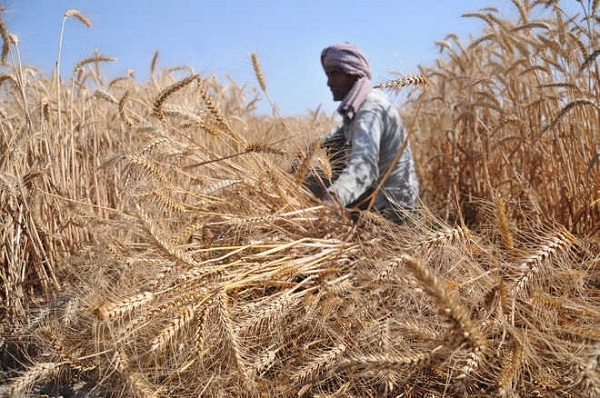
Agriculture Minister Narendra Singh Tomar, in his statement made in the Lok Sabha, informed that the MSP of six Rabi crops including Wheat, Chana, Masoor, Mustard, Jowar, and Safflower has been hiked in the range of 50 to 300 rupees.
It is our great privilege to work for the welfare of our farmers. In line with our ethos of taking farmer-friendly measures, the Cabinet has taken another historic decision to raise MSP. Crores of farmers will benefit from this. https://t.co/qn0r5USZC7
— Narendra Modi (@narendramodi) September 21, 2020
PM Modi, speaking on the decision said, "It is our great privilege to work for the welfare of our farmers. In line with our ethos of taking farmer-friendly measures, the Cabinet has taken another historic decision to raise MSP. Crores of farmers will benefit from this. Higher MSP will empower farmers and contribute to doubling of their income. Increased MSP, along with the series of agriculture reforms passed by Parliament will ensure dignity and prosperity of farmers. Jai Kisan!"
"The highest increase in MSP has been announced for lentil (Rs. 300 per quintal) followed by the gram and rapeseed & mustard (Rs. 225 per quintal each) and safflower (Rs. 112 per quintal). For barley and wheat, an increase of Rs. 75 per quintal and Rs 50 per quintal respectively has been announced. The differential remuneration is aimed at encouraging crop diversification," a statement from the Ministry of Agriculture read.
The Minister also informed that the government paid nearly seven lakh crore rupees to the farmers as part of MSP payment in the last six years which is almost double the amount that was paid from 2009 to 2014 under the UPA Government's tenure. During 2009-2014, 1.52 LMT pulses were procured by the government under UPA government. However, during 2014-2019 under the NDA government, 76.85 LMT pulses have been procured which is an increase of 4962 percent.
As the new rates of MSP have been announced, he said this is proof that procurement at MSP and the APMC mandis will continue to function, however, the farmer will be free to sell his produce outside these systems anywhere throughout the country to get remunerative prices. The Minister said, "the hike which is in consonance with the recommendations of the Swaminathan Commission's report reflects the current government’s commitment towards Minimum Support Price and procurement of Agri products in the country."
Tomar assured that the recently passed farm bills in the Parliament do not impact MSP or provisions of the APMC Act in any way and also appealed to the farmers not to fall prey to the false or misleading political tactics of the opposition parties.
The Agriculture Ministry further in the statement has said that the Food Corporation of India (FCI) and other designated state agencies will continue to provide price support to the farmers. It said, the government has set up a buffer stock of pulses and domestic procurement of pulses is also being done under the Price Stabilization Fund.
The Ministry informed that despite the global COVID-19 pandemic and consequent nationwide lockdown, timely intervention made by the government has led to an all-time record procurement of wheat in the country. The government has also increased the procurement centers for wheat by 1.5 times and for pulses and oilseeds by three times during the COVID pandemic. It also informed that 15 percent more procurement of wheat has been done during these testing times along with disbursal of nearly 75 thousand crore rupees to the farmers.