COVID19, Governance and the PM: Crucifixion before accountability!
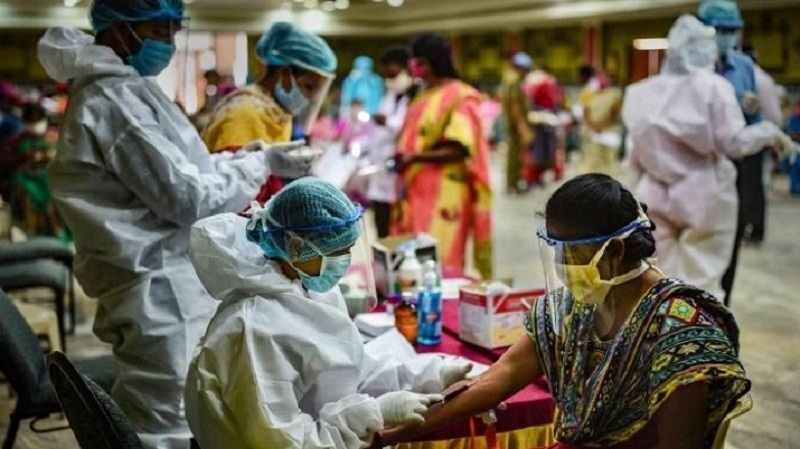
It goes without saying that India is passing through an unprecedented and very difficult times. Very recently there have been Elections for some State Assemblies as well. The loss or rather inability to come to power in West Bengal of the party in power in the Centre has discredited Prime Minister Narendra Modi, but the explanation for this loss has been democratic and founded on cultural rationalizations; the PM has not been the subject of personal abuse. In fact, the PM himself has congratulated the winners.
But in the case of the COVID, the PM has become the subject of widespread personal abuse; he has been accused as someone who is personally responsible for the unprecedented rise in both numbers falling sick and losing life. These are issues on which nobody would be happy about and definitely not the PM either. But this does not by any means justify the loss of rationality and subject the PM to all possible personal and political accusations. If the PM has been responsible for all the causes for the spread of the pandemic and the consequential loss of lives, our robust democracy would see to it that he pays the democratic price.
Having said that, I would hasten to add that time is for fighting the pandemic in a collective way, and not for exploiting the atmosphere for political or other vested reasons for crucifying the PM. Let us try to understand the scale, complexity and dynamics surrounding the present pandemics such that as of now we focus on collectively fighting the pandemic; the crucifixion of the PM in person can wait.
First, given the depth and spread of the disease, the PM has not wasted time in responding to every criticism of him in person; this is very unlike him as exemplified in other instances. We must at least have the minimum magnanimity to accept that he has given all his attention to fighting the disease from the moment its fast explosion became a reality.
Second, let us also accept the fact that the world does not have an appropriate framework of lessons from earlier experiences like the present one; what happened a little over a century ago was during a period of very little science and no information technology. In modern period of science and technology, we can only refer to the HIV epidemic.
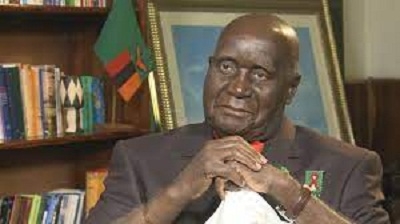 Writing a Foreword to a book on AIDS and Governance, Dr. Kenneth D. Kaunda, the then President of Zambia wrote in 2006: “It is now more than 20 years since the first cases of AIDS were diagnosed. Today, Africa is facing a crisis with frightening implications on populations. A crisis which, I feel should be declared as an emergency requiring extraordinary and urgent measures to address; a crisis that not only needs the urgent attention of our governments but, more importantly, their commitment to act. Indeed, I sincerely believe that the AIDS epidemic in sub-Sahara Africa should be enough reason to compel our leaders to do what is right in the fight against the disease. For this pandemic has already taken millions of our people especially the young ones in the prime of their lives. And many more are living with HIV/AIDS. I wish in this regard to share with you an underlying motivation for my commitment to the fight against HIV/AIDS. When I was still in office as President of the Republic of Zambia, I lost my son in December 1986 due to an AIDS related illness.
At that time, there was not so much known about this disease as we know today. As such, there were so many stigmas against AIDS patients. I realized that if we had to make progress in the fight against AIDS, there was a need at high political level to provide leadership to encourage openness in dealing with people infected with the disease. I viewed this to be important in order to break the wall of silence, which was mainly due to stigmatization as AIDS was viewed to be a disease of shame. I wish to stress the fact that I believed then, as I still do today, that if we succeeded in breaking the wall of silence, many infected people would be encouraged to come out into the open and seek medical treatment and our doctors would learn more about the disease for the good of humanity.
With this objective in mind, my wife and I decided to make public the cause of the death of our son. I convened a press conference at which I announced that my son had died of AIDS. Many people did not understand why my wife and I decided to announce publicly the cause of our son’s death. But for us, this was an attempt to help remove the myth surrounding HIV/AIDS among our people. I have also taken an initiative to encourage people to go for voluntary testing so that they can know their status.
In 2002, I took an HIV test after which I publicly announced the results, which were negative. But I said that even if I had been found to be HIV-positive, I would still have made it public and used that status in the fight against this pandemic. I’m glad to mention that since then, the issue of stigma is becoming less of an issue and that there are many Zambians who are going for voluntary testing. As you are aware, this is important so that those who are found to be HIV-positive would be counseled on how to live positively and those that are negative are given the necessary information on prevention.
…In view of the foregoing, there is an urgent need for close partnership among the stakeholders involved in this fight. The involvement of political leaders is important because people do listen to what they say. Political leaders and governments need to work closely with non- governmental organizations, communities, and people living with HIV/AIDS and international partners in order to develop effective strategies for combating HIV/AIDS.”
Kindly mark the importance attached to stakeholders and politicians in Kaunda’s statement. But the “The global HIV/AIDS epidemic is a long-term event whose impact unfolds over many decades rather than months.” The critical lessons learnt on HIV pandemic by the middle of the first decade of this Millennium were: “We observe a more rapid spread of health problems as a consequence of (1) an expanding worldwide mobility (for example, infectious diseases as well as (2) the globalization of consumption habits as a result of global advertising and cultural densification (for example, smoking, changing patterns of food consumption).
HIV/AIDS is seen as a global threat that is comparable to epidemics such as the plague and cholera in the nineteenth century; and new, hitherto unknown diseases like Ebola and SARS are interpreted as examples of new global challenges to health.
One reaction to these relatively new threats through infectious diseases is the renegotiation of the International Health Regulations, which coordinate restrictions on travel and the exchange of goods, cooperation in surveillance, and research in emergency situations:
• The defence mechanisms of antimicrobials (antibiotics and antiviral, anti-parasitic and antifungal drugs) are weakening due to overuse by the middle and upper classes and incomplete therapies by the poorer segments of the population, as well as by widespread use of antibiotics in animal feed. The development of multi-drug resistant strains has become a serious problem in the treatment of tuberculosis and malaria, in particular as research on antimicrobials has slowed down considerably since the 1970s).
•The more rapid spread of drugs and medical technology from rich countries to – in principle – all corners of the earth has the potential to improve global health in general, but also leads increasingly to ethical problems as it makes the selectivity of health care related to income more and more obvious.
•In the face of the debt crisis and structural adjustment programs, ‘health’, like other social programs, was no longer seen as a primary focus of development cooperation. In most countries, resources were insufficient for the health needs of the poor, and many developing country governments were desperately seeking funds to uphold a minimum of social services. The crisis of the primary health care strategy became visible in the 1980s, when even the most fundamental services (preventive measures, vaccines, pregnancy) were increasingly underfunded. This can be seen as an element of the crisis of state-dominated cooperation in international health.
• Linked to these processes, the supporters of comprehensive systems of primary health care also lost ground within the WHO in the 1980s and 1990s, with the organization refusing to take a strong position in support of grassroots strategies to develop local health care (which were frequently backed by civil society organizations.
•The liberalization of international trade and the reduced scope of national regulatory tools decreased the control of national societies over the production of and access to medical drugs, health equipment, and – with the General Agreement on Trade in Services (GATS) – to some degree also over the supply of health services.
• Since the mid-1990s, there has been a mounting preoccupation with the vicious circle of rising poverty and growing vulnerability to health problems in large parts of what is becoming an increasingly global society. Social exclusion is also a health concern and a starting-point for the spread of epidemics beyond the limits of slums and marginalized societies as well as a serious problem for the provision of health-related services.
• Governments of OECD countries show growing concerns because of the increased trans-border spread of health problems and infectious diseases in addition to the possible political and economic instabilities related to the high prevalence of poverty-related diseases (like HIV/AIDS in some world regions). Thus, in the 1990s, health played an increasingly important role at the G7/G8 meetings.”
But the world still faces two major challenges: (i) The vaccine for HIV is still awaited. (ii) The Global Health Governance framework is still incomplete. This global framework is particularly significant in the case of pandemics. Unfortunately, the COVID19 emerged in this background. Unlike the HIV, the COVID19 has nothing to do with the behavioral indulgence of the person being infected; it infects unknowingly all irrespective of affluence or poverty or place of residence. However, the COVID19 demands convergence between Science and Politics more than ever in order to fight it meaningfully.
Quite contrary to this requirement, the intervention needs to the present pandemic and as arising from the scientists have been so conflicting. Science still suffers from what Kiell Andersson highlighted in 2008 in the book titled Transparency and Accountability in Science and Politics: “The main force behind the on-going disintegration of scientific identity is commercialization. This is not a new factor, of course. Partnerships between science and industry seem quite rational and reasonable. Knowledge-seeking science needs money to be invested in research. The aim of industry is to develop products for profit, but it needs a sound base of knowledge for this to be done. In other words, science and industry need each other and they have complementary interests.
As the costs of basic science and clinical research have increased, and as public funds have proved insufficient to cover the cost increase, universities have become more dependent on industry money. Furthermore, politicians have encouraged scientists in academia to collaborate more closely with business and industry for the sake of economic development.
Even if these trends are not new, something changed dramatically during the 1980s that made academia and industry come closer together. The emerging biotechnology industry, based as it was on new techniques developed from molecular and genetic biology, became the driving force behind this development. Since then the meaning of science, to seek the truth as a public good, has been gradually distorted by a drive to find profitable technologies.”
This period has also been coupled by two political movements: A. Legal Democracy – “The idea of legal democracy is the minimization of the role of the state and the granting of the fullest possible scope to market forces. Individual freedom and free choice have the highest priority and this can best be achieved by the market. The dynamic market is the perfect mechanism for determining not just individual but also collective choice. As a consequence, the role of the state is limited to providing a legal system to protect the individual from violent force and to secure his properties…The legal democratic system cannot offer awareness and accountability in societal decision-making.”
B. The competing paradigm to this is Participatory democracy: “the main characteristic of participative democracy (in its broadest sense thus including deliberation and discursion) is a focus on process as much as results. More participation increases the legitimacy of societal decisions. In contrast to the traditional theory of democracy, which emphasizes voting as the central institution, participative democracy theorists argue that legitimate lawmaking can only arise from the public deliberation of the citizenry. Participation is not only good for the society as a whole, but also for individual citizens who are rewarded by self fulfillment through participation and deliberation. Proper rules for deliberation will also bring justice and more equality between groups in society. Strength of deliberative democratic models, according to their proponents, is that they tend, more than any other model, to generate ideal conditions of impartiality, rationality and knowledge of the relevant facts…….The idea of participatory democracy seems, however, too idealistic …We simply lack the knowledge needed to find the appropriate procedures to make it work.”
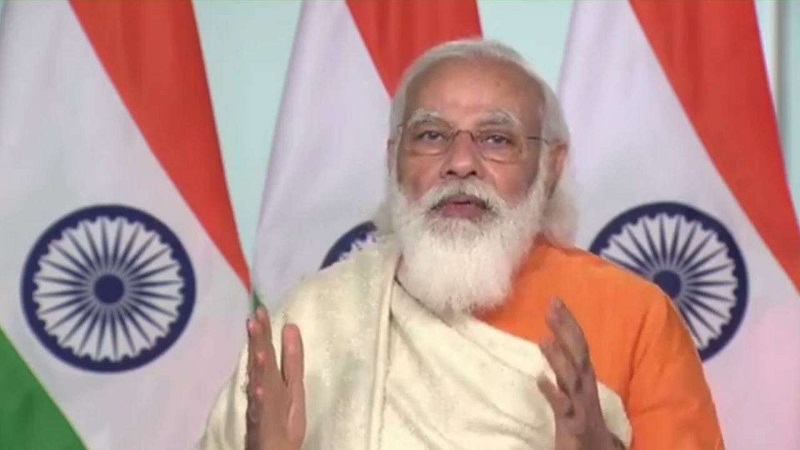
Our Prime Minister, in the light of these complexities, has attempted to address the needs of the nation to adequately face the challenges caused by the pandemic. Unlike in political engagements in the case of Assembly/Parliamentary elections, he has fully digested the need for action rather than vocabulary in the public domain; this is why we see the PM in his very unusual approach of speaking less on pandemics this time. This does by no means imply that he is unconcerned, but speaks volumes of his commitment to what Robert Dahl emphasized to establish Political Equality: “Among adults no persons are so definitely better qualified than others to govern that they should be entrusted with complete and final authority over the government of the state.”
Time is now for all the stakeholders (including vocal journalists) and the inhuman profit-seekers in medicines and oxygen supplies to rise to the occasion for collective social responsibility.