Apex court upholds 10% EWS quota in a 3:2 split verdict


New Delhi, Nov 7: The Supreme Court on Monday upheld the 10 percent quota for economically weaker sections (EWS) in government jobs, and public and private sector education institutes in a #:2 split verdict.
The apex court pronounced the judgment on a batch of pleas challenging the validity of the 103rd constitution amendment providing 10 percent reservation to EWS category persons in admissions and government jobs.
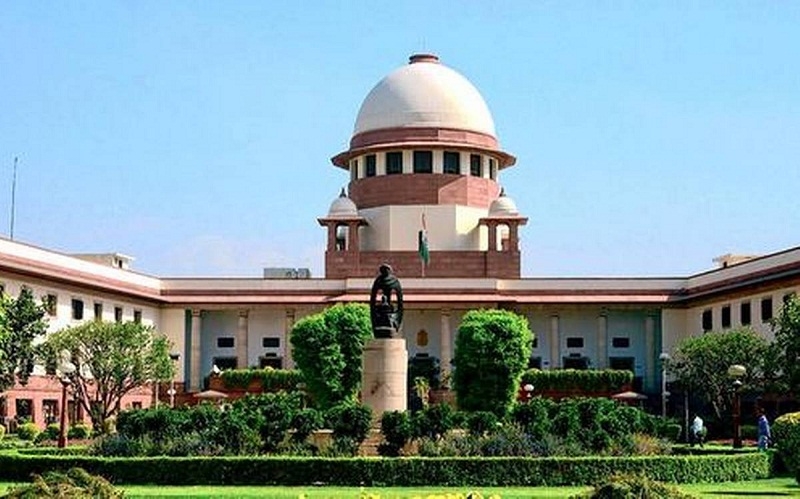
The Supreme Court reserved the verdict on this issue after the hearing was completed on September 27. The main issue was whether the EWS quota violated the basic structure of the Constitution. A team of senior lawyers participated in the hearing process on this issue which lasted for six and a half days.
A five-judge bench headed by Chief Justice Uday Umesh Lalit delivered the judgment in this case. Chief Justice Lalit and Justice Ravindra Bhat struck down the EWS amendment while Justices Dinesh Maheshwari, Bela Trivedi, and Justice J B Pardiwala upheld the EWS amendment. Thus, the majority bench upheld the 103rd Constitutional amendment.
According to media reports, Chief Justice Lalit dissented from the quota stating that it violated the Constitution. “I have concurred with the view taken by Justice Bhat. The decision stands at 3:2”, CJI Lalit said.
The Supreme Court heard as many as 40 petitions and most of the pleas, including the legal one filed by Janhit Abhiyan in 2019, challenging the validity of the 103rd Constitution Amendment Act. The Centre in 2019 through this amendment Act introduced provisions for EWS reservation in admissions and jobs.
Both the houses of the parliament had cleared the amendment on January 8 and 9 in 2019 and the then President Ram Nath Kovind had given his approval by signing the amendment, The EWS quota is over and above the existing 50% reservation granted to the SCs, STs, and OBCs.
The five-member bench of the apex court answered the questions such as whether the 103rd amendment is constitutional in allowing reservation solely on economic criteria. and whether the amendment is valid in allowing the state governments to enforce quotas in private institutes that do not receive any government aid. And, whether the amendment is constitutional in excluding the SC, ST, and OBC from the scope of the EWS quota.
Justice Dinesh Maheshwari held that the EWS quota does not violate the basic structure of the Constitution.
“EWS amendment does not violate thebasic structure as it is based in economic criteria, state forming special provision for EWS quota does not violate the basic structure,” Justice Maheshwari held.
Reservation, he said, is an instrument of affirmative action so as to ensure an all-inclusive march towards the goals of an egalitarian society.
“It is a means of the inclusion of any class or section so disadvantaged. Reservation on an economic basis does not violate the basic structure of the Constitution,” he said.