Vishwaguru Bharat 13: When Charkha undermined British economic interests, becoming global symbol of self-sufficiency
The charkha"s origins can be traced back to ancient India, where it served as a traditional tool for hand-spinning cotton and other fibers.
Total Views |


The charkha , a humble spinning wheel, stands as an enduring symbol of resilience, self-sufficiency, and the spirit of independence. Originating in ancient India, the charkha's role in the Indian freedom struggle and its global impact transcended its utilitarian function. The fourteenth article of the series 'Vishwaguru Bharat' delves into the origin of the charkha in India, its pivotal role in the Indian freedom struggle, and its inspirational influence on the world.
Ancient Origins and Evolution
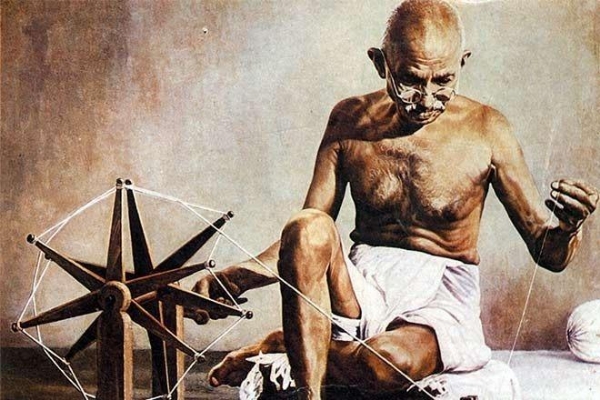
The charkha's origins can be traced back to ancient India, where it served as a traditional tool for hand-spinning cotton and other fibers. Its simple design, consisting of a wooden frame and a rotating spindle, enabled individuals to transform raw cotton into thread. Over centuries, the charkha evolved in design and utility, becoming an essential tool for producing yarn and textiles that were vital to India's economy.
Symbolism and Simplicity
The charkha's significance extended beyond its utilitarian purpose. It became a powerful symbol of self-sufficiency, rural economy, and community unity. The act of spinning, often associated with the contemplative rhythms of life, held deep philosophical and spiritual connotations in Indian culture. Mahatma Gandhi recognized the symbolism of the charkha and harnessed its power to inspire a mass movement for India's independence.
Charkha in the Indian Freedom Struggle
The charkha assumed a central role in Mahatma Gandhi's strategy of nonviolent resistance against British colonial rule. Gandhi saw the charkha as a tool not only for economic empowerment but also as a means to foster self-reliance and a sense of national identity. He encouraged every Indian to spin their own cloth, advocating for the boycott of British-made textiles. This movement, known as the Khadi Movement, aimed to undermine British economic interests while strengthening the fabric of Indian society.
The Symbol of Khadi
Khadi, hand-spun and hand-woven cloth, became a potent symbol of resistance against British oppression. By wearing and using khadi, Indians expressed their rejection of imported goods and British domination. The production of khadi also provided livelihoods for countless rural artisans, aligning with Gandhi's vision of self-sufficiency and the revitalization of village economies. The charkha, therefore, became synonymous with India's fight for freedom and self-determination.
Global Inspiration and Legacy
The impact of the charkha extended beyond India's borders, inspiring movements and individuals worldwide. Gandhi's philosophy of nonviolent resistance and self-reliance resonated with figures like Martin Luther King Jr. and Nelson Mandela, who drew inspiration from his teachings. The symbolism of the charkha served as a reminder that even in the face of adversity, individuals could empower themselves through peaceful means.
Legacy of Empowerment and Sustainability
The charkha's legacy lives on as a testament to the principles of empowerment and sustainability. Even in the modern world, where mechanization and mass production prevail, the charkha continues to serve as a reminder of the power of self-sufficiency and community cohesion. Organizations dedicated to promoting khadi and supporting rural artisans uphold the legacy of the charkha by preserving traditional skills and fostering economic independence.
Continued Relevance
In contemporary India, the charkha remains relevant as a symbol of heritage, national identity, and rural empowerment. Khadi products are sought after not only for their cultural significance but also for their natural and sustainable qualities. The charkha continues to inspire initiatives that prioritize sustainable production methods and fair wages, aligning with global movements towards ethical and eco-friendly practices.
The charkha's journey from its ancient origins as a utilitarian tool to its central role in the Indian freedom struggle showcases its remarkable transformation into a symbol of empowerment and resilience. Gandhi's strategic integration of the charkha into the fabric of India's fight for independence reshaped its significance, making it an emblem of national identity and economic self-sufficiency. Beyond India's borders, the charkha's inspiration transcended cultures, influencing movements and leaders committed to nonviolent change. As a beacon of hope and self-determination, the charkha reminds us that even the simplest tools can weave threads of profound change and enduring legacy.
--