NB Explains | Women's reservation bill gets Lok Sabha nod with 454:2 majority
Total Views |


New Delhi, Sept 21: In a historic development, the Lok Sabha on Wednesday passed a Women's reservation bill granting reservation to women on one-third of seats in Lok Sabha and state assemblies. It passed with near unanimity amid demands from the opposition to extend similar benefits to Other Backward Classes (OBCs) and immediate implementation of the measure before the elections next year.
After a spirited eight-hour debate in which 60 members participated, the Lok Sabha passed the Constitution (128th Amendment) Bill, with 454 members voting in favour and two against it.
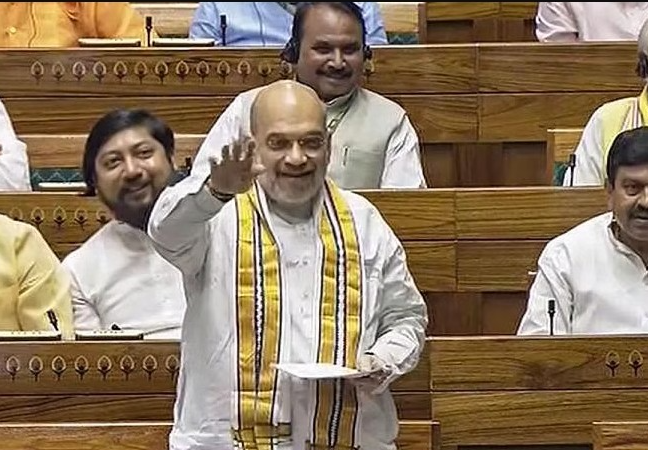
It was the first to be passed in the new Parliament building. The historic Bill, termed as Nari Shakti Vandan Adhiniyam, will now be taken up in Rajya Sabha for passage for the remainder of the session. As a part of the Constitution (128th Amendment) Bill, it might require approval from half of state assemblies.
Prime Minister Modi said he was delighted at the passage of the bill with such phenomenal support.
"I thank MPs across Party lines who voted in support of this Bill. The Nari Shakti Vandan Adhiniyam is a historic legislation which will further boost women empowerment and will enable even greater participation of women in our political process," he posted on X.
In Lok Sabha, the home minister pushed back against the opposition's criticism for not including an OBC sub-quota and asserted that the BJP has given more representation to the community than those claiming to speak for them.
Nearly 29% or 85 BJP MPs, 29 Union ministers, and 365 of its 1,358 MLAs, which is over 27%, are from the OBC category, Shah said. He said over 40% of its MLCs also belong to the Other Backward Classes (OBCs).
Debate over credit
The debate also saw rival political parties claim credit for women's reservation, with Gandhi saying that the bill was a dream of her late husband and former prime minister Rajiv Gandhi, who made attempts to grant reservation to women in local bodies in 1989 but failed, and BJP members asserting that former prime minister Atal Bihari Vajpayee brought the bill twice only to be met with unruly scenes in the House.
Also Read: NB Explains | What is Women's Reservation Bill?
The bill was brought in 2008 during the coalition government led by Prime Minister Manmohan Singh and passed by the Rajya Sabha, where it was introduced, in 2010. However, the bill could not be passed in the Lok Sabha due to political differences. It subsequently lapsed with dissolution of the 15th Lok Sabha.
Oppose to the Bill
AIMIM leader Asaduddin Owaisi was the lone voice of opposition to the bill contending that the measure would provide reservation only to "savarna women", and exclude OBC and Muslim women who have little representation in Parliament. The AIMIM has two members in Lok Sabha.
On the issue of immediate implementation of the proposed law, Shah said such a move would lead to allegations of partiality and insisted that the matter be best left to the delimitation commission which would carry out the exercise in a transparent manner.
"If we do it and Wayanad becomes reserved you will say it is a political step. If Hyderabad becomes a reserved seat, Owaisi ji will say it is politically motivated," the home minister said. Wayanad in Kerala is represented in Lok Sabha by Congress leader Rahul Gandhi.
Shah said the delimitation commission was an appropriate forum for demarcation of constituencies reserved for women as it is chaired by a retired Supreme Court judge and has representation from political parties.
Bill Passed
The bill was passed as per the provisions of Article 368 (2) of the Constitution relating to the passage of constitutional amendment bills, which requires support of the majority of the total membership of the House and a majority of not less than two-thirds of the members present and voting.
A few amendments moved by the government relating to the numbering of the Constitution amendment bill were also cleared by the House. When the proposed legislation goes to Rajya Sabha for its consideration, it will be called the Constitution (106th Amendment) Bill, officials said.
Several members had demanded immediate rollout of women's reservation and criticised the provisions that said that the quotas will come into effect after the delimitation exercise undertaken after the first census after the commencement of the proposed law.
Twenty-seven women members cutting across party lines participated in the debate on the bill, with BJP legislators coming out in support of it and the opposition members demanding its immediate implementation.
At present, there are 82 women members in Lok Sabha, out of the total strength of 543.
What is the bill?
The Bill proposes one-third, or 33% reservation, for women representative in both Lok Sabha and state assemblies. The reservation will continue to be in place for 15 years from the day of its implementation, with provision for the Parliament to extend the duration if required.
The 128th Constitution Amendment Bill states that political reservation for women will only come into effect after the relevant census figures are published and the delimitation – an exercise comprising the revision of seat numbers in Parliament and the redrawing of constituency boundaries – is done on the basis of that.
This provision signifies that the reservation can be implemented not before 2029, if the Bill gets passed in Rajya Sabha during this session.