The Cracks Beneath the Bubble: Global Economic Shifts and India’s Strategic Ascent
Total Views |


-Chintan Mokashi
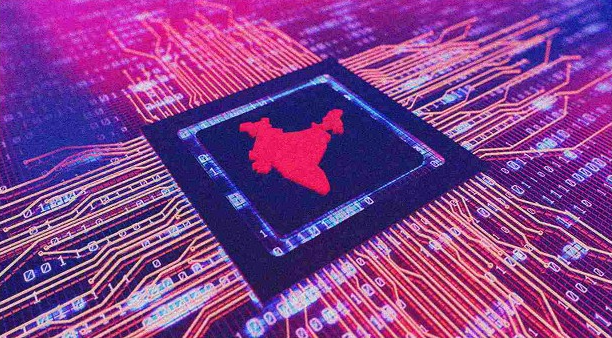
As the global economy grapples with mounting uncertainties, a quiet but decisive shift is underway. From trade wars and AI hype cycles to defense realignments and indigenous innovation, the world is witnessing a recalibration of power—and India is emerging as a confident architect of its own future.
The Trump administration’s aggressive tariff regime—particularly the 100% levy on pharmaceutical imports—has triggered a cascading impact. Estimated losses of $87 billion have rippled across the U.S. economy, with $30 billion directly affecting American farmers, many of whom are already reeling from supply chain disruptions and declining global demand.
Defense spending, once a cornerstone of American strategic dominance, is also under pressure. From January to August 2025, the U.S. defense sector has reported a 35% contraction, driven by stalled procurement, geopolitical fatigue, and budgetary constraints. The wars may be winding down, but the economic wounds are fresh.
The AI Bubble: Promise or Pretense?
Global consulting giants—PwC, Capgemini, Accenture, IBM, McKinsey—have positioned themselves as the torchbearers of AI transformation. Their influence spans continents, shaping government policies and corporate strategies. Yet, critics argue that the AI boom is increasingly speculative, driven more by valuation hype than grounded utility. The “AI bubble”, as flagged by Deutsche Bank and other analysts, is showing signs of internal stress. Blockchain, once hailed as unhackable, has faced breaches. AI models, while powerful, remain energy-intensive and ethically complex. The convergence of AI and crypto—once seen as the future—is now under scrutiny.
India, meanwhile, is charting a different course. Having reduced its dependence on Western consulting firms, the country is nurturing its own intellectual ecosystem. Plans to develop four indigenous Big Four equivalents are already in motion, with Indian researchers leading the charge in policy design, data science, and strategic advisory.
In defense, the GTRE-developed Kaveri engine is nearing operational readiness. With thrust levels approaching 90kN, it is poised to power the Tejas Mk2, reducing reliance on foreign fifth-generation fighters like the SU-57. Integration and testing are underway, with a rollout expected within 3–4 years.
India’s National AI Mission is another bold step. With 1 trillion parameters, the country is building one of the world’s most comprehensive LLMs. Eight companies are collaborating on this initiative, backed by dedicated nuclear power infrastructure to support AI workloads—an audacious but necessary move.
In the enterprise tech space, Zoho has quietly emerged as a formidable challenger to Microsoft. With a decade of proven performance and growing global adoption, Zoho exemplifies India’s ability to build scalable, secure, and user-friendly platforms. More Indian applications are in the pipeline, signaling a shift from consumption to creation.
Diplomacy and Geopolitical Assertion
India’s foreign policy is now marked by boldness and clarity:
• Hosting BRICS, G21, and Global South summits in New York, India has demonstrated its ability to lead even within Western spheres of influence.
• It has firmly rejected agricultural trade pressures from the U.S., especially around soybean and feedstock exports, asserting its own priorities.
• India is also pushing back against Western attempts to destabilize its internal harmony, responding decisively to incidents like the Bareilly unrest, which was allegedly designed to provoke communal instability.
India’s strategic messaging is clear: external powers cannot " fix " it. On the contrary, it has historically “fixed” colonial empires—British, French, Portuguese, and Spanish—and continues to challenge Western dominance through intellectual, technological, and diplomatic means.
Conclusion
India’s journey is not just about catching up—it’s about redefining the rules. By integrating ancient wisdom with modern science, asserting its geopolitical agency, and building indigenous capabilities across sectors, India is crafting a model of development that is both resilient and rooted.
As the world watches, India’s strategic renaissance offers a compelling alternative to Western paradigms—one that honors history, embraces innovation, and champions sovereignty.
The future is not merely a destination—it is a reflection of how deeply a nation understands its past and how boldly it shapes its present.
As the global economy grapples with mounting uncertainties, a quiet but decisive shift is underway. From trade wars and AI hype cycles to defense realignments and indigenous innovation, the world is witnessing a recalibration of power—and India is emerging as a confident architect of its own future.
America’s Economic Strain: Tariffs, Turbulence, and Trust Deficits
The Trump administration’s aggressive tariff regime—particularly the 100% levy on pharmaceutical imports—has triggered a cascading impact. Estimated losses of $87 billion have rippled across the U.S. economy, with $30 billion directly affecting American farmers, many of whom are already reeling from supply chain disruptions and declining global demand.
Defense spending, once a cornerstone of American strategic dominance, is also under pressure. From January to August 2025, the U.S. defense sector has reported a 35% contraction, driven by stalled procurement, geopolitical fatigue, and budgetary constraints. The wars may be winding down, but the economic wounds are fresh.
The AI Bubble: Promise or Pretense?
Global consulting giants—PwC, Capgemini, Accenture, IBM, McKinsey—have positioned themselves as the torchbearers of AI transformation. Their influence spans continents, shaping government policies and corporate strategies. Yet, critics argue that the AI boom is increasingly speculative, driven more by valuation hype than grounded utility. The “AI bubble”, as flagged by Deutsche Bank and other analysts, is showing signs of internal stress. Blockchain, once hailed as unhackable, has faced breaches. AI models, while powerful, remain energy-intensive and ethically complex. The convergence of AI and crypto—once seen as the future—is now under scrutiny.
India’s Counter-Narrative: Indigenous Innovation and Strategic Decoupling
India, meanwhile, is charting a different course. Having reduced its dependence on Western consulting firms, the country is nurturing its own intellectual ecosystem. Plans to develop four indigenous Big Four equivalents are already in motion, with Indian researchers leading the charge in policy design, data science, and strategic advisory.
In defense, the GTRE-developed Kaveri engine is nearing operational readiness. With thrust levels approaching 90kN, it is poised to power the Tejas Mk2, reducing reliance on foreign fifth-generation fighters like the SU-57. Integration and testing are underway, with a rollout expected within 3–4 years.
India’s National AI Mission is another bold step. With 1 trillion parameters, the country is building one of the world’s most comprehensive LLMs. Eight companies are collaborating on this initiative, backed by dedicated nuclear power infrastructure to support AI workloads—an audacious but necessary move.
Digital Sovereignty: Zoho and the Rise of Indian Platforms
In the enterprise tech space, Zoho has quietly emerged as a formidable challenger to Microsoft. With a decade of proven performance and growing global adoption, Zoho exemplifies India’s ability to build scalable, secure, and user-friendly platforms. More Indian applications are in the pipeline, signaling a shift from consumption to creation.
Diplomacy and Geopolitical Assertion
India’s foreign policy is now marked by boldness and clarity:
• Hosting BRICS, G21, and Global South summits in New York, India has demonstrated its ability to lead even within Western spheres of influence.
• It has firmly rejected agricultural trade pressures from the U.S., especially around soybean and feedstock exports, asserting its own priorities.
• India is also pushing back against Western attempts to destabilize its internal harmony, responding decisively to incidents like the Bareilly unrest, which was allegedly designed to provoke communal instability.
India’s strategic messaging is clear: external powers cannot " fix " it. On the contrary, it has historically “fixed” colonial empires—British, French, Portuguese, and Spanish—and continues to challenge Western dominance through intellectual, technological, and diplomatic means.
Conclusion
India’s journey is not just about catching up—it’s about redefining the rules. By integrating ancient wisdom with modern science, asserting its geopolitical agency, and building indigenous capabilities across sectors, India is crafting a model of development that is both resilient and rooted.
As the world watches, India’s strategic renaissance offers a compelling alternative to Western paradigms—one that honors history, embraces innovation, and champions sovereignty.
The future is not merely a destination—it is a reflection of how deeply a nation understands its past and how boldly it shapes its present.