Word of Command
NewsBharati 01-Oct-2025 15:00:05 PM
Total Views |


During our childhood, we were enthusiastic about attending the Republic Day parade on 26th January every year. We used to go early morning in the cold of Delhi to watch the parade. I think those were the days of the late fifties. I distinctly remember the Army, Navy and Air Force contingents marching smartly to martial tunes of the band marching along. Of course, the tabloids or Jhankis were something which we loved too.
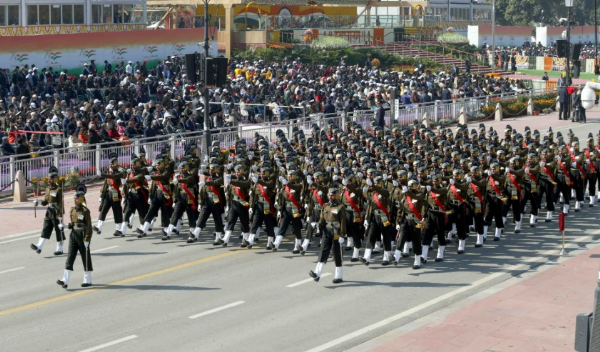
The marching contingents were led by the parade commander, commanding the smartly dressed men who marched with utter precision and unmatchable synchronisation.
The parade commander gave his word of command like ‘eyes right’ and saluted smartly at the dais where the president of India took the salute. It was a copy-paste job of the British Raj- the word of command was the most visible and audible feature, which one could not miss, spoken in English.
The Procedure for the ceremonial parade was very clear back then and is as follows…
"Eyes Right" is a command for the unit to turn their heads 45 degrees to the right to show respect to a reviewing officer or dignitary. The command is usually given while marching and is immediately followed by the command "Eyes Front" or "Ready Front" to bring the heads back to the front. The individual at the head of the formation salutes, while the rest of the formation executes "eyes right".
It was followed by Gurkhas, by Sikh Regiment or even Marathas; all were celebrating and giving covering fire to our ‘Indian republic’ but in English. No body cared what they spoke (it never crossed our minds) but were interested in how they said it- loud and clear- a shout a roar so loud that without a Public Address system ‘EYES RIGHT’ jolly well be heard by all watching the parade and this must have been rehearsed dozens if not hundreds of times in letter and spirit by the officer commanding the unit.
It looked so graceful and a feeling of patriotism went through your body as an electric current. That is what a ceremonial parade is all about and is for.
All that mattered to us was ‘How is the josh?’ and yes, the JOSH was very high for the entire civilian crowd watching the parade. Did I say ‘josh’- yes, I did. But josh is a word from the Hindi language! This word became popular after the film ‘Uri: the surgical strike’ where Vicky Kaushal asks his men before going for assault, ‘How is the Josh’?
‘How is the Josh’ became an iconic line that became a viral sensation and a symbol of patriotism and high spirits. "Josh" (जोश) means passion or enthusiasm in Hindi, and the dialogue involves Vicky Kaushal's character asking his team, "How's the josh?" to which they respond, "High, Sir!". The phrase has since been adopted and adapted by the public, even by Prime Minister Narendra Modi and cabinet ministers, and has become an enduring national slogan. Hindi? Why not ‘How is the passion”? Do you think you can replace Josh with Passion and get the same feeling as an Indian? I do not think so.
A well-made salad must have a certain uniformity; it should make perfect sense for those ingredients to share a bowl. - Yotam Ottolenghi
Power of your own language can never be and should never be underestimated – ‘kyunki phir bhi dill hai Hindustani’.
It was only in 1968 when we joined the National Defence Academy -NDA we realised that all the word of command were now in Hindi!
It got changed somewhere down the line- I cannot say exactly when- but it did change- lock stock and barrel.
We were now to say ‘dahine mur’ ‘Bayen mur’, or ‘Tez chall’ or ‘dheerey chall’. Eyes right to Dahiney dekh was as smooth as ‘Makhkhan’.
It never looked odd to say ‘Lambey dahine chchote bayen’ or ‘khulee line chall’. Drill square was full of ‘daud ke kadam taal’ or ‘peechey mur’ said ten times by drill ustad to get you off balance- and we did.
During mourning it was ‘ultey Shasthra’ to keep the weapon on the ground ‘Bhoomi Shastra’.
During the presentation of colours, it is now - निशान टोली मध्य से तेज़ चल . Nishan toli means colour party.
PT ustad in the gym will say ’oopar jump’ dayen uchchal or bayen uchchal’ ‘zammeen chchordena’.
During Cross country, when PTO had to call back the cadets after a false start would say ‘Wappaas’.
For horse riding, we used to play a game ‘Main Shivaji’. Was a competitive game to grab a white hanky from the guy called Shivaji.
During range firing, it was ‘Khali khokha uthaa’. ‘Bhaar ki karwahi kaar’.
Or ‘rifle chalta-rukta’ or ‘ fauri ilaaj’ for op-immediate quick action.
For aim it was ‘shisht’. ‘POUCH KA BUTTON bandh’, or ‘ aaram deh position bana’ ‘ hari cheez par nazzar dalo’.
Even target indication was in Hindi- ‘Samne Chchatridar peid’ or ‘door Barah baje Pahadi par jharee’
Bayonet charge was “Dhawaa”, “Dhawaa kaar”, ‘Ghonp-Nikal- Nikal’.
Even in a mess the mess in charge says ‘Bhojan Tayyar hai shrimaan’ as the food is laid on the table.
The most preferred and loved martial music tune is ‘Sarey Jahaan se achcha, Hindustan Hamara…’
This is followed by all. We have Jats, Dogras, Madras regiment, Ladakh scouts, Assam rifles, Assam regiment and several other ethnic groups within a large armed force. They all follow the same word of command across the board, and we are all proud of it.
Though the armed forces were the first to adopt Hindi, one of our major and more common languages, the renaissance is catching up fast.
People do not understand the power of a link language.
If Kishore Kumar had sung only Bengali songs or Lata Mangeshkar had been stuck to Marathi or Shankar Mahadevan had sung Malayali songs, or Rajesh Khanna, Dharmendra, and Sunny Deol had stuck to Punjabi cinema, do you think they could have earned the name and fame that they got from the link language Hindi?
‘You're going to have 100s of millions of users on Chrome, spanning mobile, tablets, and desktops. That is one unfragmented base. That uniformity is probably better than most of the issues across browsers.’ - Sundar Pichai
The marching contingents were led by the parade commander, commanding the smartly dressed men who marched with utter precision and unmatchable synchronisation.
The parade commander gave his word of command like ‘eyes right’ and saluted smartly at the dais where the president of India took the salute. It was a copy-paste job of the British Raj- the word of command was the most visible and audible feature, which one could not miss, spoken in English.
The Procedure for the ceremonial parade was very clear back then and is as follows…
"Eyes Right" is a command for the unit to turn their heads 45 degrees to the right to show respect to a reviewing officer or dignitary. The command is usually given while marching and is immediately followed by the command "Eyes Front" or "Ready Front" to bring the heads back to the front. The individual at the head of the formation salutes, while the rest of the formation executes "eyes right".
It was followed by Gurkhas, by Sikh Regiment or even Marathas; all were celebrating and giving covering fire to our ‘Indian republic’ but in English. No body cared what they spoke (it never crossed our minds) but were interested in how they said it- loud and clear- a shout a roar so loud that without a Public Address system ‘EYES RIGHT’ jolly well be heard by all watching the parade and this must have been rehearsed dozens if not hundreds of times in letter and spirit by the officer commanding the unit.
It looked so graceful and a feeling of patriotism went through your body as an electric current. That is what a ceremonial parade is all about and is for.
All that mattered to us was ‘How is the josh?’ and yes, the JOSH was very high for the entire civilian crowd watching the parade. Did I say ‘josh’- yes, I did. But josh is a word from the Hindi language! This word became popular after the film ‘Uri: the surgical strike’ where Vicky Kaushal asks his men before going for assault, ‘How is the Josh’?
‘How is the Josh’ became an iconic line that became a viral sensation and a symbol of patriotism and high spirits. "Josh" (जोश) means passion or enthusiasm in Hindi, and the dialogue involves Vicky Kaushal's character asking his team, "How's the josh?" to which they respond, "High, Sir!". The phrase has since been adopted and adapted by the public, even by Prime Minister Narendra Modi and cabinet ministers, and has become an enduring national slogan. Hindi? Why not ‘How is the passion”? Do you think you can replace Josh with Passion and get the same feeling as an Indian? I do not think so.
A well-made salad must have a certain uniformity; it should make perfect sense for those ingredients to share a bowl. - Yotam Ottolenghi
Power of your own language can never be and should never be underestimated – ‘kyunki phir bhi dill hai Hindustani’.
It was only in 1968 when we joined the National Defence Academy -NDA we realised that all the word of command were now in Hindi!
It got changed somewhere down the line- I cannot say exactly when- but it did change- lock stock and barrel.
We were now to say ‘dahine mur’ ‘Bayen mur’, or ‘Tez chall’ or ‘dheerey chall’. Eyes right to Dahiney dekh was as smooth as ‘Makhkhan’.
It never looked odd to say ‘Lambey dahine chchote bayen’ or ‘khulee line chall’. Drill square was full of ‘daud ke kadam taal’ or ‘peechey mur’ said ten times by drill ustad to get you off balance- and we did.
During mourning it was ‘ultey Shasthra’ to keep the weapon on the ground ‘Bhoomi Shastra’.
During the presentation of colours, it is now - निशान टोली मध्य से तेज़ चल . Nishan toli means colour party.
PT ustad in the gym will say ’oopar jump’ dayen uchchal or bayen uchchal’ ‘zammeen chchordena’.
During Cross country, when PTO had to call back the cadets after a false start would say ‘Wappaas’.
For horse riding, we used to play a game ‘Main Shivaji’. Was a competitive game to grab a white hanky from the guy called Shivaji.
During range firing, it was ‘Khali khokha uthaa’. ‘Bhaar ki karwahi kaar’.
Or ‘rifle chalta-rukta’ or ‘ fauri ilaaj’ for op-immediate quick action.
For aim it was ‘shisht’. ‘POUCH KA BUTTON bandh’, or ‘ aaram deh position bana’ ‘ hari cheez par nazzar dalo’.
Even target indication was in Hindi- ‘Samne Chchatridar peid’ or ‘door Barah baje Pahadi par jharee’
Bayonet charge was “Dhawaa”, “Dhawaa kaar”, ‘Ghonp-Nikal- Nikal’.
Even in a mess the mess in charge says ‘Bhojan Tayyar hai shrimaan’ as the food is laid on the table.
The most preferred and loved martial music tune is ‘Sarey Jahaan se achcha, Hindustan Hamara…’
This is followed by all. We have Jats, Dogras, Madras regiment, Ladakh scouts, Assam rifles, Assam regiment and several other ethnic groups within a large armed force. They all follow the same word of command across the board, and we are all proud of it.
Though the armed forces were the first to adopt Hindi, one of our major and more common languages, the renaissance is catching up fast.
People do not understand the power of a link language.
If Kishore Kumar had sung only Bengali songs or Lata Mangeshkar had been stuck to Marathi or Shankar Mahadevan had sung Malayali songs, or Rajesh Khanna, Dharmendra, and Sunny Deol had stuck to Punjabi cinema, do you think they could have earned the name and fame that they got from the link language Hindi?
‘You're going to have 100s of millions of users on Chrome, spanning mobile, tablets, and desktops. That is one unfragmented base. That uniformity is probably better than most of the issues across browsers.’ - Sundar Pichai
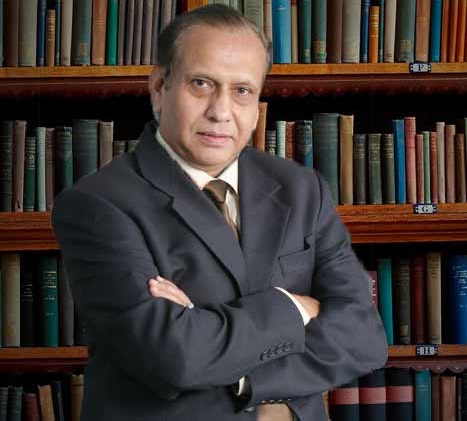
Virender Kapoor
A thinker, educationist and an inspirational guru. Kapoor is an Indian who wears many hats. An educationist of repute, he was the Director of a prestigious management Institute under the Symbiosis umbrella. He has emerged as a leading think tank in human behavior, motivation and success. As a celebrity author, his name appears with the likes of Thomas Friedman and Dale Carnegie. He has authored more than 30 books as of now which are on Amazon worldwide and several of his books are in the pipeline.