Dr Ambedkar and RSS: Forgotten chapters of mutual respect and shared vision
Total Views |


The presence of former President Ram Nath Kovind as the chief guest at the Rashtriya Swayamsevak Sangh’s (RSS) Vijayadashmi function in Nagpur this year has once again revived a critical yet often ignored debate: the historical relationship between Dr. B.R. Ambedkar and the RSS. This occasion, which also marked the RSS centenary, saw Kovind reminding the nation about a neglected but important incident — Dr. Ambedkar’s visit to an RSS shakha at Karad in Satara district on January 2, 1940.
This event, reported in Kesari on January 9, 1940, and later in Janata (the periodical published by Dr. Ambedkar himself) on January 20, 1940, remains a matter of historical record. Yet, strangely, neither academic circles nor government institutions have highlighted or studied this incident seriously. The deliberate silence around it raises questions about the objectivity of many so-called intellectuals and historians, who seem to have been influenced by ideological biases rather than historical truth.
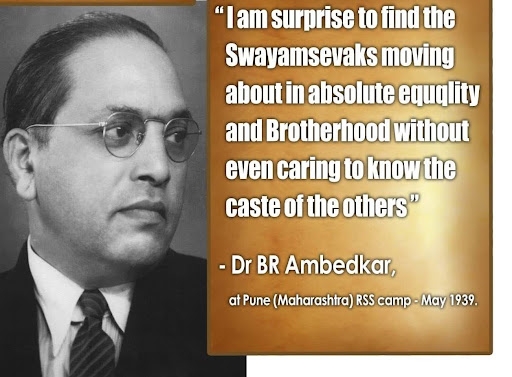
Dr. Ambedkar’s Karad visit was not his first interaction with the RSS. Months earlier, in May 1939, he had visited an RSS camp near Pune. There, Ambedkar observed a unique experiment in social organisation that left him pleasantly surprised. Swayamsevaks, drawn from different castes, were living, eating, and working together without any consideration of birth-based hierarchy. Ambedkar is reported to have remarked that he was astonished to see young men moving about in perfect equality and brotherhood without bothering to know one another’s caste.
For a man who had dedicated his life to annihilating caste, this experience was not just heartening but also thought-provoking. At Karad, while addressing swayamsevaks, Ambedkar openly admitted that he had ideological differences with the RSS. Yet, he emphasised that he looked at the RSS “with great affection.” This candid admission was not the voice of political compulsion but of a democrat who valued dialogue, debate, and the recognition of sincerity in action.
What makes this even more significant is the fact that Ambedkar, known for his uncompromising sense of self-respect, would never have revisited the RSS shakha in Karad had his earlier experience in 1939 left him with a sense of dissatisfaction or discomfort. That he chose to engage again with the organisation within seven months shows that he recognised something genuine and valuable in its functioning.
By the late 1930s, both Ambedkar and the RSS had made their positions clear. Ambedkar was unyielding in his demand for social equality, declaring at Yeola in 1935 that though he was born a Hindu, he would not die one. His announcement of conversion was a revolutionary statement against the rigid caste practices of Hindu society. The RSS, founded by Dr. Keshav Baliram Hedgewar in 1925, was building a grassroots movement for Hindu unity, deliberately discouraging caste distinctions within its shakhas.
Despite Ambedkar’s declared distance from Hindu fold and his eventual embrace of Buddhism in 1956, his visits to RSS camps in the 1930s and 1940s demonstrate that he acknowledged the Sangh’s sincerity in attempting to create equality within its fold. Both Ambedkar and the RSS shared a deep commitment to nation-building, albeit through different means.
What united them was a shared conviction: India could never become strong unless caste divisions were dismantled and social harmony established.
The silence of Indian academia on Ambedkar’s visits to RSS shakhas is telling. The reports of his visits were not hidden — they were published prominently, including in Janata, the very mouthpiece of Ambedkar himself. Yet, for decades, mainstream historians, driven perhaps by ideological preferences, chose to ignore this fact.
It is difficult to believe that such an omission could be accidental. Rather, it reflects how history-writing in India has often been shaped more by political and ideological alignments than by honest scholarship. By sidelining such critical episodes, a distorted image of both Ambedkar and the RSS has been projected — Ambedkar as a figure wholly opposed to Hindu social institutions, and RSS as an organisation opposed to reform and social justice. The truth, however, is more nuanced and complex.
Ambedkar’s acknowledgment of affection for the RSS, despite differences, shows his democratic temperament. He believed in discussion, debate, and the possibility of reconciling differences for the larger good of society. Similarly, RSS under Hedgewar and later leaders respected Ambedkar for his courage, intellect, and relentless fight for justice, even if they did not formally collaborate.
This mutual respect was evident again during the tumultuous years of Partition. Ambedkar appreciated the role of RSS volunteers in protecting displaced Hindus and providing relief during communal violence in Bengal, Punjab, and Sindh. He saw in the RSS an organisation that was committed to national unity at a time when the very idea of India was under severe threat.
It is true that Ambedkar and the RSS did not walk the same path. Ambedkar eventually chose conversion to Buddhism as a route to emancipation, while the RSS continued to emphasise Hindu cultural unity. Ambedkar argued that without annihilating caste through legal and social revolution, India could never progress. RSS, on the other hand, believed that caste would naturally dissolve through shared living, collective discipline, and the nurturing of a national spirit.
Despite these differences, both were bound by the vision of a strong, self-respecting, and united India. Their interactions reveal not antagonism, but a recognition of each other’s sincerity and dedication to social transformation.
 Former President Sri Ram Nath Kovind offered floral tributes to the founder of Rashtriya Swayamsevak Sangh, Dr. Keshav Baliram Hedgewar at Reshimbagh, in Nagpur on the occasion of Vijayadashami. Pic: RSS.org
The re-emergence of this forgotten chapter, as highlighted by former President Kovind, carries several important lessons for contemporary India.
The story of Dr. B.R. Ambedkar’s interactions with the RSS is one of the most neglected episodes of modern Indian history. His visits to the RSS camp in 1939 and the Karad shakha in 1940, his remarks about equality among swayamsevaks, and his acknowledgment of “affection” for the RSS all point toward a mutual recognition rooted in democratic values and shared concerns for social harmony.
This event, reported in Kesari on January 9, 1940, and later in Janata (the periodical published by Dr. Ambedkar himself) on January 20, 1940, remains a matter of historical record. Yet, strangely, neither academic circles nor government institutions have highlighted or studied this incident seriously. The deliberate silence around it raises questions about the objectivity of many so-called intellectuals and historians, who seem to have been influenced by ideological biases rather than historical truth.
Ambedkar’s visits to RSS programmes
Dr. Ambedkar’s Karad visit was not his first interaction with the RSS. Months earlier, in May 1939, he had visited an RSS camp near Pune. There, Ambedkar observed a unique experiment in social organisation that left him pleasantly surprised. Swayamsevaks, drawn from different castes, were living, eating, and working together without any consideration of birth-based hierarchy. Ambedkar is reported to have remarked that he was astonished to see young men moving about in perfect equality and brotherhood without bothering to know one another’s caste.
For a man who had dedicated his life to annihilating caste, this experience was not just heartening but also thought-provoking. At Karad, while addressing swayamsevaks, Ambedkar openly admitted that he had ideological differences with the RSS. Yet, he emphasised that he looked at the RSS “with great affection.” This candid admission was not the voice of political compulsion but of a democrat who valued dialogue, debate, and the recognition of sincerity in action.
What makes this even more significant is the fact that Ambedkar, known for his uncompromising sense of self-respect, would never have revisited the RSS shakha in Karad had his earlier experience in 1939 left him with a sense of dissatisfaction or discomfort. That he chose to engage again with the organisation within seven months shows that he recognised something genuine and valuable in its functioning.
The context of the 1930s and 1940s
By the late 1930s, both Ambedkar and the RSS had made their positions clear. Ambedkar was unyielding in his demand for social equality, declaring at Yeola in 1935 that though he was born a Hindu, he would not die one. His announcement of conversion was a revolutionary statement against the rigid caste practices of Hindu society. The RSS, founded by Dr. Keshav Baliram Hedgewar in 1925, was building a grassroots movement for Hindu unity, deliberately discouraging caste distinctions within its shakhas.
Despite Ambedkar’s declared distance from Hindu fold and his eventual embrace of Buddhism in 1956, his visits to RSS camps in the 1930s and 1940s demonstrate that he acknowledged the Sangh’s sincerity in attempting to create equality within its fold. Both Ambedkar and the RSS shared a deep commitment to nation-building, albeit through different means.
- Ambedkar sought structural and legal reforms, backed by social movements and, eventually, conversion to break caste barriers.
- RSS pursued social reform through cultural unification and daily discipline, promoting brotherhood among Hindus irrespective of caste.
What united them was a shared conviction: India could never become strong unless caste divisions were dismantled and social harmony established.
Why academicians chose silence
The silence of Indian academia on Ambedkar’s visits to RSS shakhas is telling. The reports of his visits were not hidden — they were published prominently, including in Janata, the very mouthpiece of Ambedkar himself. Yet, for decades, mainstream historians, driven perhaps by ideological preferences, chose to ignore this fact.
It is difficult to believe that such an omission could be accidental. Rather, it reflects how history-writing in India has often been shaped more by political and ideological alignments than by honest scholarship. By sidelining such critical episodes, a distorted image of both Ambedkar and the RSS has been projected — Ambedkar as a figure wholly opposed to Hindu social institutions, and RSS as an organisation opposed to reform and social justice. The truth, however, is more nuanced and complex.
Shared democratic spirit
Ambedkar’s acknowledgment of affection for the RSS, despite differences, shows his democratic temperament. He believed in discussion, debate, and the possibility of reconciling differences for the larger good of society. Similarly, RSS under Hedgewar and later leaders respected Ambedkar for his courage, intellect, and relentless fight for justice, even if they did not formally collaborate.
This mutual respect was evident again during the tumultuous years of Partition. Ambedkar appreciated the role of RSS volunteers in protecting displaced Hindus and providing relief during communal violence in Bengal, Punjab, and Sindh. He saw in the RSS an organisation that was committed to national unity at a time when the very idea of India was under severe threat.
Convergence and divergence
It is true that Ambedkar and the RSS did not walk the same path. Ambedkar eventually chose conversion to Buddhism as a route to emancipation, while the RSS continued to emphasise Hindu cultural unity. Ambedkar argued that without annihilating caste through legal and social revolution, India could never progress. RSS, on the other hand, believed that caste would naturally dissolve through shared living, collective discipline, and the nurturing of a national spirit.
Despite these differences, both were bound by the vision of a strong, self-respecting, and united India. Their interactions reveal not antagonism, but a recognition of each other’s sincerity and dedication to social transformation.
Lessons for today
The re-emergence of this forgotten chapter, as highlighted by former President Kovind, carries several important lessons for contemporary India.
- Dialogue over dogma – Ambedkar’s willingness to visit and engage with RSS, despite differences, underscores the importance of dialogue in a democracy. Genuine reform is possible only when diverse ideas interact rather than when walls of prejudice divide them.
- Truth over ideology – Historical facts, like Ambedkar’s visits to RSS shakhas, must be acknowledged honestly. Concealing or distorting them only weakens the credibility of scholarship and deprives society of valuable lessons.
- Shared goals matter – Ambedkar and RSS may have differed in methods, but both worked toward social harmony and national strength. Their mutual respect reminds us that unity in diversity is possible when sincerity of purpose is recognised.
- Breaking stereotypes – The narrative that Ambedkar and the RSS were permanently opposed to each other is simplistic. Their relationship shows shades of complexity, which, if studied properly, can enrich our understanding of India’s social and political history.
The story of Dr. B.R. Ambedkar’s interactions with the RSS is one of the most neglected episodes of modern Indian history. His visits to the RSS camp in 1939 and the Karad shakha in 1940, his remarks about equality among swayamsevaks, and his acknowledgment of “affection” for the RSS all point toward a mutual recognition rooted in democratic values and shared concerns for social harmony.