Job losses because of arrival of Artificial Intelligence: What is the way out?
NewsBharati 22-Nov-2025 11:51:51 AM
Total Views |


Billions of dollars have been invested in creating Artificial Intelligence. One of the core purposes is to take over repetitive, time-consuming jobs, both in a general sense and through specific applications.
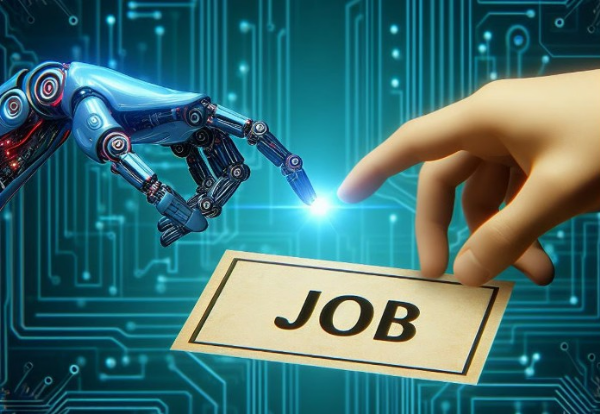
Most of the experts are still crystal gazing and looking at it as a magic box. The whole concept- especially its impact is nebulous. Some are even predicting that this is an overinflated over hyped bubble that could burst any time soon. Some are saying it will make things better. And these are coming from IT honchos sitting even in Silicon Valley or in a punny way (Silly- con) valley.
Be that as it may, this technology has just hit the market- may be a little too early but the idea is to invest in a very powerful tool now for long term gains. Efficiency and optimization with great support for human thinking and decision making is what is desirable. It also means that instead of four you may require one or two people to do the same job. This is debatable but only time will tell- presently these are guesstimates at best.
It will -common sense- tells us would impact IT and ITES (Information Technology Enabled Services) dependent services like banking, e-commerce etc too.
Software development
If you look at the software or IT industry, it saw a boom which lasted for a few decades. Typically, the software industry has experienced several periods of rapid growth, most notably during the late 1990s and early 2000s. This was a period when most systems- manual or semi-automatic- were under transition and computer applications were developing bottom upwards, meaning almost from scratch. Hardware costs plummeted in a big way which was another reason for quick adoption.
I remember buying an apple 8-bit computer with floppy disc drive, black and white console and a hard disc capacity of close to nothing for INR 80,000 in 1984. With DOS disc operating system. A mainframe had 4 winches hard drives of 400 Mb each giving you 1600 Mb space those days!
Today within decades things have catapulted. "Top of the line" laptops for demanding professional use, offer up to 8TB of storage capacity. For most power users, however, 1TB or 2TB SSDs are the common high-end configurations offered by major manufacturers like Apple, HP, and Dell.
By the way I TB = 1000,000 megabytes! Thousand-thousand Megabytes!
There was therefore a need – a big need- for coders and developers in large numbers. Every organization saw merit in it; it made it more efficient and that was the bottom line. You had to be foolish to keep making manual entries and calculations on a calculator when thousands of entries- data- once captured could be manipulated in hundreds of ways to generate data/reports in several ways for better efficiency. A click on the mouse was all that was required to generate reports. This is when ‘programmers as foot soldiers’ were required in big numbers. It was game of age-old demand and supply gap. Demand was sudden and huge and supply was short- every one was in a hurry- a parallel requirement and the industry flourished and people were desperate to hire people who could do coding. Semi-skilled programmers (a programmer who has moved beyond basic, beginner-level tasks but has not yet reached the advanced proficiency of a highly experienced developer. This level of skill is often associated with intermediate-level programmers who can work with concepts like object-oriented programming and have a solid understanding of core programming principles). This formed the bottom of the IT manpower Pyramid.
Companies were so desperate that the idea of ‘on bench’ resulted and fructified. Which means you keep 1000 employees on the bench- taking salary doing nothing. This was anticipatory hiring so that whenever you get a contract you have a ready work force- ready to hit the ground running.
The available skill set
According to a 2023 survey, a significant portion of the developer workforce has less than 10 years of experience, including 26.53% with 5-9 years and 23.3% with 1-4 years.
This implies that almost 25% are green horns so to say in a tech segment. But they were paid a lot- maybe it was their good luck- as demands were high. When there is demand for tomatoes and crop fails due to bad weather, the prices go up. A similar situation existed in the IT industry.
There is no single percentage for the total number of computer science engineers in the IT industry, but around 40% of employed engineers are in the IT domain.
The industry had all along increasingly focused on practical coding skills over formal degrees, with many developers being ‘self-taught’ or at best with certifications from private teaching centres.
Big AI hit – clear and present danger
Speaking to a few senior IT heads including HR in India, the concern of job losses is real.
NASSCOM (National Association of Software and Service Companies): One report indicated that AI threatens to displace around 9 million jobs in the IT sector by 2025-26 as automation takes over routine tasks and data processing roles.
One study suggests that 40% of workers at high risk of automation have only lower secondary education, highlighting that the impact is often concentrated in less-skilled roles.
This needs rethinking at individual level
Most of the bottom of the pyramid employees need to think of an alternative. Some are numb with fear. Upscaling may be possible for few. In fact, the semi-skilled soldiers may find it extremely difficult to upgrade. Where do they go with this fixed domain skillset? They have done ‘only this’ for years on.
Monotony and burn out.
Some, -may be many- feel they came into the industry when it had shine and sheen. They came from small towns, to tinsel towns and metros living a good life which became routine and boring, stressful after a while. Daily in front of the screen for 10 hours takes its toll. Some may be thinking ‘is there another way to live life’?
According to some estimates based on surveys 80% of professional developers are not happy in their current roles. One, in three (approximately 33%) actively dislike their job. Nearly half are simply "going through the motions" or are complacent.
Every dark cloud has a silver lining
This AI sledge hammer which would eat away some jobs at entry level may be a Godsend for many who are thinking of a switch over. This could be an appropriate nudge- desperate times desperate measures.
There is no point of staying in a metro hunting for a job. Life may be similar and stressful, even if you are lucky to get one.
Most metros in India are over polluted. Basics like Clean air and water are a far cry. You are living in small cramped up spaces leading a life of a robot. From 8 am to 9 pm when you return home five days a week.
People invest money in opening a restaurant- but more of them close before they open. Startups- one out of fifteen succeed. You need to think out of the box. Move to a different domain.
There is a sector which has no competition and huge scope. Agriculture is calling. It is not farming alone but the value chain is huge- logistics, marketing branding are still neglected. Smart farming – more bang for the buck. You don’t require ten acres of land. You have vertical farming, mushrooms, aquaponics, organic food et al.
You are educated at least better than an illiterate farmer in hinterland. You can take advantage of government schemes which he may not be even aware of. You can learn cultivation faster than him learning your skills. You are computer savvy and do digital marketing, creating your website and meeting people in the government offices. Your competition is zero. The government also wants well educated to enter and augment agriculture sector!
Government supports in a big way, loans, subsidies and protection- tax exemptions.
Today small towns and villages have bandwidth, roads and water. Infrastructure has developed so much and so much more is happening. This is the time to go for it.
The author is a Masters in Computer Science from IIT Bombay and an author of a book on agri-entrepreneurs ‘Millionaires’ available on Amazon. Coming up with new edition too.
Most of the experts are still crystal gazing and looking at it as a magic box. The whole concept- especially its impact is nebulous. Some are even predicting that this is an overinflated over hyped bubble that could burst any time soon. Some are saying it will make things better. And these are coming from IT honchos sitting even in Silicon Valley or in a punny way (Silly- con) valley.
Be that as it may, this technology has just hit the market- may be a little too early but the idea is to invest in a very powerful tool now for long term gains. Efficiency and optimization with great support for human thinking and decision making is what is desirable. It also means that instead of four you may require one or two people to do the same job. This is debatable but only time will tell- presently these are guesstimates at best.
It will -common sense- tells us would impact IT and ITES (Information Technology Enabled Services) dependent services like banking, e-commerce etc too.
Software development
If you look at the software or IT industry, it saw a boom which lasted for a few decades. Typically, the software industry has experienced several periods of rapid growth, most notably during the late 1990s and early 2000s. This was a period when most systems- manual or semi-automatic- were under transition and computer applications were developing bottom upwards, meaning almost from scratch. Hardware costs plummeted in a big way which was another reason for quick adoption.
I remember buying an apple 8-bit computer with floppy disc drive, black and white console and a hard disc capacity of close to nothing for INR 80,000 in 1984. With DOS disc operating system. A mainframe had 4 winches hard drives of 400 Mb each giving you 1600 Mb space those days!
Today within decades things have catapulted. "Top of the line" laptops for demanding professional use, offer up to 8TB of storage capacity. For most power users, however, 1TB or 2TB SSDs are the common high-end configurations offered by major manufacturers like Apple, HP, and Dell.
By the way I TB = 1000,000 megabytes! Thousand-thousand Megabytes!
There was therefore a need – a big need- for coders and developers in large numbers. Every organization saw merit in it; it made it more efficient and that was the bottom line. You had to be foolish to keep making manual entries and calculations on a calculator when thousands of entries- data- once captured could be manipulated in hundreds of ways to generate data/reports in several ways for better efficiency. A click on the mouse was all that was required to generate reports. This is when ‘programmers as foot soldiers’ were required in big numbers. It was game of age-old demand and supply gap. Demand was sudden and huge and supply was short- every one was in a hurry- a parallel requirement and the industry flourished and people were desperate to hire people who could do coding. Semi-skilled programmers (a programmer who has moved beyond basic, beginner-level tasks but has not yet reached the advanced proficiency of a highly experienced developer. This level of skill is often associated with intermediate-level programmers who can work with concepts like object-oriented programming and have a solid understanding of core programming principles). This formed the bottom of the IT manpower Pyramid.
Companies were so desperate that the idea of ‘on bench’ resulted and fructified. Which means you keep 1000 employees on the bench- taking salary doing nothing. This was anticipatory hiring so that whenever you get a contract you have a ready work force- ready to hit the ground running.
The available skill set
According to a 2023 survey, a significant portion of the developer workforce has less than 10 years of experience, including 26.53% with 5-9 years and 23.3% with 1-4 years.
This implies that almost 25% are green horns so to say in a tech segment. But they were paid a lot- maybe it was their good luck- as demands were high. When there is demand for tomatoes and crop fails due to bad weather, the prices go up. A similar situation existed in the IT industry.
There is no single percentage for the total number of computer science engineers in the IT industry, but around 40% of employed engineers are in the IT domain.
The industry had all along increasingly focused on practical coding skills over formal degrees, with many developers being ‘self-taught’ or at best with certifications from private teaching centres.
Big AI hit – clear and present danger
Speaking to a few senior IT heads including HR in India, the concern of job losses is real.
NASSCOM (National Association of Software and Service Companies): One report indicated that AI threatens to displace around 9 million jobs in the IT sector by 2025-26 as automation takes over routine tasks and data processing roles.
One study suggests that 40% of workers at high risk of automation have only lower secondary education, highlighting that the impact is often concentrated in less-skilled roles.
This needs rethinking at individual level
Most of the bottom of the pyramid employees need to think of an alternative. Some are numb with fear. Upscaling may be possible for few. In fact, the semi-skilled soldiers may find it extremely difficult to upgrade. Where do they go with this fixed domain skillset? They have done ‘only this’ for years on.
Monotony and burn out.
Some, -may be many- feel they came into the industry when it had shine and sheen. They came from small towns, to tinsel towns and metros living a good life which became routine and boring, stressful after a while. Daily in front of the screen for 10 hours takes its toll. Some may be thinking ‘is there another way to live life’?
According to some estimates based on surveys 80% of professional developers are not happy in their current roles. One, in three (approximately 33%) actively dislike their job. Nearly half are simply "going through the motions" or are complacent.
Every dark cloud has a silver lining
This AI sledge hammer which would eat away some jobs at entry level may be a Godsend for many who are thinking of a switch over. This could be an appropriate nudge- desperate times desperate measures.
There is no point of staying in a metro hunting for a job. Life may be similar and stressful, even if you are lucky to get one.
Most metros in India are over polluted. Basics like Clean air and water are a far cry. You are living in small cramped up spaces leading a life of a robot. From 8 am to 9 pm when you return home five days a week.
People invest money in opening a restaurant- but more of them close before they open. Startups- one out of fifteen succeed. You need to think out of the box. Move to a different domain.
There is a sector which has no competition and huge scope. Agriculture is calling. It is not farming alone but the value chain is huge- logistics, marketing branding are still neglected. Smart farming – more bang for the buck. You don’t require ten acres of land. You have vertical farming, mushrooms, aquaponics, organic food et al.
You are educated at least better than an illiterate farmer in hinterland. You can take advantage of government schemes which he may not be even aware of. You can learn cultivation faster than him learning your skills. You are computer savvy and do digital marketing, creating your website and meeting people in the government offices. Your competition is zero. The government also wants well educated to enter and augment agriculture sector!
Government supports in a big way, loans, subsidies and protection- tax exemptions.
Today small towns and villages have bandwidth, roads and water. Infrastructure has developed so much and so much more is happening. This is the time to go for it.
The author is a Masters in Computer Science from IIT Bombay and an author of a book on agri-entrepreneurs ‘Millionaires’ available on Amazon. Coming up with new edition too.

Virender Kapoor
A thinker, educationist and an inspirational guru. Kapoor is an Indian who wears many hats. An educationist of repute, he was the Director of a prestigious management Institute under the Symbiosis umbrella. He has emerged as a leading think tank in human behavior, motivation and success. As a celebrity author, his name appears with the likes of Thomas Friedman and Dale Carnegie. He has authored more than 30 books as of now which are on Amazon worldwide and several of his books are in the pipeline.