Putin’s India Visit: A Checkmate to the West
NewsBharati 08-Dec-2025 10:06:46 AM
Total Views |


Putin’s two-day visit to India on December 4-5, 2025, was not just another diplomatic engagement. It was a geopolitical earthquake. Even before his plane touched down, the Russian president had already played what many analysts are calling a “checkmate” against the West. For weeks, Western media speculated that Putin would not dare step outside Russia due to sanctions and international warrants. Yet his arrival in Delhi, and the warmth with which Prime Minister Narendra Modi received him, shattered those narratives and signalled a new reality in global politics.
Breaking Protocol, Breaking Narratives
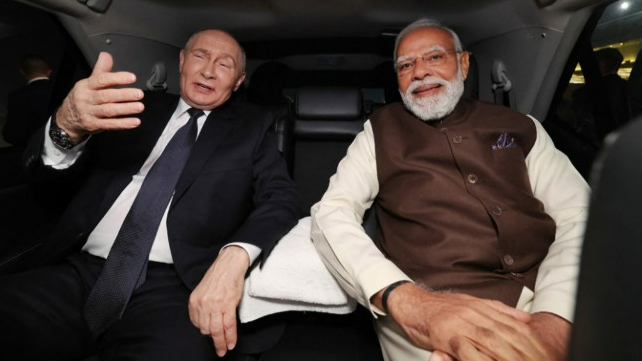
Modi personally welcomed Putin at the airport, breaking traditional protocol that usually delegates such duties to senior ministers. What followed was not a stiff handshake but a bear hug, laughter, and an atmosphere charged with camaraderie. The two leaders sat together in the same car and later shared a private dinner—without ministers, aides, or noise. This was more than symbolism; it was a direct rebuttal to Western warnings of “strategic consequences” if Modi and Putin met.
Putin’s Pre-Arrival Moves
Before arriving, Putin had already announced three major steps that rattled the West:
• RT India Launch – Russia’s state-backed news channel will now broadcast directly to Indian audiences, countering Western media narratives that portray Russia as isolated or losing the war.
• Rupee-Ruble Trade – India and Russia will bypass the U.S. dollar in bilateral trade, strengthening financial independence and reducing reliance on Western-controlled systems.
• Energy Cooperation Beyond Oil – The partnership will expand into natural gas, nuclear energy, and renewables, signalling long-term strategic alignment.
These moves were described as a complete checkmate, undermining the West’s ability to control narratives and economic levers.
The Eight Critical Agreements
Beyond symbolism, the visit produced eight critical agreements that significantly deepen India-Russia ties, each carrying strategic weight for both nations. The launch of RT India marks a bold step in the information war, giving Russia a direct platform to counter Western narratives and allowing Indian audiences to hear perspectives often filtered out by Western media. The rupee-ruble trade mechanism is equally consequential, as it reduces dependence on the dollar and signals India’s intent to carve out financial autonomy in a multipolar world.
Expanding energy cooperation beyond crude oil into gas, nuclear, and renewables ensures long-term energy security for India while providing Russia with a stable market. This move directly challenges Western sanctions. In the sphere of defence collaboration, joint production and technology transfer strengthen India’s military self-reliance and keep its arsenal diversified, preventing overdependence on Western suppliers.
The infrastructure projects, particularly the International North-South Transport Corridor (INSTC), are a game-changer: by bypassing Europe and NATO-controlled routes, India can cut shipping time by nearly 40% and costs by over 30%, creating a direct Eurasian trade superhighway. In space research, Russia’s support for India’s Gaganyaan mission is invaluable, especially given delays from NASA; Roscosmos brings unmatched expertise as the first nation to send a human into space, reinforcing India’s ambitions in manned spaceflight.
The agreements on education and culture highlight the soft-power dimension, fostering student exchanges and cultural partnerships that build long-term goodwill between societies. Finally, pharmaceutical and healthcare cooperation taps into India’s role as a global pharma hub while leveraging Russia’s resources, ensuring affordable medicines and joint research that benefits both populations. Taken together, these eight agreements are not short-term deals but pillars of a strategic partnership that spans media, finance, energy, defence, infrastructure, science, culture, and healthcare—laying the foundation for decades of cooperation and signalling India’s determination to act on its own terms.
The Golden Highlight: Connectivity Corridor
The most transformative of these agreements is the North-South Transport Corridor, linking India through Iran, Afghanistan, and Central Asia to Russia—bypassing Europe, NATO, and the Middle East. This corridor is expected to reduce shipping time by 40% (from 30 days to about 15) and cut costs by over 30%. In effect, it creates a direct “superhighway” for Indian trade, outside Western control.
Fertilizer Security
Another strategic move was India’s decision to establish its own fertilizer plant in Russia, leveraging Russia’s cheap gas to produce fertilizers at lower cost. This ensures India’s agricultural security even if sanctions are imposed again. Since the plant is Indian-owned, exports to India cannot be blocked, making it a masterstroke in long-term planning.
Space Cooperation
Russia’s space agency Roscosmos stepped in to support India’s Gaganyaan mission, pledging to provide training and technology for India’s first manned space flight. With NASA delaying cooperation, Russia’s involvement is crucial. This is symbolic too—Russia was the first nation to send a human into space, and its technology remains unmatched.
Challenging Western Hypocrisy
Putin’s message was blunt: if the United States can buy uranium from Russia, why should India be stopped from buying oil? Modi reinforced this by stating that India will buy whatever is cheapest to keep the country running—whether from Russia or elsewhere. If Russia offers cheaper energy, India will take it. This was a direct strike against Western double standards, exposing the inconsistency of sanctions and selective morality.
Global Reactions
Western capitals reacted with unease. European leaders called the India-Russia alignment “unacceptable” and accused Modi of betraying democracy. Yet the same Western voices continue to buy Russian uranium while criticising India for buying Russian oil. The contradiction was glaring.
Putin’s visit to India was not an ordinary diplomatic event. It was a statement of defiance against Western pressure and a reaffirmation of India’s independent foreign policy. Modi’s warm embrace, the private dinner, and the signing of critical agreements sent a clear message: India will choose its partners based on national interest, not Western dictates.
The North-South Corridor, the fertiliser plant, and space cooperation ensure that these agreements are not short-term; they will shape India-Russia relations for decades. Russia gains a lifeline, India secures energy and agricultural stability, and the West receives a reality check.
This visit proved one thing: the era of Western dominance is fading. Countries like India and Russia cannot be isolated. The hug between Modi and Putin was more than a gesture. It was a symbol of sovereignty, friendship, and a new multipolar world order.
Breaking Protocol, Breaking Narratives
Modi personally welcomed Putin at the airport, breaking traditional protocol that usually delegates such duties to senior ministers. What followed was not a stiff handshake but a bear hug, laughter, and an atmosphere charged with camaraderie. The two leaders sat together in the same car and later shared a private dinner—without ministers, aides, or noise. This was more than symbolism; it was a direct rebuttal to Western warnings of “strategic consequences” if Modi and Putin met.
Putin’s Pre-Arrival Moves
Before arriving, Putin had already announced three major steps that rattled the West:
• RT India Launch – Russia’s state-backed news channel will now broadcast directly to Indian audiences, countering Western media narratives that portray Russia as isolated or losing the war.
• Rupee-Ruble Trade – India and Russia will bypass the U.S. dollar in bilateral trade, strengthening financial independence and reducing reliance on Western-controlled systems.
• Energy Cooperation Beyond Oil – The partnership will expand into natural gas, nuclear energy, and renewables, signalling long-term strategic alignment.
These moves were described as a complete checkmate, undermining the West’s ability to control narratives and economic levers.
The Eight Critical Agreements
Beyond symbolism, the visit produced eight critical agreements that significantly deepen India-Russia ties, each carrying strategic weight for both nations. The launch of RT India marks a bold step in the information war, giving Russia a direct platform to counter Western narratives and allowing Indian audiences to hear perspectives often filtered out by Western media. The rupee-ruble trade mechanism is equally consequential, as it reduces dependence on the dollar and signals India’s intent to carve out financial autonomy in a multipolar world.
Expanding energy cooperation beyond crude oil into gas, nuclear, and renewables ensures long-term energy security for India while providing Russia with a stable market. This move directly challenges Western sanctions. In the sphere of defence collaboration, joint production and technology transfer strengthen India’s military self-reliance and keep its arsenal diversified, preventing overdependence on Western suppliers.
The infrastructure projects, particularly the International North-South Transport Corridor (INSTC), are a game-changer: by bypassing Europe and NATO-controlled routes, India can cut shipping time by nearly 40% and costs by over 30%, creating a direct Eurasian trade superhighway. In space research, Russia’s support for India’s Gaganyaan mission is invaluable, especially given delays from NASA; Roscosmos brings unmatched expertise as the first nation to send a human into space, reinforcing India’s ambitions in manned spaceflight.
The agreements on education and culture highlight the soft-power dimension, fostering student exchanges and cultural partnerships that build long-term goodwill between societies. Finally, pharmaceutical and healthcare cooperation taps into India’s role as a global pharma hub while leveraging Russia’s resources, ensuring affordable medicines and joint research that benefits both populations. Taken together, these eight agreements are not short-term deals but pillars of a strategic partnership that spans media, finance, energy, defence, infrastructure, science, culture, and healthcare—laying the foundation for decades of cooperation and signalling India’s determination to act on its own terms.
The Golden Highlight: Connectivity Corridor
The most transformative of these agreements is the North-South Transport Corridor, linking India through Iran, Afghanistan, and Central Asia to Russia—bypassing Europe, NATO, and the Middle East. This corridor is expected to reduce shipping time by 40% (from 30 days to about 15) and cut costs by over 30%. In effect, it creates a direct “superhighway” for Indian trade, outside Western control.
Fertilizer Security
Another strategic move was India’s decision to establish its own fertilizer plant in Russia, leveraging Russia’s cheap gas to produce fertilizers at lower cost. This ensures India’s agricultural security even if sanctions are imposed again. Since the plant is Indian-owned, exports to India cannot be blocked, making it a masterstroke in long-term planning.
Space Cooperation
Russia’s space agency Roscosmos stepped in to support India’s Gaganyaan mission, pledging to provide training and technology for India’s first manned space flight. With NASA delaying cooperation, Russia’s involvement is crucial. This is symbolic too—Russia was the first nation to send a human into space, and its technology remains unmatched.
Challenging Western Hypocrisy
Putin’s message was blunt: if the United States can buy uranium from Russia, why should India be stopped from buying oil? Modi reinforced this by stating that India will buy whatever is cheapest to keep the country running—whether from Russia or elsewhere. If Russia offers cheaper energy, India will take it. This was a direct strike against Western double standards, exposing the inconsistency of sanctions and selective morality.
Global Reactions
Western capitals reacted with unease. European leaders called the India-Russia alignment “unacceptable” and accused Modi of betraying democracy. Yet the same Western voices continue to buy Russian uranium while criticising India for buying Russian oil. The contradiction was glaring.
In the United States, President Trump expressed admiration for both Modi and Putin but simultaneously criticised the deals between them. Putin, playing mind games, praised Trump’s actions as “in good faith,” leaving him cornered, unable to oppose or endorse the partnership fully.
Putin’s visit to India was not an ordinary diplomatic event. It was a statement of defiance against Western pressure and a reaffirmation of India’s independent foreign policy. Modi’s warm embrace, the private dinner, and the signing of critical agreements sent a clear message: India will choose its partners based on national interest, not Western dictates.
The North-South Corridor, the fertiliser plant, and space cooperation ensure that these agreements are not short-term; they will shape India-Russia relations for decades. Russia gains a lifeline, India secures energy and agricultural stability, and the West receives a reality check.
This visit proved one thing: the era of Western dominance is fading. Countries like India and Russia cannot be isolated. The hug between Modi and Putin was more than a gesture. It was a symbol of sovereignty, friendship, and a new multipolar world order.

Chintan Mokashi
Chintan Mokashi is a Pune-based writer, journalist, and researcher. He specialises in cinema, world history, human rights, and corporate fraud examination. With a PG Diploma in Journalism from KC College, Mumbai and extensive experience in writing across diverse subjects, his work blends analytical depth with cultural insight. Fluent in Marathi and English, Chintan’s writing bridges historical context with contemporary relevance, offering readers a thoughtful and engaging perspective.