Op Sindoor: More than 'vengeance', More about 'virtue'
Acknowledging the sacrifice of Pahalgam’s dead and the pain of Hindu widows, that was symbolized in the codename “Sindoor” for married Hindu women, the strikes were as much about moral justice as military necessity.
NewsBharati 07-May-2025 14:39:02 PM
Total Views |


Fifteen days after terrorists gunned down 26 innocent people in Jammu & Kashmir’s Pahalgam on April 22, India launched Operation Sindoor in the early hours of May 7, 2025. In a calibrated retaliation, all three services – Army, Navy and Air Force – struck nine pre-identified terror camps across Pakistan and Pakistan-occupied Kashmir. This was no random shelling, it was a surgical strike aimed at the root causes of militancy. Official statements stressed that the targets were not civilian or military sites, but the broader terror infrastructure: training bases, recruitment hubs, launch pads and logistics nodes used by groups like JeM, LeT and Hizbul Mujahideen.
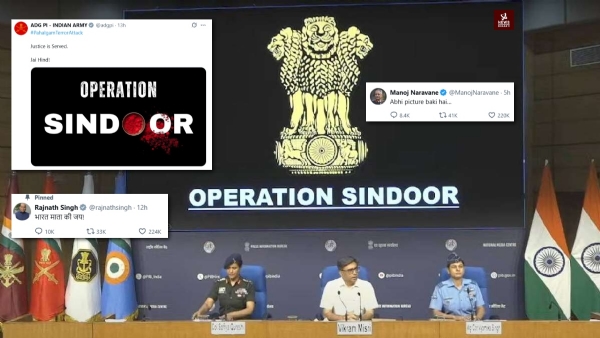
As India’s government put it, this “precision” operation was meant to deliver justice to Pahalgam’s victims and to dismantle the ecosystem of terror from which attacks are born. Two weeks after the massacre, the night sky above Pakistan lit up with explosions. At exactly 1:44 AM on May 7, fighters and helicopters struck simultaneously at four camps in Pakistan and five in PoK. Guided by credible intelligence, India’s forces unleashed a swift 25‑minute assault. One senior military spokesperson noted that “nine terror camps were targeted and successfully destroyed. The selection of targets was based on credible intelligence inputs and the role of these facilities in perpetrating terror activities.” The sites were chosen carefully to minimize any civilian harm. All of this was overseen from New Delhi by Prime Minister Modi, fulfilling his vow to “identify, track and punish every terrorist and their backers” – from Mumbai 2008 to the Pulwama suicide attack and now Pahalgam.
All-Forces Assault on Terror Camps
Operation Sindoor marked an unprecedented tri-service operation against terror infrastructure. It is the first time since 1971 that India’s Army, Navy and Air Force struck together against Pakistan-linked targets. Cruise missiles and loitering drones or “kamikaze” drones from naval ships, fighter jets and helicopters all pounded the nine designated camps. The coordinated attack began just after midnight and wrapped up within half an hour.
In a press briefing, Indian officers reported no losses on our side and that every aircraft returned safely. The operation was executed with precision: Wing Commander Vyomika Singh explained that the strikes lasted about 25 minutes starting at 1:05 AM, and were designed “to avoid damage to civilian infrastructure and loss of any civilian life.”All three forces were fully engaged, yet no Pakistani military bases were hit – only known terror facilities. In short, India’s forces “rained hell” on the militants’ dens while carefully avoiding escalation.
Veteran commanders and analysts stress that the use of the Army, Navy and Air Force together sent a strong deterrent signal. Former Chief of the Air Staff of India RKS Bhadauria (Retd) noted that destroying terror camps by sea- and air-launch missiles is a major leap in India’s strike capability. He further pointed out that the operation demonstrates India’s resolve: carrying out an all‑services strike “following the overall directions of PM Modi to inflict unimaginable punishment to the terrorists and their backers…”. Acknowledging the sacrifice of Pahalgam’s dead and the pain of Hindu widows, that was symbolized in the codename “Sindoor” for married Hindu women, the strikes were as much about moral justice as military necessity.
Striking at the Terrorist Infrastructure
Crucially, Operation Sindoor was not aimed at human targets alone, but at the entire infrastructure that breeds militancy. Indian officials repeatedly called the hits “precision strikes on terrorist camps” and “focused, non-escalatory actions” against terror bases
A Defence Ministry press release put it plainly: “Under the operation, the forces hit terrorist infrastructure in Pakistan and PoK from where terrorist attacks against India have been planned and directed.” In other words, the army pounded the ecosystem of terror– the camps and support nodes that recruit, train, arm and dispatch militants, rather than striking civilian areas or military assets. Perhaps that's the difference between the Indian Army and the Pakistani Jihadi Army.
The target list speaks for itself. India’s strikes included infamous training hubs and logistical hubs used by Pakistan-backed terror groups:
Training and Indoctrination Centers: For example, Bahawalpur’s Markaz Subhan Allah, Jaish-e-Mohammed’s primary training and indoctrination hub, was hit. This complex, established in 2015, was Masood Azhar’s de facto HQ and the site where JeM trained Pulwama attack bombers and held jihadist sermons.
- Nearby Muridke’s Markaz Taiba– Lashkar-e-Taiba’s main camp where many 26/11 attackers were trained – also took a direct hit.
- Bombing these camps severs the supply of new recruits and commanders.
Infiltration Launch Pads: Camps near the Line of Control were targeted. In PoK, Muzaffarabad and Kotli – notorious hubs for terror infiltration into J&K – were struck. These sites have long housed staging grounds, smuggling routes and tunnels used to send fighters and weapons across the border.
- Destroying them disrupts the pipeline of insurgents
Weapons Caches and Supply Bases: Smaller satellite camps in places like Chak Amru, Gulpur, Barnala, Bhimber and Sialkot were also hit. Intelligence briefings described these as “feeder nodes”of the terror network – storing arms, ammunition and providing safe houses.
For instance, the LeT camp at Barnala (Bhimber, PoK) used to funnel fighters and weapons into Poonch and Rajouri, and the Hizbul camp at Shawai Nallah (Muzaffarabad), are all part of the supply chain.
Leadership Outposts: Even camps that housed senior militants were struck. The “Abbas” camp in Kotli, led by a top JeM commander, and the Maskar Raheel Shahid camp (Kotli) run by senior Hizbul figure Irfan Tanda, were on the list.
Intelligence suggests these sites sheltered dozens of militants at a time and were key training centers for sniping and guerrilla warfare.
Each of the nine selected sites was “based on actionable intelligence linking them to terrorist activity,” Indian officials said. Indeed, the evidence shows they all housed guns, ammo dumps and hardline preachers. The Bahawalpur compound even contained JeM’s arms depots and venues where Azhar gave jihadist speeches and indoctrinated youth. By leveling such sites, the strikes blew holes in the terror ecosystem – hitting the roots of militancy.
India’s government emphasized that it deliberately avoided any Pakistani military or civilian targets. As one MoD spokesperson stated, “No Pakistani military facilities have been targeted. India has demonstrated considerable restraint in the selection of targets and the method of execution.”
The embassy in Washington likewise tweeted that Indian actions were “focused and precise… No Pakistani civilian, economic or military targets have been hit. Only known terror camps were targeted.”
In short, India struck only those outposts which planning committees and logistic bases for the Pahalgam attack (and others) depended on.
Precision, Proportion, and Restraint
Officials repeatedly stressed that India’s response was measured and non-escalatory. Foreign Secretary Vikram Misri told reporters that “these actions were measured, non-escalatory, proportionate and responsible. They focused on dismantling the terrorist infrastructure and disabling terrorists likely to be sent across to India.”
The army’s press release echoed this, saying the operation “underscores India’s resolve to hold perpetrators accountable while avoiding unnecessary provocation... no Pakistani military facilities were hit, reflecting India’s calibrated and non-escalatory approach.”
This narrative was backed up by data: officials noted that all nine targets belonged onlyto the terrorist network, and none were regular army bases. Former Air Chief Marshal (RKS Bhadauria) explicitly confirmed: “Nine terrorist sites and their infrastructure have been targeted… All targets chosen belong to the terrorist network and none were military targets. The cowardly and barbaric attack by terrorists at Pahalgam has been avenged…”
In international media, Indian spokesmen pointed out that this was a counter-terrorism strike, not an act of war. The Permanent Representative said New Delhi had provided allies with evidence of Pakistan’s backing for Pahalgam terrorists, and aimed to shatter only terror links.
America’s top diplomat called for restraint on both sides, while adding that every country has a right to self-defence, sentiment New Delhi referred to. Domestically, the strikes were hailed as carefully calibrated.
Impact: Justice and Deterrence
By hitting the recruitment and training hubs of JeM, LeT and others, India sent a powerful message: terror cells will be targeted at their source, not just at lone attackers. Security experts note that after the 2008 Mumbai massacre, India has pursued a two-pronged strategy — hunt down terrorists (Policing) and dismantle their overseas sanctuaries (Military). Operation Sindoor clearly belongs to the latter category. It shows that behind every suicide bomber and gunman is an infrastructure – camps, madrassas, handlers and arms dumps – which can be destroyed. Analysts believe this will make future attacks more difficult.
For the grieving families of Pahalgam, the strikes brought a measure of relief. Relatives have spoken of feeling vindicated that “widows have been avenged”
In Indian cities, pictures of the army breaking fast on May 6 went viral, symbolizing determination. Even as Pakistan vowed retaliation, India’s leaders stressed that the strikes were surgical, not vindictive. Defence Minister Rajnath Singh reiterated to commanders: “The aim is to deter terror, not to escalate into a full-blown war.”Every statement referred to “punishing the terrorists and their backers,” not Pakistan per se.
Symbolically, the operation carries weight. It underlines that India will treat its terror problem as a transnational one, cutting at the roots. By destroying indoctrination camps and exile HQs of banned outfits, India hopes to choke off the future pipeline.
For example, eliminating JeM’s Bahawalpur HQ (and the preacher-levelers within) strikes at the command structure that spawns suicide cells. Similarly, obliterating LeT’s Muridke camp disrupts the radical training that once produced Ajmal Kasab.
The Indian government puts forth that only by dismantling such infrastructure can the cycle of violence be broken. In the words of an army general, this strike was meant as a “tough lesson”to Pakistan’s deep state: Pakistan must not allow militant breeding grounds to exist with impunity.
Looking Ahead
India’s post-strike statements made clear that it considers this just one stage in a continuing campaign against cross-border terror. The Foreign Secretary warned that India will “deter and prevent more such cross-border attacks.”
Security forces are now analyzing the damage, confirming which leaders were killed or escaped, and watching if others like Balakot (2019) will be struck in future if needed. The strategic significance is unambiguous: by forcing terrorists to rebuild their networks underground or exodus, India is likely buying time for stability and counter-radicalization at home.
In sum, Operation Sindoor sent a clear signal: India will go after the nursery of terror, not just the militants on the street. By focusing on training camps, logistics bases, recruiters and commanders, India aimed to fracture the ecosystem that spawns terrorism
As the Defence Ministry put it, the strike was “focused and non-escalatory, aimed specifically at locations used for planning and directing attacks against India.” In the coming months, observers will see whether this approach of surgical strikes on infrastructure, combined with on-ground policing, succeeds in deterring future attacks. But for now, the message is clear: the roots of terror have been hit hard, and India’s resolve stands unshaken.
Each emphasized the deliberate targeting of terrorist camps, not civilian or military targets, consistent with India’s policy of punitive action against terror infrastructure.
--

Himali Nalawade
Himali Nalawade is associated with News Bharati as an Author since a considerable period. She is mostly linked with researched articles from the areas of Defence, Defence Infrastructure and Culture-Religion. Along with her Masters in Mass Communication and Journalism after her graduation in History, she has also studied Diploma in Underwater Archaeology and Diploma in Indology.