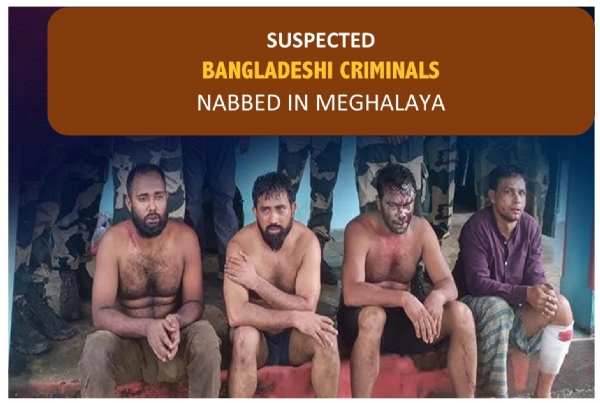
The repeated brutal attacks by Bangladeshi nationals targeting residents or shops, even by knocking on doors, should serve as a loud wake-up call for every citizen in Meghalaya. The recent early-morning assault in South West Khasi Hills, where Bangladeshi armed men, including a Bangladeshi policeman wielding pistols and lethal weapons, was extremely horrifying. In the last two years, we have regularly witnessed mindless assaults by Bangladeshi nationals on naïve and simple-hearted natives of Meghalaya along the border areas. Given the strained ties between India and Bangladesh at present, such incidents must push the state government to remain on high alert.
Yes, we cannot afford to overlook the lessons from Assam, the immediate neighbour of Meghalaya. What happens in Assam can spill over into Meghalaya as well. For decades, illegal immigrants—I am not referring to permanent citizens—in Assam have inflicted deep wounds upon indigenous communities, affecting the entire demographic make-up of the state. Backed by special support networks, even by certain political parties, they have seized forest land, encroached on many temple trust properties, and illegally occupied ecologically sensitive areas like Kaziranga National Park, the agricultural belts of Nagaon and Morigaon, riverine zones in Dhubri, wetlands in Barpeta and Goalpara, Gorukhuti and Dholpur-Gorukhuti village, and Dibru-Saikhowa. Petty land-grabbing by particular communities is alarmingly numerous.
What’s even more shocking is that, during the aftermath of the Pahalgam massacre—where Hindu civilians were targeted by Lashkar-e-Taiba and its proxy, Resistance Front—many in Assam openly chanted “Pakistan Zindabad,” glorifying the killers and justifying the carnage. Such displays of radical sympathy are sadly not new.
Who can guarantee that Meghalaya will be spared the same fate if we continue to remain complacent? Our vulnerability is crystal clear—we share a long, porous 443 km border with Bangladesh, where extremist ideologies have been given dangerous breathing space in the last one year, soon after the ousting of Sheikh Hasina and the takeover by Muhammad Yunus. How can we ignore the fact that in the past two years, the Assam government has arrested numerous illegal immigrants linked to Bangladeshi terror outfits like ABT/AQIS, with some suspected of having ties to the dreaded ISIS? What is most harrowing is that most of these Bangladeshi criminals are given protection, support, and shelter by citizens of specific communities within the state.
If West Bengal and several districts of Assam have already become so “unsafe” for their natives due to unchecked infiltration and years of political apathy, then every citizen in Meghalaya must remain vigilant. I believe that each individual has a role to play in safeguarding Meghalaya, whether tribal or non-tribal, as long as they are permanent citizens who genuinely love this abode of clouds. Border areas in Garo Hills and Jaintia Hills are especially sensitive and precarious.
Yes, those who attackeda few people near the border today could strike with greater brutality tomorrow, targeting hundreds more. Please don’t ever say that the tiger hasn’t attacked you yet while living near a dense forest; when it does, it will be too late to escape. Meghalaya must wake up before the threat at our doorstep becomes an irreversible reality, as intruders from across the border knock on your door with lethal weapons. The madness of extremism knows no boundaries; the madness of fundamentalism knows no humanity.