Rahul Gandhi, will you answer for the ‘Vote Theft’ Congress committed against Dr. Ambedkar?
Total Views |


In the winter of 1952, as India went through its first general elections, the Congress party emerged with a solid majority in the Lok Sabha. Yet, in Bombay North, a closely watched battle ended with Dr. B.R. Ambedkar — the chief architect of the Constitution — suffering a narrow defeat, a result that left even him stunned. In the aftermath, Ambedkar charged that an orchestrated disinformation drive had deliberately confused thousands of voters, leading them to spoil their ballots and thereby deny him a legitimate victory.
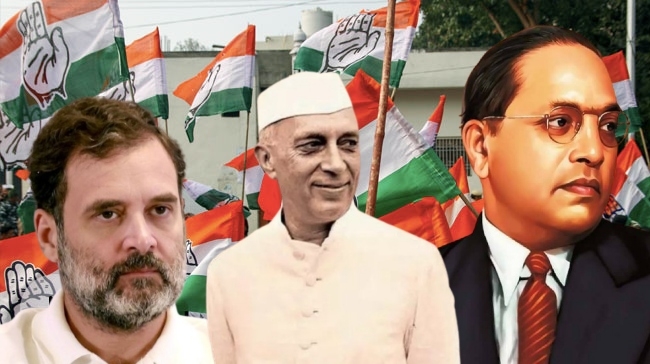
In 2025, Rahul Gandhi, a senior Congress "leader", now levels charges against the Election Commission, accusing it of “vote theft” and manipulation of voter rolls in several states. The irony is striking: the same party that today claims the Constitution is being undermined once deployed similar tactics against its framer, Ambedkar, during India’s very first electoral test.
What happened in the 1952 Bombay North election?
The 1951–52 general election was the first major test of India’s universal adult franchise, with more than 173 million citizens casting their votes for the first time. In this backdrop, Dr. Ambedkar’s political stance in 1952 carried exceptional significance. By then, he had been forced to resign from Nehru’s Cabinet following sharp differences over priorities, with the Hindu Code Bill acting as the triggering point. Nehru had aimed to diminish Ambedkar's influence by sidelining him from mainstream politics. Against this backdrop, it became a strategic priority for the Congress and Nehru to defeat Ambedkar. So, for Congress strategists, the goal was not just to win, but to keep Ambedkar out of the first Lok Sabha entirely.
Bombay City North was a double-member constituency, electing one representative from the General category and one from the Scheduled Castes. Each voter was required to cast two separate ballots: one for each category. Crucially, both votes had to be for different candidates; giving both to the same person would invalidate the ballots entirely. While this rule aimed to prevent an over-concentration of votes on a single candidate, it also created a loophole: voters unfamiliar with the procedure could be easily misled into wasting their second vote.
For the reserved seat, Jawaharlal Nehru fielded Narayan Sadoba Kajrolkar — a Dalit social worker and former personal assistant to Ambedkar, who had even campaigned against him in the past. This was no coincidence but a calculated political move. While Congress positioned Kajrolkar as a direct counter to Ambedkar, two other contenders — Communist leader S.A. Dange and Independent Dr. G.V. Deshmukh — ran parallel propaganda campaigns that further eroded Ambedkar’s prospects.
The results?
Dr. Ambedkar had to face defeat in these elections. Congress's Narayan Sadoba Kajrolkar defeated him by about 14,561 votes. In the aftermath, he openly questioned the outcome. Speaking to PTI, Ambedkar did not mince words: “I cannot find worse propaganda than this. How the overwhelming support of the people of Bombay could have been so badly denied is, in fact, a matter for investigation by the Election Commissioner.” Convinced that the results were tainted, he, along with Socialist leader Ashok Mehta, filed a petition before the Chief Election Commissioner seeking to annul the Bombay City North Parliamentary election and have it declared illegal.
One of the most significant aspects that was highlighted from his petition was the sheer, almost unbelievable, figure of invalidated ballots uncovered during the counting process. According to the returning officer’s declaration, a detail prominently cited in Dr. Ambedkar’s election petition, an astonishing 74,333 votes were rendered void. The overwhelming majority of these were so-called “double votes,” in which both ballot papers had been placed in the same candidate’s box. This was no mere coincidence but a direct outcome of the deceptive and misleading propaganda that had been spread among the electorate.
Distribution of Invalidated 'Double Votes' Among Candidates (as per Election Petition)
Opponents urged voters to “drop both ballot papers” into a single candidate’s box as a show of loyalty — an unlawful act that automatically invalidated the ballots. This tactic, promoted through party pamphlets and the weekly Yugantar, formed a deliberate vote-cutting strategy aimed at crippling rival candidates’ chances. This clearly fits what Section 100 calls “corrupt practices extensively prevailing.”
Ambedkar maintained that this was not a handful of isolated misinformation incidents, but a well-organised propaganda campaign that influenced tens of thousands of voters. Its sheer scale and targeted execution met both the numerical and substantive criteria required to annul an election. But what action did the Central Election Commission take on this complaint? The available records do not include the Election Tribunal’s final judgment, and it was never made public. Ambedkar’s defeat meant so much to Nehru that he mentioned it in a letter written to Lady Edwina Mountbatten which was published in the ‘Selected Works of Jawaharlal Nehru’. Discussing the 1952 general elections in Bombay province, Nehru wrote that the Socialist Party had joined forces with Ambedkar’s party, causing them to lose public repute, and accused Ambedkar of combining with Hindu communalism.
However, the Congress party's efforts to undermine Dr. Ambedkar's political career did not end in 1952. They ensured his defeat again in the 1954 by-election for the Bhandara constituency (a predominantly Dalit population constituency in the Vidarbha region), where Dr. Ambedkar once again attempted to enter the Lok Sabha.
In a clear demonstration of its resolve to keep him out of Parliament, the Congress fielded a candidate against him - Manaharbhai Patel, an influential figure in Bhandara. During this campaign, he was extremely critical of Nehru’s leadership but Congress ensured his defeat by just 8500 votes. He was not only defeated by the Congress candidate, but this time he slipped to third position. By the time of the second general election in 1957, Ambedkar had passed away in 1956. In this way, the fact remains that Ambedkar could not enter the Lok Sabha, which was created by the constitution he had drafted.
The most serious charge levelled against the Congress leadership came from Savita Ambedkar, Dr. Ambedkar's wife. In her autobiography, she alleged a direct nexus between Prime Minister Jawaharlal Nehru, the powerful Bombay Congress leader S.K. Patil, and Communist leader S.A. Dange. According to her account, this trio had decided to employ "whatever strategy suited the occasion" with the express purpose of ensuring Dr. Ambedkar's defeat.
For decades after he passed away in 1956, his legacy was systematically downplayed by successive Congress governments. While Kajrolkar was awarded Padma Bhushan in 1970, Dr Ambedkar was denied the Bharat Ratna, India's highest civilian honour, which was finally conferred upon him posthumously in 1990 by the non-Congress V.P. Singh government.
Therefore, the loud claims of “vote theft” made by Congress today become hollow when set against its own history. In 1952, during India’s very first general elections, Dr. Ambedkar was allegedly robbed of tens of thousands of votes through a coordinated propaganda campaign that benefited Congress and kept him out of the Lok Sabha and they had repeatedly tried to discredit him in the past. Today, when the Congress finds itself in a deep political crisis and is desperately looking for a comeback through targeting democratic institutions such ECI, it has bowed down in reverence to him. Moreover, the same party that gained from this wrongdoing of “vote theft” never took responsibility for it and now tries to appear virtuous by accusing others of damaging democracy. If Congress truly wishes to speak of electoral integrity, it must first reckon with how it helped deny Ambedkar his rightful mandate at the dawn of India’s democracy.
In 2025, Rahul Gandhi, a senior Congress "leader", now levels charges against the Election Commission, accusing it of “vote theft” and manipulation of voter rolls in several states. The irony is striking: the same party that today claims the Constitution is being undermined once deployed similar tactics against its framer, Ambedkar, during India’s very first electoral test.
What happened in the 1952 Bombay North election?
The 1951–52 general election was the first major test of India’s universal adult franchise, with more than 173 million citizens casting their votes for the first time. In this backdrop, Dr. Ambedkar’s political stance in 1952 carried exceptional significance. By then, he had been forced to resign from Nehru’s Cabinet following sharp differences over priorities, with the Hindu Code Bill acting as the triggering point. Nehru had aimed to diminish Ambedkar's influence by sidelining him from mainstream politics. Against this backdrop, it became a strategic priority for the Congress and Nehru to defeat Ambedkar. So, for Congress strategists, the goal was not just to win, but to keep Ambedkar out of the first Lok Sabha entirely.
Bombay City North was a double-member constituency, electing one representative from the General category and one from the Scheduled Castes. Each voter was required to cast two separate ballots: one for each category. Crucially, both votes had to be for different candidates; giving both to the same person would invalidate the ballots entirely. While this rule aimed to prevent an over-concentration of votes on a single candidate, it also created a loophole: voters unfamiliar with the procedure could be easily misled into wasting their second vote.
For the reserved seat, Jawaharlal Nehru fielded Narayan Sadoba Kajrolkar — a Dalit social worker and former personal assistant to Ambedkar, who had even campaigned against him in the past. This was no coincidence but a calculated political move. While Congress positioned Kajrolkar as a direct counter to Ambedkar, two other contenders — Communist leader S.A. Dange and Independent Dr. G.V. Deshmukh — ran parallel propaganda campaigns that further eroded Ambedkar’s prospects.
The results?
Dr. Ambedkar had to face defeat in these elections. Congress's Narayan Sadoba Kajrolkar defeated him by about 14,561 votes. In the aftermath, he openly questioned the outcome. Speaking to PTI, Ambedkar did not mince words: “I cannot find worse propaganda than this. How the overwhelming support of the people of Bombay could have been so badly denied is, in fact, a matter for investigation by the Election Commissioner.” Convinced that the results were tainted, he, along with Socialist leader Ashok Mehta, filed a petition before the Chief Election Commissioner seeking to annul the Bombay City North Parliamentary election and have it declared illegal.
One of the most significant aspects that was highlighted from his petition was the sheer, almost unbelievable, figure of invalidated ballots uncovered during the counting process. According to the returning officer’s declaration, a detail prominently cited in Dr. Ambedkar’s election petition, an astonishing 74,333 votes were rendered void. The overwhelming majority of these were so-called “double votes,” in which both ballot papers had been placed in the same candidate’s box. This was no mere coincidence but a direct outcome of the deceptive and misleading propaganda that had been spread among the electorate.
Distribution of Invalidated 'Double Votes' Among Candidates (as per Election Petition)
| Candidate Name | Party | Invalid 'Double Votes' |
| S. A. Dange | Communist Party Of India (CPI) | 39,165 |
| Vithal Balkrishna Gandhi | Indian National Congress (INC) | 10,881 |
| Narayan Sadoba Kajrolkar | Indian National Congress (INC) | 6,892 |
| Gopal Vinayak Deshmukh | Independent (IND) | 6,634 |
| Ashok Ranjitram Mehta | Socialist Party (SP) | 5,597 |
| Bhimrao Ramji Ambedkar | All India Scheduled Caste Federation (SCF) | 2,921 |
| Others | - | 3,143 |
| Total | 74,333 |
Opponents urged voters to “drop both ballot papers” into a single candidate’s box as a show of loyalty — an unlawful act that automatically invalidated the ballots. This tactic, promoted through party pamphlets and the weekly Yugantar, formed a deliberate vote-cutting strategy aimed at crippling rival candidates’ chances. This clearly fits what Section 100 calls “corrupt practices extensively prevailing.”
Ambedkar maintained that this was not a handful of isolated misinformation incidents, but a well-organised propaganda campaign that influenced tens of thousands of voters. Its sheer scale and targeted execution met both the numerical and substantive criteria required to annul an election. But what action did the Central Election Commission take on this complaint? The available records do not include the Election Tribunal’s final judgment, and it was never made public. Ambedkar’s defeat meant so much to Nehru that he mentioned it in a letter written to Lady Edwina Mountbatten which was published in the ‘Selected Works of Jawaharlal Nehru’. Discussing the 1952 general elections in Bombay province, Nehru wrote that the Socialist Party had joined forces with Ambedkar’s party, causing them to lose public repute, and accused Ambedkar of combining with Hindu communalism.

However, the Congress party's efforts to undermine Dr. Ambedkar's political career did not end in 1952. They ensured his defeat again in the 1954 by-election for the Bhandara constituency (a predominantly Dalit population constituency in the Vidarbha region), where Dr. Ambedkar once again attempted to enter the Lok Sabha.
In a clear demonstration of its resolve to keep him out of Parliament, the Congress fielded a candidate against him - Manaharbhai Patel, an influential figure in Bhandara. During this campaign, he was extremely critical of Nehru’s leadership but Congress ensured his defeat by just 8500 votes. He was not only defeated by the Congress candidate, but this time he slipped to third position. By the time of the second general election in 1957, Ambedkar had passed away in 1956. In this way, the fact remains that Ambedkar could not enter the Lok Sabha, which was created by the constitution he had drafted.
The most serious charge levelled against the Congress leadership came from Savita Ambedkar, Dr. Ambedkar's wife. In her autobiography, she alleged a direct nexus between Prime Minister Jawaharlal Nehru, the powerful Bombay Congress leader S.K. Patil, and Communist leader S.A. Dange. According to her account, this trio had decided to employ "whatever strategy suited the occasion" with the express purpose of ensuring Dr. Ambedkar's defeat.
For decades after he passed away in 1956, his legacy was systematically downplayed by successive Congress governments. While Kajrolkar was awarded Padma Bhushan in 1970, Dr Ambedkar was denied the Bharat Ratna, India's highest civilian honour, which was finally conferred upon him posthumously in 1990 by the non-Congress V.P. Singh government.
Therefore, the loud claims of “vote theft” made by Congress today become hollow when set against its own history. In 1952, during India’s very first general elections, Dr. Ambedkar was allegedly robbed of tens of thousands of votes through a coordinated propaganda campaign that benefited Congress and kept him out of the Lok Sabha and they had repeatedly tried to discredit him in the past. Today, when the Congress finds itself in a deep political crisis and is desperately looking for a comeback through targeting democratic institutions such ECI, it has bowed down in reverence to him. Moreover, the same party that gained from this wrongdoing of “vote theft” never took responsibility for it and now tries to appear virtuous by accusing others of damaging democracy. If Congress truly wishes to speak of electoral integrity, it must first reckon with how it helped deny Ambedkar his rightful mandate at the dawn of India’s democracy.