Chanakya - The Golden Age
NewsBharati 30-Aug-2025 09:52:38 AM
Total Views |


“The unexamined life is not worth living” – Socrates
I, as an Indian, feel that in the global arena, Chanakya should have got a better deal in terms of visibility and fame in comparison to other great thinkers of his time. His contemporaries, like Aristotle and Socrates, were from Greece in Europe. The reasons could be several; perhaps one major reason could be that since the Greek philosophers influenced the West, which later developed much faster than the rest of the world, they got more traction. My idea, therefore, of giving you a world view of human thinking in this article was to bring to the fore contributions of Chanakya, who was in no way less than any other philosopher ever born. In fact, he was first amongst his equals and needs to be on the world map.
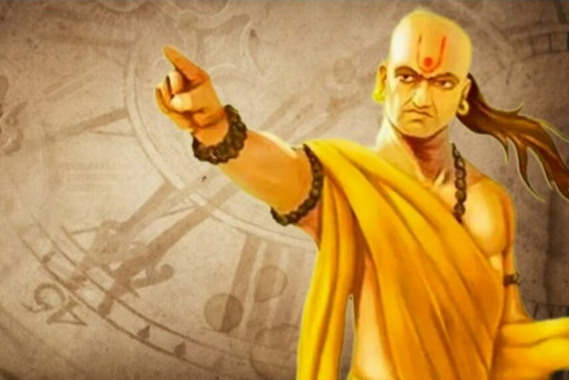
The second reason could be that after independence, we forgot our own heritage, and therefore works of our great thinkers got lost, though their contributions were immense. It was a self-inflicted injury.
Chanakya lived in the times when our society was beginning to get organised. New rules of the game were being created, and a lot of great minds were working towards this effort across the world. Greece, China and India were the lands where a lot was being churned out in terms of the evolution of our society. The focus was on Religion, philosophy, war and the survival of a nation. The idea of a nation-state and nation first emerged during those days, and Chanakya was a pioneer of such ideas.
Science verse’s philosophy
If one takes a macro view of human development, the scientific discoveries occurred in the last couple of centuries while philosophy encompassing strategic thought, political science, propaganda, rhetoric, governance, economics and even deceit, developed much earlier and started evolving more than three thousand years ago.
Therefore, thousands of years ago, day-to-day complex human problems were addressed effectively and judiciously by thinkers of those days, which appealed to the whole world. It influenced every soul on earth regardless of race or color of skin colour. They professed universal truths. This was philosophy in action. This was the golden thought age.
If today we live in the age of a knowledge society, two to three thousand years ago, our civilisation was dominated by wisdom. Knowledge continuously changes, but wisdom is preserved and is eternal. The difference between knowledge and wisdom is - ‘If reading a story is knowledge, then understanding the moral of the story is wisdom’. Knowledge can be tens of Gigabytes, yet wisdom- the essence of it all is only a few words.
Religion and Warfare
There were a few glorious centuries of golden thought, which perhaps created monumental wisdom for humanity to move on. Religious philosophies also developed centuries ago and were appealing to the masses because they were derived from spiritual thought. Isn’t it amazing that the teachings of Gurus or the founders of faiths went far and wide when there were no means of communication! There were no postal services, no telephone, no radio broadcast, no internet, no TV. I would attribute the spreading of the religious philosophies despite all the handicaps of distance and time to the power and purity of those thoughts and the power of their wisdom. They were therefore unstoppable.
Concurrently art of warfare was also being developed. Religion and war though always on cross roads were the fundamental requirement of mankind. Good and bad always coexisted.
Two of the great stalwarts in the field of religious philosophy and strategy of warfare were born 2500 years ago- Gautam Buddha at Lumbini, now in Nepal in 566 BC whereas Sun Tzu in 544 BC at Qi in China.
While Buddha talked of equanimous mind, meditation, and nirvana in India around 500 BC; Sun Tzu laid the foundation of strategic thought in warfare and statecraft around the same time in China.
“We are shaped by our thoughts; we become what we think. When the mind is pure, joy follows like a shadow that never leaves.” - Buddha
Philosophy and life
Around two centuries apart from Buddha and Sunzu, Aristotle, the greatest of the Greek philosophers of his time talked of Anger management and human behaviour around 300 BC in Greece.
Greek philosophers in this period were moving towards the radical idea that there were no gods who controlled the destiny of life on earth from some detached mountaintop. Rather, it was man himself who, thanks to his own brainpower and hard work, could decipher the laws of the universe to become master of all nature.
Philosophy, from the Greek word phílosophía, means ‘the love of wisdom’. It is the study of knowledge, or "thinking about thinking"; the breadth of it cannot be captured in a few words. Some of the definitions and interpretations of the word philosophy are so very fascinating, and therefor,e I would like to put some of them here.
Philosophical questions (unlike those of the sciences) are usually foundational and abstract in nature. Philosophy is practised and studied primarily through reflection and does not tend to rely on experiment. It sometimes may carry the sense of unproductive or frivolous musings, but over the centuries it has produced some of the most important original thought, and its contribution to politics, sociology, science and literature has been inestimable.
Sample two of the most illustrative definitions of philosophy is given below.
American Heritage Dictionary defines philosophy as ‘Investigation of the nature, causes, or principles of reality, knowledge, or values, based on logical reasoning rather than empirical methods.’
Penguin English Dictionary says ‘The study of the ultimate nature of existence, reality, knowledge and goodness, as discoverable by human reasoning.'
Greek philosophy covers an absolutely enormous number of topics including: political philosophy, ethics, metaphysics, ontology (the study of the nature of being, or existence, life), logic, biology, rhetoric, and aesthetics (branch of philosophy dealing with art, beauty, and taste). Greek philosophy is known for its undeniable influence on Western thought. Although there were several Greek philosophers over these centuries, Socrates, Plato, and Aristotle – known as the big three of Greek philosophy- are the only three worth focusing on during this period. Let us study them in a little detail now.
“Europe was created by history. America was created by philosophy” - Margaret Thatcher
Socrates the first of the great philosophers of Greece came up with his original ideas and lived through 470 - 399 BC. His most favorite student and yet another great thinker, Plato lived through 437- 347 BC. Aristotle (384-322 BC), a student of Plato, who later started his own philosophical school when he was 50 years old. Although he lived only ten more years, Aristotle produced nearly a thousand books and pamphlets, only a few of which have survived. He was known as a peripatetic philosopher, because he lectured to his student while taking a walk. Aristotle was supreme among such thinkers. The scope of his works was truly immense, covering everything from speculations on the nature of the human soul to the physics of the universe; from city politics and personal ethics to the history of plants and animals; and from public speaking and poetry to music, memory and logic.
“The ideas of all these men resound across the world today with ever more deafening echo than even during their times. Man - therefore it appears- had started thinking critically, collectively, and simultaneously across the continents more than 2500 years ago.”
Chanakya also belonged to this philosophically productive golden era. He walked the earth from 371-283 BC.
Several books have been written about this enigmatic persona who lived in this enlightened era. This man had the wisdom; wisdom which was used by his king Chandragupta Maurya to run and expand his empire effectively. Chanakya was the teacher of Chandragupta Maurya and almost at the same time in history, Aristotle had Alexander the great as his student.
Alexander the Great, the Greek emperor invaded the Indian sub-continent. His offensive upon the land's patchwork of small Hindu empires proved to be highly successful due to the disunity of the petty rulers. It was Chanakya who, feeling deeply distressed at heart, searched for and discovered a qualified leader in the person of Chandragupta Maurya who was highly intelligent, courageous and physically powerful. He was a commoner and was not a blue blooded by birth. Chanakya cared little that by birth he should not have dared to approach the throne. A man of acute discretion, Chanakya desired only that a ruler of extraordinary capabilities be raised to the exalted post of King of Magadha so that the offensive launched by the Greeks could be repressed.
Kings of neighboring states rallied under Chandragupta's leadership and the last of the Greeks headed by Alexander's former general Seleucus were defeated.
Chanakya’s teachings and ideas are principles, so basic, that they will be relevant at all times. One could draw a parallel with Sun Tzu who wrote a classic ‘The art of war’ more than 2500 years ago about warfare strategy and discussed broad eternal truths concerning military and political philosophy. Again, these were so basic and fundamental in nature that the entire strategy with the most modern weapons is still being based on his teachings and observations. Though the horse mounted cavalry has been replaced with fast-moving, all-powerful tanks and spears with machine guns and rocket launchers his teachings are still remain relevant because he deals with fundamentals of human behavior, broad strategic thinking and politics of war which would never change. Generals in War rooms and corporate board rooms are still using his teachings gainfully. Diplomacy, strategy and international relations still remain very fundamental in nature; only the lexicon may change according to the context and with time.
These are like Newton’s three laws of motion which would never ever change, which form the fundamental base of Classical and Quantum Mechanics.
Chankya was one person who also demonstrated great appetite towards various areas of human excellence, which probably no one of his period possessed- especially in the Asian continent.
Chanakya’s work can be interpreted in different ways - philosophically, politically, technically and most importantly, practically.
“I must study politics and war that my sons may have liberty to study mathematics and philosophy” - John Adams
With inputs from Virender Kapoor’s book
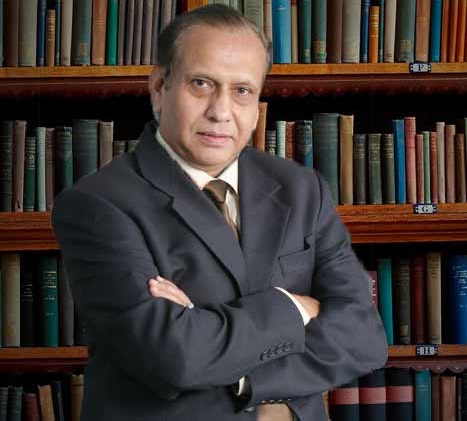
Virender Kapoor
A thinker, educationist and an inspirational guru. Kapoor is an Indian who wears many hats. An educationist of repute, he was the Director of a prestigious management Institute under the Symbiosis umbrella. He has emerged as a leading think tank in human behavior, motivation and success. As a celebrity author, his name appears with the likes of Thomas Friedman and Dale Carnegie. He has authored more than 30 books as of now which are on Amazon worldwide and several of his books are in the pipeline.