#BanKhalidKaShivaji: History Hails Shelar Mama’s Courage, But Today’s Shelar Bows to Propaganda?
Total Views |


#BanKhalidKaShivaji: Chhatrapati Shivaji Maharaj has been an eternal inspiration of Hindavi Swarajya, and his legacy is one of the most glorious chapters in Indian history. However, today, a section of left-leaning historians, filmmakers, and certain media personalities are deliberately attempting to distort this very legacy. This comes in the wake of a new film titled "Khalid ka Shivaji," which has sparked controversy for promoting a distorted version of history. These are not just baseless lies...they are a deliberate desecration of Maharaj’s image, a calculated assault on his legacy.
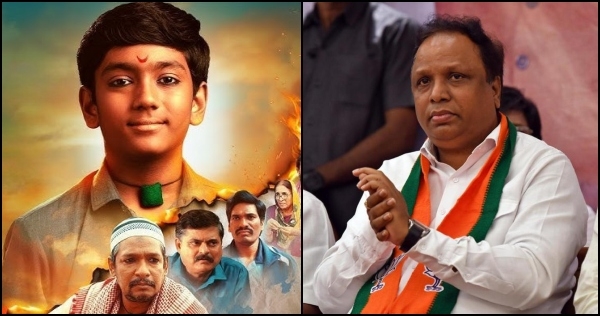
What makes this even more alarming is that this film, directed by Raj More and marking his debut in Marathi cinema, has been officially selected for the prestigious ‘Marché du Film’ section at the Cannes Film Festival this year. The film has not only stirred debate in the cinematic space but also ignited a political and social firestorm in Maharashtra.
Amid this public outrage over this offensive depiction, Ashish Shelar, the state’s Minister of Culture, has taken it upon himself to send this film to Cannes. Though he attempted to dodge the controversy, citing a recommendation from the Maharashtra Film, Theatre, and Cultural Development Corporation, the final selection and clearance still come under the ministry. Therefore, the responsibility lies squarely with Ashish Shelar for enabling an official platform for a film that mocks Marathi sentiments, distorts historical truths, and paints Shivaji Maharaj in a communal light. By sending this film to an international platform like Cannes, Ashish Shelar has effectively given government endorsement to this propaganda, damaging the cultural credibility of the BJP and betraying the trust of countless Shiv devotees. In such a context, serious questions must be raised about his political accountability.
The film, though superficially presented as a story of a Muslim boy in search of Shivaji Maharaj, is actually a veiled and aggressive propaganda piece. It attempts to force-fit Shivaji Maharaj into a religious framework, a dangerous pattern we’ve been witnessing from leftist and liberal circles in recent years. These groups have consistently tried to portray Shivaji as a "secular" or even "Islam-friendly" king, contrary to well-documented history. Similarly, they have continued to do the same. Several of the claims made in the film are not just factually wrong but deeply offensive:
Claim 1: 35% of Shivaji Maharaj’s army were Muslim soldiers.
Fact: This is entirely false. While it is true that there were Muslims in Shivaji’s army, authentic historical records and chronicles clearly prove that their number was nowhere near 35%. This figure has been deliberately exaggerated to push a specific narrative.
Claim 2: Shivaji Maharaj built a mosque at Raigad.
Fact: This is yet another baseless and blatantly false claim. There was never any mosque at Raigad. In fact, it was Shivaji Maharaj himself who chose Raigad as the capital of Hindavi Swarajya and initiated the construction of magnificent temples there.
An inscription carved on the walls of the Jagadishwar Temple reads:
Some historians have even claimed that the temple's spire resembles an Islamic dome, suggesting that Shivaji was influenced by Sufi saints and Islamic scholars. This theory is not only baseless but deliberately misleading. It is an attempt to plant communal undertones where there were none.
Claim 3: Shivaji Maharaj had 11 Muslim bodyguards.
Fact: This claim is historically incorrect. Shivaji Maharaj’s bodyguards were selected from among his most loyal Maratha Mavalas, renowned for their dedication, bravery, and agility. Their names are well-documented. In Sabhasad Bakhar and Shivabharat, which are reliable historical sources, we find the names of the ten bodyguards who accompanied Shivaji during his encounter with Afzal Khan. Among them, only Siddi Ibrahim was a Muslim — the rest were fiercely loyal Maratha warriors.
These warriors were not chosen based on caste or religion, but on their unwavering loyalty and skill. The recent claim that there were ‘11 Muslim bodyguards’ has been circulated in some public discussions and on social media, but there is no credible historical basis for this. Eminent historians have rightly pointed out that such claims distort the organisational and military structure of Shivaji’s administration.
All these false claims seem to have a singular objective: to reduce Shivaji Maharaj to merely a patron of Muslims and downplay his Hindutva-rooted legacy. While it’s true that Maharaj respected all faiths, his mission to establish Swarajya was deeply rooted in the protection of Hindu Dharma and culture — this is a historical fact that cannot be erased. His encounter with Afzal Khan is testimony to his strategic acumen and commitment to Hindu resistance. Protecting Hindu temples and dharma formed the very core of his governance.
With this, there has been a systematic attempt has been made to present Chhatrapati Shivaji Maharaj as a ‘secular’ ruler. Individuals aligned with certain ideological leanings, including leftist historians, Islamists, and so-called progressives, have been selectively distorting historical facts to reframe Shivaji’s legacy according to their convenience. The controversial film ‘Khalid ka Shivaji’ appears to be a direct product of this distorted mindset.
Hindu organisations seek ban
Hindu organisations have raised strong objections to this film. Legal notices have been served to the filmmakers, and there are demands before the Censor Board to ban the film. The Hindu Mahasangh has even warned that if the film is released, they will organise public lectures on the slaying of Afzal Khan, an unmistakable sign of the seriousness and depth of public outrage.
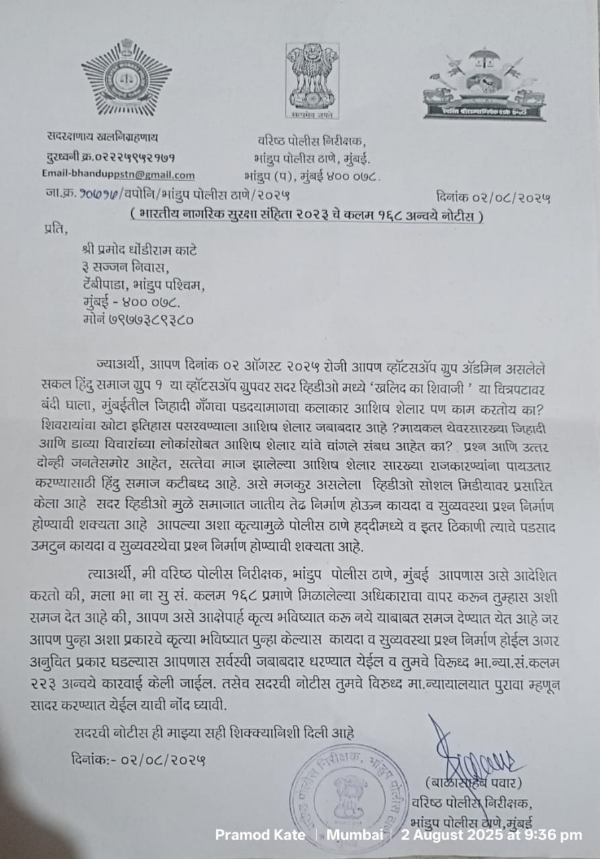
Yet, unfortunately, the Bhandup Police Station has issued notices to Hindutva activists, not to the film's creators, but to those who expressed outrage on social media against this historically inaccurate and provocative movie. Instead of addressing the real threat of divisive content, law enforcement is targeting those defending national and cultural integrity.
It should be noted that such films have the full capabilities of tearing the social fabric and creating communal tensions. It is therefore imperative that both the government and the Censor Board take serious note of this issue. Chhatrapati Shivaji Maharaj is not just a hero of Maharashtra, but a divine symbol of Indian pride. Any film made in his name must remain true to historical facts. This is the minimum expectation of every true Indian.
Source: Vayuveg
What makes this even more alarming is that this film, directed by Raj More and marking his debut in Marathi cinema, has been officially selected for the prestigious ‘Marché du Film’ section at the Cannes Film Festival this year. The film has not only stirred debate in the cinematic space but also ignited a political and social firestorm in Maharashtra.
Amid this public outrage over this offensive depiction, Ashish Shelar, the state’s Minister of Culture, has taken it upon himself to send this film to Cannes. Though he attempted to dodge the controversy, citing a recommendation from the Maharashtra Film, Theatre, and Cultural Development Corporation, the final selection and clearance still come under the ministry. Therefore, the responsibility lies squarely with Ashish Shelar for enabling an official platform for a film that mocks Marathi sentiments, distorts historical truths, and paints Shivaji Maharaj in a communal light. By sending this film to an international platform like Cannes, Ashish Shelar has effectively given government endorsement to this propaganda, damaging the cultural credibility of the BJP and betraying the trust of countless Shiv devotees. In such a context, serious questions must be raised about his political accountability.
What are the fake claims made in the film?
The film, though superficially presented as a story of a Muslim boy in search of Shivaji Maharaj, is actually a veiled and aggressive propaganda piece. It attempts to force-fit Shivaji Maharaj into a religious framework, a dangerous pattern we’ve been witnessing from leftist and liberal circles in recent years. These groups have consistently tried to portray Shivaji as a "secular" or even "Islam-friendly" king, contrary to well-documented history. Similarly, they have continued to do the same. Several of the claims made in the film are not just factually wrong but deeply offensive:
Claim 1: 35% of Shivaji Maharaj’s army were Muslim soldiers.
Fact: This is entirely false. While it is true that there were Muslims in Shivaji’s army, authentic historical records and chronicles clearly prove that their number was nowhere near 35%. This figure has been deliberately exaggerated to push a specific narrative.
Claim 2: Shivaji Maharaj built a mosque at Raigad.
Fact: This is yet another baseless and blatantly false claim. There was never any mosque at Raigad. In fact, it was Shivaji Maharaj himself who chose Raigad as the capital of Hindavi Swarajya and initiated the construction of magnificent temples there.
An inscription carved on the walls of the Jagadishwar Temple reads:
"By the order of Shiv Chhatrapati, I (Hiroji Indulkar) constructed wells, reservoirs, ponds, gardens, marketplaces, pillars, stables for horses, and temples."
Notably, there is not a single mention of any mosque in this detailed record.Some historians have even claimed that the temple's spire resembles an Islamic dome, suggesting that Shivaji was influenced by Sufi saints and Islamic scholars. This theory is not only baseless but deliberately misleading. It is an attempt to plant communal undertones where there were none.
Claim 3: Shivaji Maharaj had 11 Muslim bodyguards.
Fact: This claim is historically incorrect. Shivaji Maharaj’s bodyguards were selected from among his most loyal Maratha Mavalas, renowned for their dedication, bravery, and agility. Their names are well-documented. In Sabhasad Bakhar and Shivabharat, which are reliable historical sources, we find the names of the ten bodyguards who accompanied Shivaji during his encounter with Afzal Khan. Among them, only Siddi Ibrahim was a Muslim — the rest were fiercely loyal Maratha warriors.
These warriors were not chosen based on caste or religion, but on their unwavering loyalty and skill. The recent claim that there were ‘11 Muslim bodyguards’ has been circulated in some public discussions and on social media, but there is no credible historical basis for this. Eminent historians have rightly pointed out that such claims distort the organisational and military structure of Shivaji’s administration.
All these false claims seem to have a singular objective: to reduce Shivaji Maharaj to merely a patron of Muslims and downplay his Hindutva-rooted legacy. While it’s true that Maharaj respected all faiths, his mission to establish Swarajya was deeply rooted in the protection of Hindu Dharma and culture — this is a historical fact that cannot be erased. His encounter with Afzal Khan is testimony to his strategic acumen and commitment to Hindu resistance. Protecting Hindu temples and dharma formed the very core of his governance.
With this, there has been a systematic attempt has been made to present Chhatrapati Shivaji Maharaj as a ‘secular’ ruler. Individuals aligned with certain ideological leanings, including leftist historians, Islamists, and so-called progressives, have been selectively distorting historical facts to reframe Shivaji’s legacy according to their convenience. The controversial film ‘Khalid ka Shivaji’ appears to be a direct product of this distorted mindset.
Hindu organisations seek ban
Hindu organisations have raised strong objections to this film. Legal notices have been served to the filmmakers, and there are demands before the Censor Board to ban the film. The Hindu Mahasangh has even warned that if the film is released, they will organise public lectures on the slaying of Afzal Khan, an unmistakable sign of the seriousness and depth of public outrage.
Yet, unfortunately, the Bhandup Police Station has issued notices to Hindutva activists, not to the film's creators, but to those who expressed outrage on social media against this historically inaccurate and provocative movie. Instead of addressing the real threat of divisive content, law enforcement is targeting those defending national and cultural integrity.
It should be noted that such films have the full capabilities of tearing the social fabric and creating communal tensions. It is therefore imperative that both the government and the Censor Board take serious note of this issue. Chhatrapati Shivaji Maharaj is not just a hero of Maharashtra, but a divine symbol of Indian pride. Any film made in his name must remain true to historical facts. This is the minimum expectation of every true Indian.
Source: Vayuveg