Kerala HC order exposes deep rot in Sabarimala’s management
Total Views |


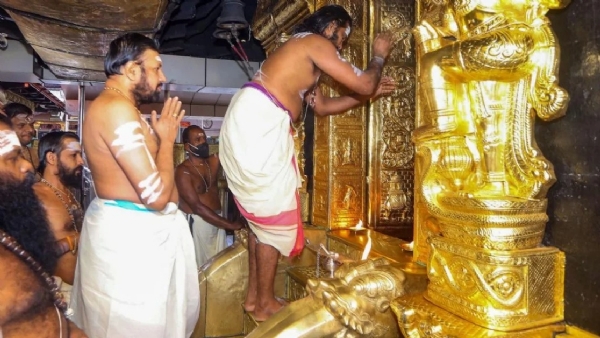
The Sabarimala temple in Kerala has once again entered the spotlight due to a fresh controversy. This time, the issue is not related to women’s entry. The communist government, which has often shown disregard for Hindu sentiments, is now facing sharp criticism for tampering with temple traditions. The Kerala High Court has pulled up the Travancore Devaswom Board (TDB) for removing the gold-plated copper sheets from the statues of the temple’s Dwarapalas (guardian deities).
The Incident
The Kerala High Court recently ordered the immediate seizure of all records related to the gold-plating work at Sabarimala. The issue arose after the removal of gold-coated copper plates from the guardian idols without informing the temple commissioner. The court observed that many questions remained unanswered regarding the process, and therefore, complete documentation—from the very first day of gold plating—must be produced. Two days prior, the court had directed the TDB to bring back the removed plates from Chennai to Sabarimala, emphasizing that such actions without approval were wholly unacceptable.
Travancore Devaswom Board Under Communist Grip
The Travancore Devaswom Board, which manages 1,248 temples in Kerala under the Travancore-Cochin Hindu Religious Institutions Act of 1950, is currently headed by senior CPM leader K. Ananthagopan. Critics argue that under communist control, temple lands have been encroached upon, donations misused, and now even the temple ornaments have been carried away to Chennai—likely to disappear forever.
Communists, who preach Marx’s philosophy that “religion is the opium of the masses,” never hesitate to seek blessings from maulvis and priests during elections. They proudly call Kerala “God’s Own Country” while simultaneously mocking Hindu traditions. Why is scrutiny demanded only of temple donations while the vast funds collected by thousands of churches and mosques go unquestioned?
The Economics of Temples
Sabarimala alone receives over ₹500 crore in annual donations, much of which funds charitable activities. During the COVID-19 pandemic, Hindu temples and gurudwaras contributed thousands of crores in relief, whereas mosques and churches hardly offered any aid. This highlights the difference between Dharma and mere “religion.” From ancient times, temples have stood at the heart of India’s socio-economic life. In crises—be it wars, floods, or storms—temples have supported victims irrespective of their faith.
Communists as a Shadow on Indian Culture
Globally, communists failed in their attempts to destroy faith. In India, where religion and culture are inseparable, they continue targeting Hindu institutions while appeasing Muslim and Christian vote banks. The CPM government in Kerala even prohibited the display of saffron flags on temples to avoid offending Muslims, a ban overturned only after Hindus went to court.
Meanwhile, “love jihad” cases in Kerala exposed how Hindu and Christian girls were lured, converted, and trafficked abroad to serve Islamist networks—a reality highlighted by the film The Kerala Story. The state government, embarrassed, dismissed it as propaganda.
While meddling in temple affairs, the communist regime has ignored Kerala’s economic stagnation. Despite high literacy, industries are absent, and the economy survives mainly on tourism and remittances from Gulf countries. Instead of interfering in Hindu culture, communists would do well to focus on reviving their sinking political fortunes.
The Incident
The Kerala High Court recently ordered the immediate seizure of all records related to the gold-plating work at Sabarimala. The issue arose after the removal of gold-coated copper plates from the guardian idols without informing the temple commissioner. The court observed that many questions remained unanswered regarding the process, and therefore, complete documentation—from the very first day of gold plating—must be produced. Two days prior, the court had directed the TDB to bring back the removed plates from Chennai to Sabarimala, emphasizing that such actions without approval were wholly unacceptable.
Travancore Devaswom Board Under Communist Grip
The Travancore Devaswom Board, which manages 1,248 temples in Kerala under the Travancore-Cochin Hindu Religious Institutions Act of 1950, is currently headed by senior CPM leader K. Ananthagopan. Critics argue that under communist control, temple lands have been encroached upon, donations misused, and now even the temple ornaments have been carried away to Chennai—likely to disappear forever.
Communists, who preach Marx’s philosophy that “religion is the opium of the masses,” never hesitate to seek blessings from maulvis and priests during elections. They proudly call Kerala “God’s Own Country” while simultaneously mocking Hindu traditions. Why is scrutiny demanded only of temple donations while the vast funds collected by thousands of churches and mosques go unquestioned?
The Economics of Temples
Sabarimala alone receives over ₹500 crore in annual donations, much of which funds charitable activities. During the COVID-19 pandemic, Hindu temples and gurudwaras contributed thousands of crores in relief, whereas mosques and churches hardly offered any aid. This highlights the difference between Dharma and mere “religion.” From ancient times, temples have stood at the heart of India’s socio-economic life. In crises—be it wars, floods, or storms—temples have supported victims irrespective of their faith.
Communists as a Shadow on Indian Culture
Globally, communists failed in their attempts to destroy faith. In India, where religion and culture are inseparable, they continue targeting Hindu institutions while appeasing Muslim and Christian vote banks. The CPM government in Kerala even prohibited the display of saffron flags on temples to avoid offending Muslims, a ban overturned only after Hindus went to court.
Meanwhile, “love jihad” cases in Kerala exposed how Hindu and Christian girls were lured, converted, and trafficked abroad to serve Islamist networks—a reality highlighted by the film The Kerala Story. The state government, embarrassed, dismissed it as propaganda.
While meddling in temple affairs, the communist regime has ignored Kerala’s economic stagnation. Despite high literacy, industries are absent, and the economy survives mainly on tourism and remittances from Gulf countries. Instead of interfering in Hindu culture, communists would do well to focus on reviving their sinking political fortunes.