Intellectual Bankruptcy of the INDIA Bloc
But there is one elementary question the INDIA bloc has conspicuously failed to answer: Why should the Indian voter believe them?
NewsBharati 01-Oct-2026 13:35:59 PM
Total Views |


The latest performance of the INDIA bloc against the Election Commission is not a new political argument. It is an old collection of allegations, old demands and old slogans repackaged as a new “Save Democracy” campaign. The bloc wants the country to believe that democracy is under threat because of the Special Intensive Revision of electoral rolls, because of the Election Commission, because of EVMs and, now, because India does not vote through ballot papers.
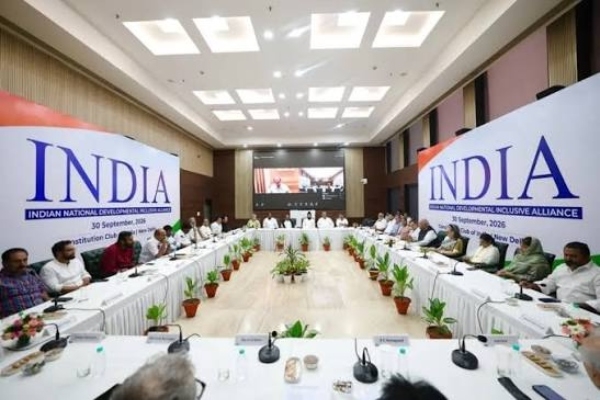
The opposition has made a series of allegations. But where is the new evidence? That is the uncomfortable question.
There is nothing intellectually sophisticated about repeating an allegation until it acquires the appearance of truth. A slogan is not evidence. A press conference is not evidence. A march is not evidence. And certainly, a political party losing an election is not evidence of electoral theft.
History becomes particularly inconvenient here. The 1971 Rae Bareli election of Indira Gandhi was contested by Raj Narain. The Allahabad High Court's June 1975 judgment found electoral malpractice and declared her election void. The case subsequently reached the Supreme Court, which in November 1975 set aside the High Court judgment in the constitutional circumstances of the time.
The point is not to reopen the Indira Gandhi case. The point is to demolish the absurd proposition that paper-ballot elections were somehow beyond manipulation. They were not.
Indian democracy survived because institutions, courts, election officials, political parties and voters repeatedly confronted electoral malpractice and developed safeguards against it. The answer to a vulnerability was reform — not romanticising the past.
Akhilesh Yadav provides another striking illustration of the opposition's changing argument. In November 2024, after the Uttar Pradesh by polls, Yadav alleged that “electronic booth capturing” had helped the BJP win and accused the authorities of electoral cheating. That raises a simple question. If the problem is really booth capturing, why would replacing an EVM with a ballot paper eliminate the human element that makes booth capturing possible?
The machine does not enter a polling station with a political flag. People do.
If the allegation is that voters were prevented from voting freely, polling stations were manipulated or officials were compromised, then the problem is electoral enforcement and institutional integrity, not the existence of a voting machine.
The opposition cannot have it both ways. It cannot describe elections as vulnerable because of “electronic booth capturing” one day and then present paper ballots as the automatic cure the next.
Mamata Banerjee's politics provides another reason to treat sweeping allegations of electoral fraud with caution. The Nandigram election of 2021 saw serious allegations of electoral irregularities and booth capturing. The Election Commission examined the complaints and rejected the allegations of booth capture after considering reports from its officials.
The lesson is simple and universal - An allegation must be investigated. It must not be converted into a fact merely because a political leader makes it. That principle must apply equally to the BJP, Congress, TMC, Samajwadi Party and every other political formation.
The INDIA bloc's problem is not that it is opposing the Election Commission. Opposition parties have every democratic right to criticise the Commission, demand explanations and challenge decisions in court. Its problem is that it increasingly appears to have reduced a complicated institutional question to a political formula:
EVM = suspicious.
SIR = vote theft.
ECI = compromised.
Election loss = manipulation.
Ballot paper = democracy.
This is not an argument. It is political shorthand masquerading as political philosophy.
The opposition demands the old electoral rolls. But why should an old electoral roll automatically be more legitimate than a revised one? Electoral rolls have to change because people die, migrate, become eligible to vote, change addresses and appear in duplicate records. The opposition demands ballot papers. But where is the evidence that the mere replacement of EVMs with paper will eliminate electoral malpractice? The opposition demands the removal of the CEC. But what specific proven misconduct constitutes the basis for that extraordinary demand? And above all, the opposition alleges “vote chori”. Then show the stolen votes.That is the democratic standard.
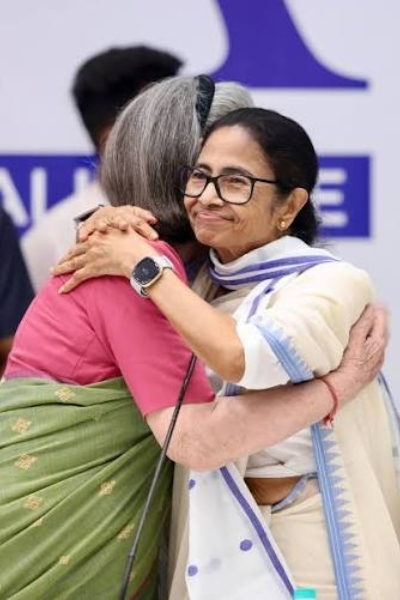
The most disturbing feature of the current campaign is that the INDIA bloc appears to be asking Indians to distrust an electoral system without providing a proportionate evidentiary foundation for that distrust. That is dangerous territory.
Democracy depends not merely on the right to vote but on the willingness of political parties to accept the voter's verdict. When parties win, elections cannot suddenly become sacred. When they lose, elections cannot suddenly become suspect.
India has experienced booth capturing, bogus voting, intimidation and electoral malpractice. It responded by strengthening its electoral machinery. It introduced reforms, improved identification, strengthened procedures and moved towards technologies intended to reduce opportunities for physical manipulation. The Election Commission's own historical account makes that evolution clear.
Now the opposition wants to reverse that journey. Fine. Make the case. But do not insult the intelligence of the Indian voter by pretending that the ballot paper was some lost age of electoral innocence.
Democracy does not become stronger by going backwards. It becomes stronger when allegations are tested against evidence, institutions are held accountable through law, and political parties respect the intelligence of the voter.
The INDIA bloc can march to the Election Commission. It can organise rallies. It can demand explanations. It can oppose SIR. It can demand electoral reforms.
But it cannot demand that the nation simply believe its allegations. If there has been “vote chori”, show us the stolen vote. Until then, the loudest evidence of “vote chori” is not an electoral record—it is a political slogan.
But there is one elementary question the INDIA bloc has conspicuously failed to answer: Why should the Indian voter believe them?
The opposition has made a series of allegations. But where is the new evidence? That is the uncomfortable question.
There is nothing intellectually sophisticated about repeating an allegation until it acquires the appearance of truth. A slogan is not evidence. A press conference is not evidence. A march is not evidence. And certainly, a political party losing an election is not evidence of electoral theft.
History becomes particularly inconvenient here. The 1971 Rae Bareli election of Indira Gandhi was contested by Raj Narain. The Allahabad High Court's June 1975 judgment found electoral malpractice and declared her election void. The case subsequently reached the Supreme Court, which in November 1975 set aside the High Court judgment in the constitutional circumstances of the time.
The point is not to reopen the Indira Gandhi case. The point is to demolish the absurd proposition that paper-ballot elections were somehow beyond manipulation. They were not.
Indian democracy survived because institutions, courts, election officials, political parties and voters repeatedly confronted electoral malpractice and developed safeguards against it. The answer to a vulnerability was reform — not romanticising the past.
Akhilesh Yadav provides another striking illustration of the opposition's changing argument. In November 2024, after the Uttar Pradesh by polls, Yadav alleged that “electronic booth capturing” had helped the BJP win and accused the authorities of electoral cheating. That raises a simple question. If the problem is really booth capturing, why would replacing an EVM with a ballot paper eliminate the human element that makes booth capturing possible?
The machine does not enter a polling station with a political flag. People do.
If the allegation is that voters were prevented from voting freely, polling stations were manipulated or officials were compromised, then the problem is electoral enforcement and institutional integrity, not the existence of a voting machine.
The opposition cannot have it both ways. It cannot describe elections as vulnerable because of “electronic booth capturing” one day and then present paper ballots as the automatic cure the next.
Mamata Banerjee's politics provides another reason to treat sweeping allegations of electoral fraud with caution. The Nandigram election of 2021 saw serious allegations of electoral irregularities and booth capturing. The Election Commission examined the complaints and rejected the allegations of booth capture after considering reports from its officials.
The lesson is simple and universal - An allegation must be investigated. It must not be converted into a fact merely because a political leader makes it. That principle must apply equally to the BJP, Congress, TMC, Samajwadi Party and every other political formation.
The INDIA bloc's problem is not that it is opposing the Election Commission. Opposition parties have every democratic right to criticise the Commission, demand explanations and challenge decisions in court. Its problem is that it increasingly appears to have reduced a complicated institutional question to a political formula:
EVM = suspicious.
SIR = vote theft.
ECI = compromised.
Election loss = manipulation.
Ballot paper = democracy.
This is not an argument. It is political shorthand masquerading as political philosophy.
The opposition demands the old electoral rolls. But why should an old electoral roll automatically be more legitimate than a revised one? Electoral rolls have to change because people die, migrate, become eligible to vote, change addresses and appear in duplicate records. The opposition demands ballot papers. But where is the evidence that the mere replacement of EVMs with paper will eliminate electoral malpractice? The opposition demands the removal of the CEC. But what specific proven misconduct constitutes the basis for that extraordinary demand? And above all, the opposition alleges “vote chori”. Then show the stolen votes.That is the democratic standard.
The INDIA bloc repeatedly invokes the voter. But the voter is not a child who must be instructed whom to trust. The voter is perfectly capable of asking questions. If millions of votes have allegedly been stolen, show the evidence. If electoral rolls have allegedly been manipulated, identify the voters. If the Election Commission has violated the law, identify the statutory provision and demonstrate the violation. If the CEC has committed misconduct warranting removal, establish it. If EVMs are demonstrably unreliable, produce the evidence.
This is not hostility towards the opposition. It is the minimum intellectual standard expected from anyone claiming to defend democracy. The Election Commission should be accountable. Electoral rolls should be accurate. Genuine voters must not be excluded. Complaints must be investigated. Transparency must be maintained. No institution should be above scrutiny. But scrutiny is not the same thing as demolition. And criticism is not evidence.
The most disturbing feature of the current campaign is that the INDIA bloc appears to be asking Indians to distrust an electoral system without providing a proportionate evidentiary foundation for that distrust. That is dangerous territory.
Democracy depends not merely on the right to vote but on the willingness of political parties to accept the voter's verdict. When parties win, elections cannot suddenly become sacred. When they lose, elections cannot suddenly become suspect.
India has experienced booth capturing, bogus voting, intimidation and electoral malpractice. It responded by strengthening its electoral machinery. It introduced reforms, improved identification, strengthened procedures and moved towards technologies intended to reduce opportunities for physical manipulation. The Election Commission's own historical account makes that evolution clear.
Now the opposition wants to reverse that journey. Fine. Make the case. But do not insult the intelligence of the Indian voter by pretending that the ballot paper was some lost age of electoral innocence.
Democracy does not become stronger by going backwards. It becomes stronger when allegations are tested against evidence, institutions are held accountable through law, and political parties respect the intelligence of the voter.
The INDIA bloc can march to the Election Commission. It can organise rallies. It can demand explanations. It can oppose SIR. It can demand electoral reforms.
But it cannot demand that the nation simply believe its allegations. If there has been “vote chori”, show us the stolen vote. Until then, the loudest evidence of “vote chori” is not an electoral record—it is a political slogan.

Editor's Desk
Editor's Desk