Global media skips assault on a Kashmiri because it doesn’t suit their agenda
The coverage by the so-called global media surrounding the incidents involving Kashmiri youth frequently displays a stark contrast between domestic headlines and international reporting.
Total Views |


Sometimes, silence is deafening, and hence revealing. This has held true on several occasions in the case of the so-called global media ranging from BBC, CNN, AFP, Reuters, AP, Al Jazeera, The New York Times, The Washington Post, The Wall Street Journal and so on and so forth. It has happened once again. This time, all these media houses have maintained a stoic silence so far about the assault on a Kashmiri youth allegedly by ‘Rahul Gandhi’s supporters’ at Connaught Place in Delhi.
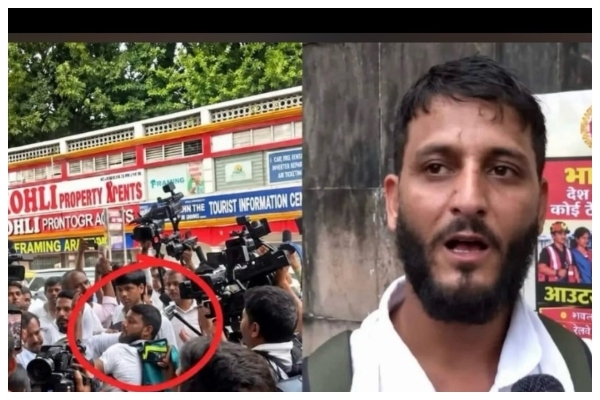
The coverage by the so-called global media surrounding the incidents involving Kashmiri youth frequently displays a stark contrast between domestic headlines and international reporting. In the above-mentioned incident, a Kashmiri youth Fahim Nazir was allegedly assaulted in Delhi by protesters – who were allegedly supporters of Congress leader Rahul Gandhi – for voicing dissenting political views and questioning opposition narratives.
Fahim Nazir ticked all the boxes that the international media deliberately ignored. He raised slogans in support of India, Prime Minister Narendra Modi, Union Home Minister Amit Shah, Delhi Police, and the Indian armed forces. The intention? Given the ongoing protests targeted at the BJP government, he wrote while filing a complaint at the Connaught Police Station, “I will not let the nation turn into Nepal, Bangladesh, or Sri Lanka.” The incident saw widespread coverage across Indian news media. However, international headlines remained silent, as if mourning the death of the potential for peddling their anti-India and anti-BJP agenda in the incident.
International outlets often operate under established editorial tropes when reporting on Kashmir and Kashmiri youth. Global news organizations prioritize stories where Kashmiri youth clash with state authorities or are allegedly subjected to human rights violations. Incidents involving political violence, civil unrest, or youth detentions by Indian security apparatuses fit into the pre-packaged narrative of state repression.
When an incident involves a Kashmiri youth – Fahim Nazir -- being victimized by non-state actors like Rahul Gandhi’s supporters it challenges the simplistic ‘state vs. civilian’ binary of the global media. Consequently, global outlets tend to downplay or ignore such events as ‘localized political brawls’ rather than ‘geopolitically relevant human rights issues’.
When Kashmiri activists or journalists are detained or questioned by law enforcement agencies in connection with enquiry into terror funding cases, the so-called global outlets like BBC, The New York Times, and Al Jazeera routinely feature prominent coverage and dedicated opinion pieces analysing democratic backsliding. In contrast, when a Kashmiri individual faces physical violence from Congress party supporters for expressing pro-India or pro-government or pro-EVM views, international platforms play blind to the event.
“Mohabbat Ki Dukaan” looks different when you support PM Modi.
— Arun Yadav (@BeingArun28) October 8, 2026
A Kashmiri Muslim youth was reportedly beaten by Congress workers.
Is this the politics @RahulGandhi stands for❓ pic.twitter.com/dBfciXC0y7
Protests against government policies regularly receive detailed international feature articles from these biased media houses. Yet, mob hostility or political intolerance within opposition demonstrations against a minority voice is sidelined, revealing a selective lens regarding whose freedom of speech merits global advocacy. In a way, these media houses end up projecting themselves as selective about minority voices. They deliberately choose minority voices that criticize the government or the security apparatus of India, and purposely turn a blind eye towards minority voices that support the government. The disparity highlights how international coverage often relies on selective spotlighting, elevating stories that fit existing geopolitical tropes while ignoring complex political realities on the ground. And, often, they wonder how Narendra Modi or the BJP win election after election.
When military operations or legal disputes over autonomy occur, they fit seamlessly into established wires managed by foreign correspondents. In contrast, street-level assault on a Kashmiri youth is skipped from coverage and made invisible. When people question this act of omission, these media houses shamelessly flaunt the newsworthiness ‘standards’ tape that blinds them to something that doesn’t fit their agenda.