How the Delhi police foiled CJP’s anarchist plot to hold the national capital to ransom?
Total Views |


New Delhi , Oct 10 : Repeat of fierce clashes like the ones witnessed during the Cockroach Janata Party sponsored march at the Parliament House during its protest against NEET paper leak was apprehended as the CJP announced fresh agitation against the election commission. However, Delhi police succeeded in foiling the anarchist bid by taking a number of precautionary measures, making elaborate security arrangements and adopting dynamic strategies that were tough, but not excessively coercive.
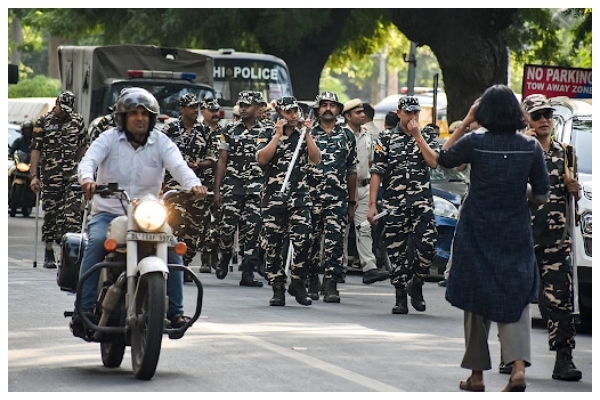
On Saturday, 25,000 to 35,000 strong men and women of Delhi Police and Central Armed Police Forces (CAPF/paramilitary) were deployed for security arrangements and New Delhi district was divided into 20 security management zones to restrict mob assemblies. Measures like suspension of mobile internet services in some parts, using advanced monitoring tools including facial recognition systems (FRS), body cameras, and drone surveillance were also adopted. This helped police identify the hardcore criminals masquerading as protestors and neutralise them in time.
To prevent assembly of a large number of people, a total of 45 metro stations were closed and arrival of trains at New Delhi and Hazrat Nizamuddin railway stations was suspended for a few hours. Besides, there were checks of all vehicles at the security posts on all borders of Delhi. This foiled all attempts to bring people to Delhi from other parts of the country.
As the police swiftly identified and detained thousands of protestors and potential troublemakers before they could cause any nuisance. That the protests had fizzled out had become clear by noon itself. However, the organisers kept on changing their strategies to make a show of strength and the police kept on foiling all their attempts. It looked as if the organisers of the protest and the Delhi police were playing a match of a strategy game!
Wrote this last evening. Delhi Police's actions today validate this. The plan was not to gather for a protest, but to stage a Singhu-like illegal blockade around Jantar Mantar, a few hundred metres away from the Parliament. AAP's master plan has been foiled. Well done. https://t.co/u5p3cc8MNO
— Tushar Gupta (@Tushar15) October 10, 2026
It all started a day before the protests when the Delhi police released an open letter to the protestors through twitter. The Delhi police tweet “The right to protest must be protected, but so must the right of a city to function safely.” struck the right cord with Delhiites who had suffered through the earlier protests of CJP.
On Saturday, 25,000 to 35,000 strong men and women of Delhi Police and Central Armed Police Forces (CAPF/paramilitary) were deployed for security arrangements and New Delhi district was divided into 20 security management zones to restrict mob assemblies. Measures like suspension of mobile internet services in some parts, using advanced monitoring tools including facial recognition systems (FRS), body cameras, and drone surveillance were also adopted. This helped police identify the hardcore criminals masquerading as protestors and neutralise them in time.
To prevent assembly of a large number of people, a total of 45 metro stations were closed and arrival of trains at New Delhi and Hazrat Nizamuddin railway stations was suspended for a few hours. Besides, there were checks of all vehicles at the security posts on all borders of Delhi. This foiled all attempts to bring people to Delhi from other parts of the country.