Political Hype Without Votes: Congress and CJP Face a Credibility Crisis
Muslim voters, like voters from other communities, are not a politically uniform bloc
Total Views |


The latest by-election results have delivered a political message that Congress and the so-called civil society activists associated with the Citizens for Justice and Peace (CJP) would do well to understand. The noise was deafening, the allegations were sweeping, and the claims of democratic breakdown were dramatic. Yet, when the political contest moved from protest platforms to the ballot box, the anticipated electoral impact was conspicuously absent.
Congress and its allies had sought to build a narrative of institutional collapse, electoral manipulation and public discontent. The campaign against the Election Commission, the repeated allegations of “vote chori” and the agitation surrounding the Special Intensive Revision (SIR) of electoral rolls were projected as evidence of a national political crisis. The expectation was that this atmosphere of confrontation would translate into electoral dividends.
The results, however, have raised an uncomfortable question: if the agitation had genuinely captured the public imagination on the scale claimed by its organisers, why did it fail to produce the expected electoral response?The answer lies in the widening gap between political noise and public credibility.
The credibility deficit
Congress appears to have mistaken visibility for legitimacy. A political party can dominate news headlines, organise demonstrations, issue dramatic statements and mobilise its supporters. None of these activities automatically establishes public confidence or guarantees votes.
The repeated invocation of threats to democracy cannot substitute for a credible political programme. Nor can allegations against constitutional institutions become convincing merely because they are repeated at rallies and press conferences. Voters expect evidence, consistency and political responsibility. When allegations are not substantiated to their satisfaction, the campaign risks being perceived as an exercise in political convenience rather than a defence of democratic principles.
Congress's difficulty is particularly acute because its campaign has increasingly revolved around delegitimising institutions whose decisions it finds inconvenient. The Election Commission becomes suspicious when electoral outcomes disappoint the party; the electoral process becomes questionable when the results do not conform to its expectations. Such an approach risks creating the impression that the institution, rather than the party's own political performance, is always to blame.
Democracy cannot function on the principle that an election is legitimate only when a particular political formation wins. The right to question electoral authorities is integral to democracy, but so is evidence, due process and respect for the electorate's verdict.
SIR: Administrative exercise or political conspiracy?
The controversy over the Special Intensive Revision of electoral rolls has exposed another weakness in the opposition's strategy. Electoral rolls must be accurate if elections are to reflect the will of eligible voters. The identification of duplicate, ineligible or otherwise invalid entries is a legitimate administrative objective, provided the exercise follows the law, protects eligible voters and offers effective remedies against wrongful exclusion.
Instead of concentrating exclusively on verifiable errors, procedural safeguards and the protection of every eligible elector, the political campaign has often framed SIR as part of a larger conspiracy against democracy.
That approach carries a risk. If every effort to scrutinise electoral rolls is portrayed as sinister, the public may begin to question the motives of those opposing the exercise. Voters can distinguish between legitimate objections to specific procedures and a blanket political campaign against electoral reform.
The opposition has every right to demand transparency and challenge demonstrable irregularities. But it must establish its case with facts. Generalised allegations cannot replace constituency-level evidence, and political slogans cannot settle questions that require documentary proof.
The by-election results do not, by themselves, establish that voters endorsed every aspect of SIR. They do, however, offer no automatic validation of the opposition's claim that its agitation had generated a decisive electoral wave.
CJP and the limits of activist politics
The experience also raises questions about the credibility and political reach of activist organisations associated with the anti-SIR campaign. Civil society organisations have an important role in scrutinising state action, defending civil liberties and ensuring that public authorities remain accountable. Their legitimacy, however, depends on the strength of their evidence, the consistency of their standards and their ability to distinguish legal scrutiny from partisan mobilisation.
When an organisation becomes closely identified with one political narrative, it risks losing the confidence of people who do not share that narrative. Its interventions may generate headlines and attract support among existing constituencies without persuading the wider electorate.
This is the distinction between political visibility and electoral legitimacy. The capacity to organise a protest does not establish that the protest represents the majority. Nor does the participation of prominent activists or political leaders prove that the public has accepted their interpretation of events.
The same principle applies to Congress. An alliance of political parties and activist groups may amplify a message, but amplification is not the same as credibility. If the message is perceived as exaggerated, selective or politically motivated, the combined campaign may produce less public confidence than its organisers anticipate.
The Assam question: A challenge to simplistic narratives
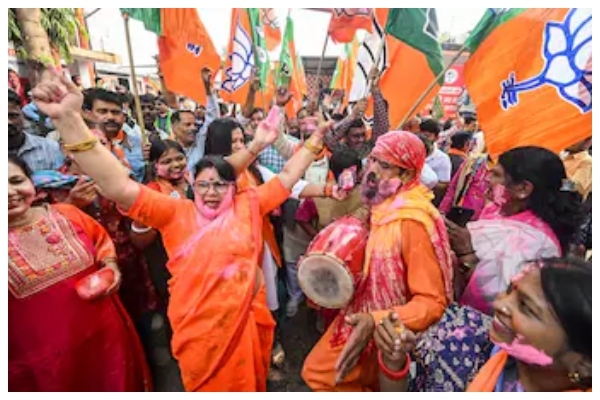
The BJP's victory in a Muslim-majority constituency in Assam, as highlighted in the election results, adds another dimension to the debate. It challenges the tendency to explain electoral behaviour through a single religious or communal category.
Muslim voters, like voters from other communities, are not a politically uniform bloc. Their choices can be influenced by local candidates, development, governance, community interests, party organisation and perceptions of political credibility. A BJP victory in a Muslim-majority seat demonstrates that demographic composition alone does not determine the outcome.
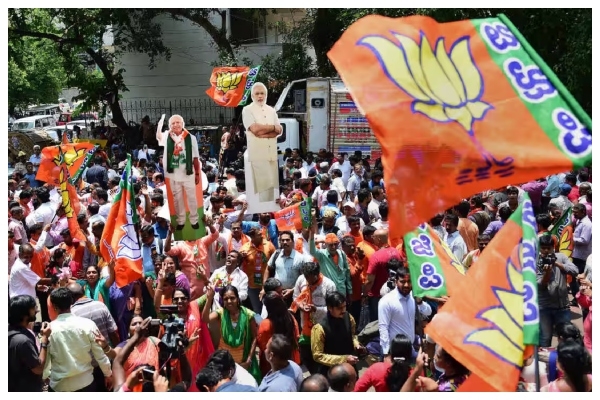
It would be equally simplistic to treat one constituency's result as proof that an entire community has abandoned a particular party or endorsed every policy of another. The more defensible conclusion is that electoral behaviour is more complex than the sweeping assumptions often made by political commentators.
For Congress, the result should prompt serious reflection. If the party assumes that particular communities will automatically support it because of their religious identity or because of a campaign against the BJP, it risks taking voters for granted. Electoral support must be earned, not presumed.
Stability versus manufactured alarm
The broader political question concerns the electorate's appetite for confrontation. Political parties are entitled to oppose the government, expose wrongdoing and mobilise public opinion. But voters also assess whether a campaign offers solutions or merely deepens uncertainty.
When political rhetoric repeatedly depicts the country as being on the verge of institutional collapse, the public may ask whether the claims correspond to its own experience. When every administrative decision is portrayed as an attack on democracy, the argument may lose force through overuse.
Some voters may prioritise political stability, effective governance and the continuity of public institutions over campaigns built around perpetual alarm. Others may support SIR because they believe accurate electoral rolls are essential, while still demanding safeguards against wrongful deletion. These are plausible considerations, not conclusions that can be established from by-election results alone.
Nevertheless, the opposition must recognise that its preferred narrative is not necessarily the narrative accepted by the electorate. Political mobilisation requires more than outrage. It requires trust.
The verdict beyond the ballot
The latest results should serve as a warning to Congress and its allies against confusing agitation with public endorsement. A political campaign may generate an impressive spectacle and still fail to change voting behaviour. The more aggressively a party attacks institutions without persuading voters of the evidence behind its allegations, the greater the danger that it will undermine its own credibility.
Congress must decide whether it wants to function as a responsible opposition that challenges specific decisions through evidence and democratic procedures, or as a party that treats every political setback as proof of institutional conspiracy. CJP and other activist organisations face a similar test: their credibility depends on the consistency and substance of their interventions, not merely on the intensity of their campaigns.
The by-election results do not settle every controversy surrounding electoral rolls or constitutional institutions. They do, however, underline a basic democratic truth: no political party or activist organisation has a monopoly on the public's understanding of democracy.