Who Are You Mr Musk?
The controversy concerns Starlink, Musk’s satellite-internet venture, and the regulatory approvals required for commercial operations in India.
NewsBharati 10-Oct-2026 12:44:46 PM
Total Views |


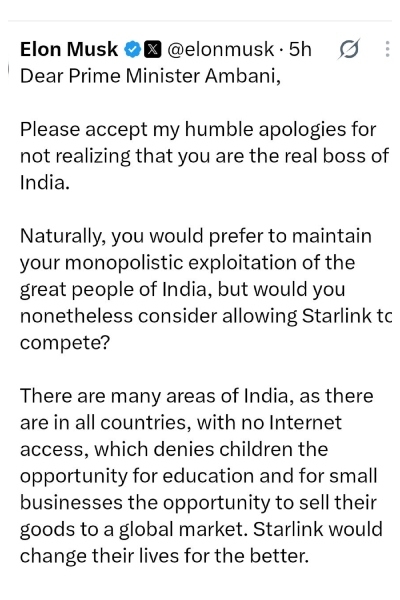
Elon Musk has crossed a line that demands an unequivocal condemnation from India. His sarcastic address to Mukesh Ambani as “Prime Minister Ambani”, accompanied by insinuations that a businessman is the real ruler of India, is not merely an irrational outburst over a commercial dispute. It is an arrogant attempt to turn a disagreement over market access into a public indictment of India’s political leadership. Musk may possess billions of dollars, command technological empires and influence millions through his social media platform X. But he has no authority over India, no mandate from its people and no right to question its democratic sovereignty.
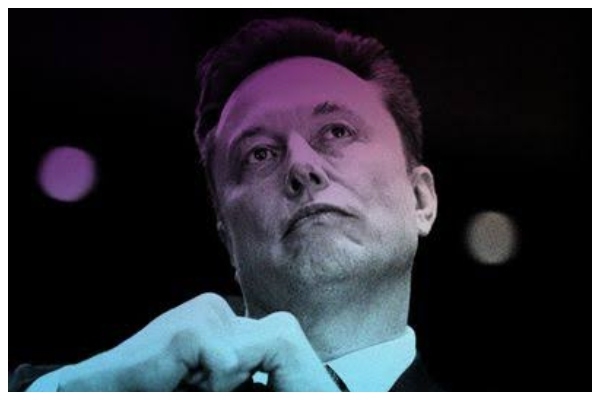 Musk must understand that India is a sovereign nation, not a corporate colony. Its Prime Minister derives authority from the constitution and the mandate of the electorate, not from the approval of a billionaire in America. India’s government is accountable to its people, not to Musk’s commercial ambitions. His money may buy companies, his technology may reach outer space, and his platform may command global attention. But it cannot buy political authority over India.
India did not win independence from colonial rule to submit to the arrogance of corporate overlords. A nation of 1.4 billion people, with an ancient civilisation and a constitutional democracy, owes no deference to a foreign tycoon who mistakes economic power for political supremacy. Musk’s achievements may be considerable, but they do not make him indispensable to India. India has its own entrepreneurs, scientists, institutions and strategic capabilities. Starlink is a potential service provider, not a national necessity that must be accommodated at any cost.
The controversy concerns Starlink, Musk’s satellite-internet venture, and the regulatory approvals required for commercial operations in India. Musk has alleged that powerful commercial interests are obstructing his entry and has used Ambani’s name to suggest that India’s political leadership serves corporate interests. The government has rejected the charge of discriminatory treatment, pointing to the regulatory and security requirements applicable to satellite operators.
Satellite communications are not an ordinary consumer business. They involve spectrum management, network security, lawful interception and the protection of sensitive information. A responsible government cannot disregard these considerations merely because a foreign entrepreneur promises technological progress. Nor can it be expected to abandon security requirements to appease a businessman accustomed to operating on a global scale.
If Starlink satisfies the applicable legal and security requirements, its application deserves fair consideration. If it does not, the deficiencies must be addressed. That is how a constitutional democracy functions. The rules cannot be rewritten because Musk is impatient, influential or accustomed to getting his way.
India welcomes technology, investment and competition. It does not surrender its regulatory sovereignty to attract them. The same law must apply to every company, Indian or foreign. If Musk believes that the regulatory process is discriminatory, he must substantiate his allegation through evidence and appropriate legal channels. Sarcasm is not proof. Public humiliation is not a regulatory remedy.
The episode becomes even more troubling because Rahul Gandhi chose to join Musk’s exchange. When Musk suggested that Ambani was the “real boss of India”, Gandhi responded: “Welcome to India, Elon. Wait till you discover the other guy.” Musk welcomed the intervention and described the situation as troubling.
Gandhi is entitled to criticise the government. He can question regulatory decisions. But he chose sarcasm over substantiation, joining a foreign billionaire in an exchange that insinuated that India’s elected leadership was subordinate to powerful private interests.
What exactly was Gandhi alleging? If he possesses evidence of political interference in the Starlink licensing process, he should place it before the public. If he believes the rules are unfair, he should explain precisely how. Merely joining Musk’s insinuations does not establish wrongdoing. It gives an international business dispute a domestic political echo and allows a foreign billionaire’s grievance to be presented as confirmation of an opposition narrative.
This is not a trivial lapse in political judgment. The Leader of the Opposition carries a responsibility to scrutinise the government through facts and arguments. He cannot expect every intervention that embarrasses the Prime Minister to be treated as a service to democracy, regardless of its substance.
Rahul Gandhi must answer a straightforward question - does his opposition to Narendra Modi matter more to him than the principle that India’s democratic authority belongs to the Indian people? Criticising the government is a constitutional right. Lending political credibility to an outsider’s unsupported insinuations is an entirely different matter.
The country does not need political leaders who look to foreign billionaires to reinforce their domestic arguments. It needs leaders capable of defending India’s institutions even while challenging the government that runs them.
Are domestic political actors and influential international figures independently pursuing their own interests, or is anyone attempting to use these parallel controversies to deepen distrust, provoke confrontation and weaken the legitimacy of an elected government? Is there evidence of a broader strategy to achieve through sustained pressure what political opponents have failed to achieve through electoral politics? These are questions that demand facts, not speculation.
The gravest danger arises when commercial grievances, political allegations and street agitation reinforce one another, creating an impression that every institution is illegitimate and every decision is suspect. If evidence establishes deliberate coordination to destabilise constitutional processes, the public deserves to know it. Until then, the proper course is vigilance, investigation and constitutional firmness not unsupported declarations of conspiracy.
India must remain alert to attempts by any domestic or international actor to exploit its divisions. It must also refuse to confuse legitimate dissent with an established design to create anarchy. The defence of national sovereignty requires both determination and intellectual honesty.
Musk’s intervention deserves a clear answer. India is not governed by his approval, and its institutions cannot be bullied by his wealth or global celebrity. Starlink must comply with Indian law. Rahul Gandhi must substantiate his political insinuations. Those agitating against constitutional authorities must establish their allegations through evidence and democratic processes.
The timing of Musk’s remarks, amid the CJP agitation, makes the larger political context which is impossible to ignore. India should investigate credible evidence of any attempt to combine domestic agitation with external pressure to undermine its institutions. But its response must be guided by facts, not conjecture.
The final word belongs to India’s people. They choose their government. The Constitution defines its authority. The nation’s security and sovereignty are not negotiable commodities.
Musk may own a corporate empire, but he owns no part of India’s democracy. Rahul Gandhi may oppose the Prime Minister, but he cannot outsource his political arguments to a foreign billionaire. India is not Musk’s colony, its Prime Minister is not answerable to him, and its future will not be decided by corporate arrogance, political insinuation or pressure from outside its borders. India will decide for itself and answer to no one but its Constitution and its people.
Who is Elon Musk to mock India’s Prime Minister? Who has appointed him the arbiter of Indian democracy? Which Indian voter has authorised this foreign billionaire to pronounce judgment on the country’s political leadership? The answer to every question is the same: nobody.
India did not win independence from colonial rule to submit to the arrogance of corporate overlords. A nation of 1.4 billion people, with an ancient civilisation and a constitutional democracy, owes no deference to a foreign tycoon who mistakes economic power for political supremacy. Musk’s achievements may be considerable, but they do not make him indispensable to India. India has its own entrepreneurs, scientists, institutions and strategic capabilities. Starlink is a potential service provider, not a national necessity that must be accommodated at any cost.
The controversy concerns Starlink, Musk’s satellite-internet venture, and the regulatory approvals required for commercial operations in India. Musk has alleged that powerful commercial interests are obstructing his entry and has used Ambani’s name to suggest that India’s political leadership serves corporate interests. The government has rejected the charge of discriminatory treatment, pointing to the regulatory and security requirements applicable to satellite operators.
Satellite communications are not an ordinary consumer business. They involve spectrum management, network security, lawful interception and the protection of sensitive information. A responsible government cannot disregard these considerations merely because a foreign entrepreneur promises technological progress. Nor can it be expected to abandon security requirements to appease a businessman accustomed to operating on a global scale.
If Starlink satisfies the applicable legal and security requirements, its application deserves fair consideration. If it does not, the deficiencies must be addressed. That is how a constitutional democracy functions. The rules cannot be rewritten because Musk is impatient, influential or accustomed to getting his way.
India welcomes technology, investment and competition. It does not surrender its regulatory sovereignty to attract them. The same law must apply to every company, Indian or foreign. If Musk believes that the regulatory process is discriminatory, he must substantiate his allegation through evidence and appropriate legal channels. Sarcasm is not proof. Public humiliation is not a regulatory remedy.
The episode becomes even more troubling because Rahul Gandhi chose to join Musk’s exchange. When Musk suggested that Ambani was the “real boss of India”, Gandhi responded: “Welcome to India, Elon. Wait till you discover the other guy.” Musk welcomed the intervention and described the situation as troubling.
Gandhi is entitled to criticise the government. He can question regulatory decisions. But he chose sarcasm over substantiation, joining a foreign billionaire in an exchange that insinuated that India’s elected leadership was subordinate to powerful private interests.
What exactly was Gandhi alleging? If he possesses evidence of political interference in the Starlink licensing process, he should place it before the public. If he believes the rules are unfair, he should explain precisely how. Merely joining Musk’s insinuations does not establish wrongdoing. It gives an international business dispute a domestic political echo and allows a foreign billionaire’s grievance to be presented as confirmation of an opposition narrative.
This is not a trivial lapse in political judgment. The Leader of the Opposition carries a responsibility to scrutinise the government through facts and arguments. He cannot expect every intervention that embarrasses the Prime Minister to be treated as a service to democracy, regardless of its substance.
Rahul Gandhi must answer a straightforward question - does his opposition to Narendra Modi matter more to him than the principle that India’s democratic authority belongs to the Indian people? Criticising the government is a constitutional right. Lending political credibility to an outsider’s unsupported insinuations is an entirely different matter.
The country does not need political leaders who look to foreign billionaires to reinforce their domestic arguments. It needs leaders capable of defending India’s institutions even while challenging the government that runs them.
There is another dimension that cannot be ignored - the timing of Musk’s outburst. His “oligarchy” allegation and subsequent attack on Ambani comes few days before CJP agitation, which is openly campaigning for overthrowing the government.
Now consider the wider political atmosphere. Allegations of electoral manipulation, attacks on constitutional authorities, agitation against the CEC and Musk’s intervention questioning who really governs India have converged within a short period. Their timing warrants scrutiny. It does not, by itself, establish that these events are coordinated, but neither should questions about their possible political exploitation be dismissed out of hand.
Are domestic political actors and influential international figures independently pursuing their own interests, or is anyone attempting to use these parallel controversies to deepen distrust, provoke confrontation and weaken the legitimacy of an elected government? Is there evidence of a broader strategy to achieve through sustained pressure what political opponents have failed to achieve through electoral politics? These are questions that demand facts, not speculation.
The gravest danger arises when commercial grievances, political allegations and street agitation reinforce one another, creating an impression that every institution is illegitimate and every decision is suspect. If evidence establishes deliberate coordination to destabilise constitutional processes, the public deserves to know it. Until then, the proper course is vigilance, investigation and constitutional firmness not unsupported declarations of conspiracy.
India must remain alert to attempts by any domestic or international actor to exploit its divisions. It must also refuse to confuse legitimate dissent with an established design to create anarchy. The defence of national sovereignty requires both determination and intellectual honesty.
Musk’s intervention deserves a clear answer. India is not governed by his approval, and its institutions cannot be bullied by his wealth or global celebrity. Starlink must comply with Indian law. Rahul Gandhi must substantiate his political insinuations. Those agitating against constitutional authorities must establish their allegations through evidence and democratic processes.
The timing of Musk’s remarks, amid the CJP agitation, makes the larger political context which is impossible to ignore. India should investigate credible evidence of any attempt to combine domestic agitation with external pressure to undermine its institutions. But its response must be guided by facts, not conjecture.
The final word belongs to India’s people. They choose their government. The Constitution defines its authority. The nation’s security and sovereignty are not negotiable commodities.
Musk may own a corporate empire, but he owns no part of India’s democracy. Rahul Gandhi may oppose the Prime Minister, but he cannot outsource his political arguments to a foreign billionaire. India is not Musk’s colony, its Prime Minister is not answerable to him, and its future will not be decided by corporate arrogance, political insinuation or pressure from outside its borders. India will decide for itself and answer to no one but its Constitution and its people.

Editor's Desk
Editor's Desk