Kapil Sibal’s Frustration: The Identity Crisis of a Politician in a Lawyer’s Robe
Kapil Sibal’s recent declaration that he has lost faith in the Supreme Court raises a question that goes beyond his immediate grievance.
Total Views |


When legal expectations collide with political ambitions, frustration can become a public argument against the very institutions a lawyer once sought to persuade.
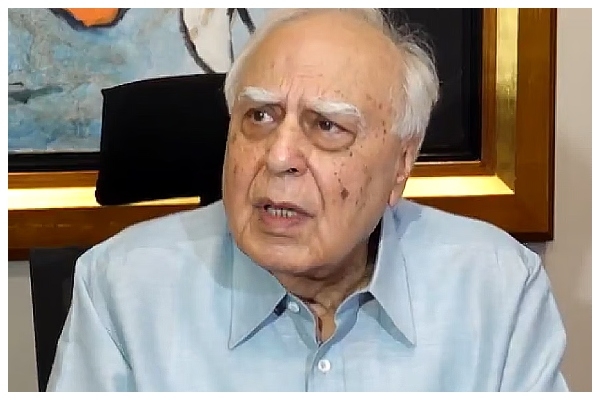
Kapil Sibal’s recent declaration that he has lost faith in the Supreme Court raises a question that goes beyond his immediate grievance. On October 10, while attacking restrictions imposed ahead of the protest demanding Chief Election Commissioner Gyanesh Kumar’s resignation, Sibal said he was tired of repeatedly approaching the Supreme Court and had little hope of obtaining relief. Yet, in the same intervention, he maintained that if anyone could save the Constitution, it was the Supreme Court.
For Sibal, however, the problem is not merely frustration with a judicial outcome. It is the intersection of his professional identity, political commitments and expectations of institutional response. That intersection deserves political scrutiny.
Lawyer by Profession, Politician by Accident?
The tension emerges when professional reasoning and political advocacy appear to demand different responses. A lawyer must make arguments within the framework of law, evidence and procedure, accepting that a court may disagree. A political campaigner seeks to persuade the public, mobilise support and challenge decisions considered unfavourable. The former must live with judicial outcomes; the latter may have incentives to portray those outcomes as evidence of a larger institutional failure.
Sibal’s recent remarks bring this tension into sharp relief. His frustration with the Court was expressed not simply as a litigant’s disappointment but as a sweeping public declaration about the futility of seeking relief. The question is whether such rhetoric reflects a lawyer’s considered assessment of judicial remedies or a political leader’s dissatisfaction with outcomes that do not advance his side’s position. That is the identity dilemma worth examiningnot whether Sibal is literally a lawyer or a politician, but which role dominates when the two pull in different directions.
The Psychology of Unmet Expectations
A lawyer may believe that an argument is legally compelling; the bench may assess the law and evidence differently. That is an ordinary feature of litigation. A disagreement with the Court does not establish judicial failure, just as a forcefully presented submission does not guarantee a favourable order.
The political question arises when an unfavourable or delayed outcome becomes grounds for expressing generalised despair about the institution itself. Sibal’s October remarks suggested that repeated approaches had yielded too little relief. That may communicate genuine disappointment, but it also converts a specific grievance into a broader public indictment of the judicial process.
The psychological mechanism is familiar: repeated effort without the expected reward can diminish perceived efficacy. But in politics, frustration is not merely an emotion. It can become a rhetorical instrument, used to convince supporters that ordinary institutional channels are failing them.
Article 370: When Legal Argument Becomes Political Contest
These were legal arguments presented in a major constitutional dispute. They should be judged on their merits, not dismissed merely because they opposed the government’s position. But the case also illustrates how Sibal’s professional role can place him at the centre of politically charged opposition to major decisions of the Modi government.
When the Supreme Court subsequently upheld the abrogation in December 2023, the outcome did not vindicate Sibal’s central challenge. The Court’s judgment became the authoritative legal resolution of the issues before it. The political disagreement, however, could continue.Here lies an important distinction. A lawyer’s argument can fail without the lawyer losing professional credibility. But when the same legal dispute is woven into a wider political narrative, an adverse judicial outcome may be experienced or presented as a setback extending beyond the courtroom.
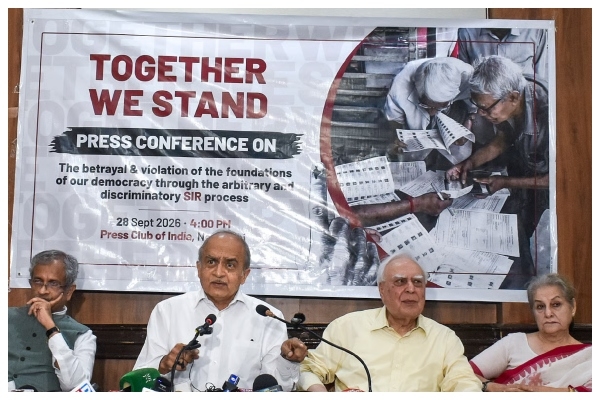
The danger is that political disappointment can encourage an interpretation in which the institution itself, rather than the argument or the limits of the available legal remedy, becomes the target of criticism.
Motivation: The Courtroom and the Political Stage
Political motivation does not automatically invalidate a legal argument. Nor does a lawyer’s association with an opposition party establish that professional duties have been abandoned. The relevant issue is whether public statements maintain a distinction between a legal claim, a political interpretation and an established fact.
Sibal’s October declaration blurred that distinction by moving from frustration over specific proceedings to a sweeping expression of lost confidence in the Supreme Court, even as he continued to describe the Court as the ultimate constitutional safeguard. That tension gives the statement its political significance.
It also raises a question about motivation. Was the declaration primarily an assessment of the effectiveness of judicial remedies, an expression of personal disappointment, or a public intervention intended to strengthen the opposition’s argument that constitutional institutions are failing? His remarks alone cannot establish a private motive. Their public function, however, can be examined: they reinforce a political narrative of institutional inadequacy at a moment of intense confrontation over the Election Commission and electoral rolls.
Frustration Is Not a Substitute for Political Argument
The contradiction between describing the Supreme Court as the institution that can save the Constitution and expressing little hope in it cannot be brushed aside. If the Court remains indispensable, the argument should focus on what it must do differently, which legal remedies remain available and why particular decisions are inadequate. Generalised despair may attract political attention, but it does not resolve the legal question.
Sibal’s career places him at the intersection of law and politics. His professional experience gives weight to his arguments; his political position gives them a wider public meaning. That combination also creates a responsibility to distinguish disappointment with an outcome from a considered conclusion about the institution itself.
The deeper political issue is whether frustration has become a substitute for persuasion. When a senior lawyer cannot secure the outcome he seeks, the proper response is to examine the argument, the evidence, the law and the available remedies. When a politician confronts an unfavourable institutional outcome, the temptation may be to turn the setback into a broader indictment of the system. Sibal’s challenge is not simply to decide whether he is a lawyer or a politician.