Pakistan at the Edge: Political Chaos, Economic Fragility & the Return of Terrorism
The constitutional implications are significant.
Total Views |


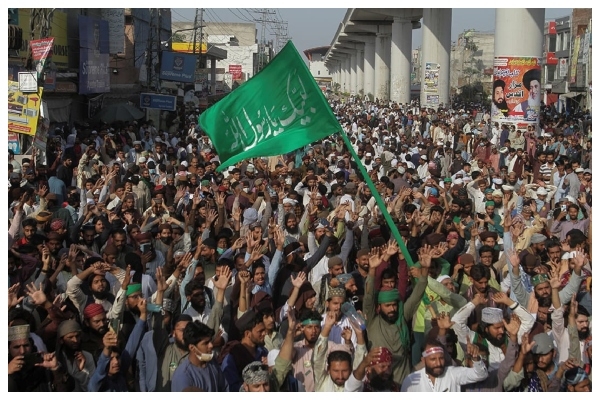
Pakistan’s emergency in Khyber Pakhtunkhwa on October 11, 2026, is more than a provincial administrative development. It exposes the depth of the internal challenges confronting a country where political confrontation, economic distress and escalating terrorism are converging. The federal government has suspended the elected provincial administration led by Imran Khan’s Pakistan Tehreek-e-Insaf, citing its failure to tackle militant violence. The PTI, in turn, has denounced the intervention as an assault on its democratic mandate. The result is a fresh confrontation in a country already struggling to establish political stability, revive its economy and contain terrorism.
Pakistan’s predicament is that these three crises cannot be treated in isolation. Political instability complicates governance; economic distress fuels public discontent; and terrorism places additional pressure on an already strained state.
The latest emergency has intensified this confrontation. Islamabad accuses the PTI government in Khyber Pakhtunkhwa of failing to cooperate adequately in the fight against terrorism. The party rejects the charge, arguing that the federal government has failed to provide the necessary resources and has excluded the provincial administration from crucial security decisions. PTI also opposes military operations without adequate consultation with provincial authorities.
This confrontation raises a fundamental question: can a country effectively combat terrorism when its political leadership is divided over security policy, the distribution of authority and the legitimacy of government? Emergency measures may give Islamabad greater administrative control, but they cannot by themselves resolve the political distrust underlying the crisis.
Pakistan’s economic difficulties form the second pillar of its instability. Repeated International Monetary Fund (IMF) programmes have provided financial support and helped the country manage immediate balance-of-payments pressures. Yet recurring dependence on external assistance points to deeper structural weaknesses.
An October 7 analysis in The Friday Times highlighted the persistence of public debt, weak investment, inflation and structural vulnerabilities despite improvements in some macroeconomic indicators. The government's economic choices remain constrained by the need to maintain IMF support, raise tax revenues and control expenditure. Pakistan’s proposed 2026–27 budget reflected these pressures, with higher defence spending and limits on development expenditure as the government sought to remain within the IMF programme’s requirements.
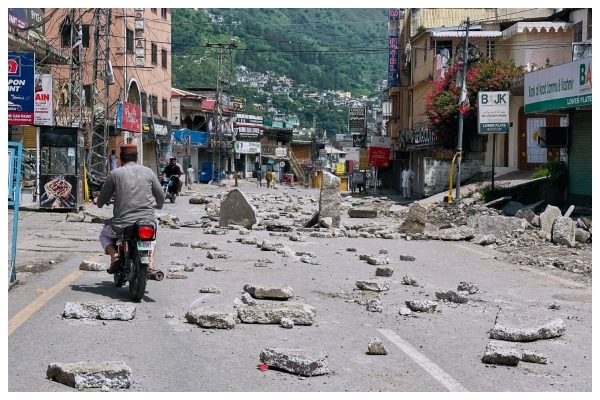
The security crisis is particularly acute in Khyber Pakhtunkhwa, which borders Afghanistan and has experienced an increase in militant attacks. Pakistani authorities have accused the provincial administration of failing to respond adequately and have alleged that militants operating from Afghanistan are responsible for attacks inside Pakistan. The Afghan Taliban and PTI have rejected accusations directed at them.
The gravity of the situation was underscored by Pakistan’s interior minister, Mohsin Naqvi, who said that residents in some districts were reluctant to leave their homes after evening because of the deteriorating security situation. The government has authorised the deployment of army personnel to assist civilian authorities.
This is not merely a question of maintaining law and order. Persistent militant violence undermines public confidence, disrupts economic activity and tests the state's ability to protect citizens. It also creates a difficult political dilemma: military action may be necessary to contain armed groups, but its effectiveness depends on intelligence, civilian cooperation, local legitimacy and a coherent national strategy.
Pakistan’s difficulties are interconnected. Political polarisation makes consensus on counterterrorism harder to achieve. Economic weakness limits the resources available for security and development. Terrorism, in turn, discourages investment, disrupts communities and intensifies pressure on the government.
The emergency in Khyber Pakhtunkhwa is therefore both a response to an immediate security challenge and a manifestation of a wider political crisis. The federal government may succeed in establishing tighter administrative control, but that alone will not guarantee peace. If the intervention deepens the confrontation , it could make cooperation within the province more difficult.
Nor can economic recovery be separated from political stability. Investors and businesses need predictable policies, functioning institutions and confidence that economic reforms will endure. A country repeatedly consumed by political confrontation finds it harder to sustain that confidence. Pakistan now faces a test that extends beyond the tenure of any individual leader or government. It must confront terrorism without allowing counterterrorism to become another source of political conflict, restore economic dynamism without relying indefinitely on external assistance, and establish a political framework capable of managing disagreements through constitutional institutions.
The emergency is a warning, not proof that the Pakistani state is on the verge of collapse. But the convergence of political conflict, economic fragility and militant violence demonstrates the scale of the challenge. Unless these problems are addressed together, emergency rule may temporarily alter the balance of power in one province while leaving the deeper crisis of Pakistan’s governance unresolved.