Ajmer police booked Bangladeshi man who was living illegally in India for 25 years; 61 detained in massive crackdown
Ajmer Police have detained a 52-year-old man identified as Ghulam Mustafa, who told investigators that he entered India illegally from Bangladesh around 25 years ago.
Total Views |


A joint team of the Ajmer District Police Special Task Force, Dargah Police Station and Ajmer CID Zone detained a 52-year-old man identified as Ghulam Mustafa on October 12 during an operation in the Dargah area.
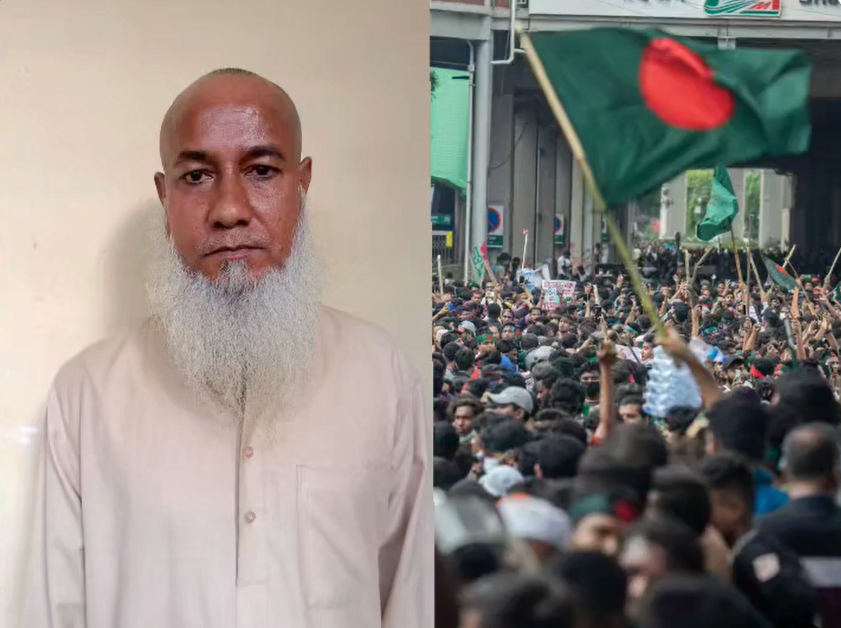
Screengrab from video on X, (Source: News Matrix)
According to media reports, Mustafa told the police that he was originally from Mughalhat village in Bangladesh's Lalmonirhat district and had entered India illegally around 25 years ago. He reportedly claimed that he crossed the international border into West Bengal before moving to different parts of the country.
Police said no valid Indian documents were found in his possession. He was taken to Dargah Police Station for questioning, and investigators are examining his background, movements and possible contacts.
The detention was part of a special campaign targeting suspected illegal Bangladeshi residents in the district. With this operation, the number of Bangladeshi nationals identified during the drive reportedly reached 61.
From West Bengal to Ajmer
According to reports carried by IANS, News18 Rajasthan, Dainik Bhaskar and Jagran, Mustafa told investigators that he initially stayed in West Bengal after crossing the border. Some reports stated that he worked at a grocery shop before moving elsewhere.
He reportedly travelled through several states, including Delhi, Uttarakhand, Assam, Gujarat and Maharashtra, before returning to Ajmer around three months before his detention.
Police are investigating how he travelled between these states, where he stayed over the years and whether he had any associates who could help establish his movements.
The Dargah locality, which attracts large numbers of pilgrims and visitors, has been among the areas covered by the police campaign. Investigators have also searched locations including Dargah Bazaar, Jaliyan Cemetery, Andarkot, Nai Sadak and Taragarh.
The operation was conducted under the directions of Ajmer Superintendent of Police Harshvardhan Agarwala. Dargah Circle Officer Harshit Sharma led the team, under the supervision of Additional Superintendent of Police Himanshu Jangid.
Ajmer's illegal infiltration drive reaches 61
Mustafa's detention is the latest in a series of operations targeting suspected illegal Bangladeshi residents in Ajmer. Media reports described it as the 27th operation under the special campaign.
According to the reported figures, 61 Bangladeshi nationals have been identified during the drive so far.The police have been focusing on crowded localities and areas where people often find work in informal occupations.
Several people identified during such operations are reportedly engaged in casual labour or other temporary work.
Just days before Mustafa's detention, police reportedly detained another man, identified as Rafiqul Islam alias Suman, in the Dargah market area. He told investigators that he had entered India through the Benapole border around eight years earlier and had subsequently lived in Kolkata and Delhi before arriving in Rajasthan.
Earlier cases in the area have also involved individuals who reportedly claimed to have lived in Ajmer for more than a decade.
These operations have brought renewed attention to the challenges faced by law enforcement agencies in identifying suspected illegal immigrants who may have moved across several states and settled in densely populated urban areas.
Does the case raise questions about identity verification?
The claim that Mustafa had lived in India for around 25 years has triggered debate on social media about the country's systems for identifying foreign nationals and verifying official records.
Some commentators have linked the case to the Election Commission's Special Intensive Revision (SIR) of electoral rolls. They argue that cases involving people who remain in India for years without valid documents highlight the need for stronger verification mechanisms.
SIR involves an intensive exercise to review and update electoral rolls, with procedures aimed at establishing voter eligibility and removing entries that do not meet the applicable requirements. The exercise has become a subject of political debate, with supporters emphasising the need for accurate voter lists and critics raising concerns about implementation and the possibility of eligible voters being excluded.
The available information establishes that he was detained, that he claimed to have entered India from Bangladesh around 25 years ago, and that police did not find valid Indian documents in his possession.
Illegal infiltration remains a concern for security agencies
Illegal infiltration from Bangladesh has remained a policy and security concern for successive Indian governments. Authorities have cited unauthorised border crossings, economic migration and the difficulties of identifying people who enter without valid documents.
Police operations in Rajasthan and other states have periodically led to the detention of suspected foreign nationals. Depending on the evidence, such cases can result in further investigation, prosecution under applicable laws or proceedings relating to immigration and deportation.
People who have lived in India for many years may also have complicated personal histories, making it important to establish their identities and legal status through documented evidence.
What happens next?
As of October 13, 2026, reports indicate that Mustafa remains under investigation. No publicly reported charge-sheet or final determination of his nationality has been detailed in the available coverage.
Investigators are expected to examine his statements, verify his background and trace his reported movements across different states. Further details may emerge after questioning and checks with the relevant authorities.
The reported figure of 61 people identified during Ajmer's campaign also raises questions about the scale of suspected illegal infiltration in the district and the challenges of detecting individuals who may have lived in the country for extended periods.