Thengadi’s Interpretation of Dr Ambedkar’s Decision on Buddhism
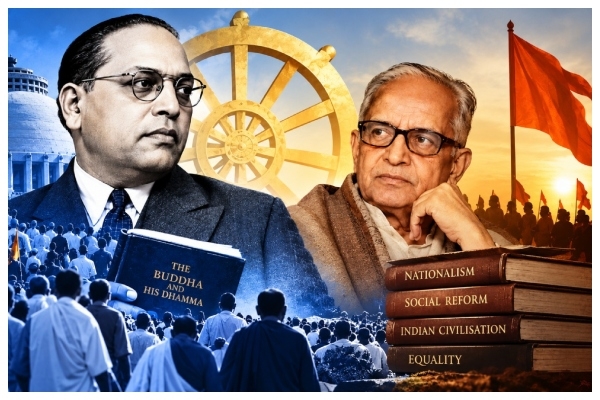
October 14 marks two significant occasions: the day Dr Babasaheb Ambedkar embraced Buddhism and the death anniversary of Dattopant Thengadi, the RSS ideologue who expounded fundamental Hindu philosophical principles, including equality.
Total Views |


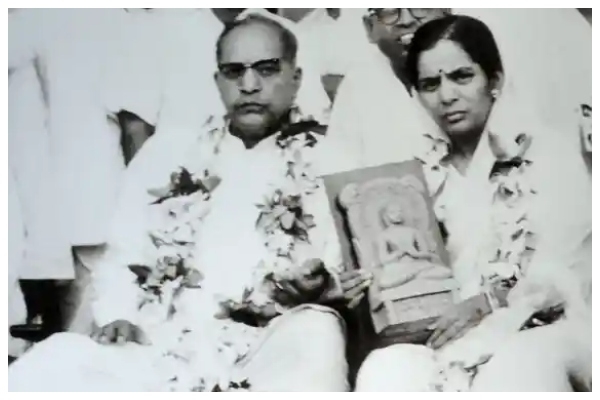
Dr B. R. Ambedkar’s decision to embrace Buddhism on October 14, 1956, was one of the most consequential events in modern Indian social history. It represented a decisive break with the caste-based social order that Ambedkar had fought throughout his life. But his decision also raised a larger question: could the struggle for social equality be pursued through a religious tradition rooted in India, and what responsibility did Hindu society bear for the injustices that had driven millions to seek alternatives?
However, his opposition to caste oppression did not mean that he was indifferent to India’s national interests. Ambedkar played a decisive role in framing the Constitution, championed democratic institutions and sought to establish a political order in which citizenship and legal rights would not depend on caste.
From Thengadi’s perspective, these contributions demonstrated that Ambedkar’s struggle for the emancipation of oppressed communities could not simply be characterised as anti-national or hostile to Indian civilisation. His choice for Buddhism had to be understood in the context of his search for social justice.
This distinction is important because it separates two questions that are often conflated: whether Ambedkar rejected the caste system and whether he rejected India. His opposition to the former is beyond dispute; the latter does not follow from it.
Thengadi attached considerable importance to Ambedkar’s choice of Buddhism rather than Marxism or communism as the basis for social transformation. He interpreted this choice as evidence that Ambedkar sought a solution to exploitation and inequality through an ethical and philosophical framework rooted in India.
Buddhism originated in India and challenged the idea that spiritual worth depended on birth or social status. Ambedkar adapted Buddhist thought to address the realities of caste discrimination, economic deprivation and political inequality. His Navayana placed social justice, liberty, equality and fraternity at the centre of his interpretation of the Buddha’s teachings.
This interpretation, however, requires an important qualification. Ambedkar did not simply reject every objective associated with Marxism. In his speech Buddha or Karl Marx, he compared the two approaches to the problem of human suffering and exploitation, while distinguishing their methods. His criticism of communism was particularly concerned with violence, dictatorship and the suppression of liberty.
This is perhaps the most consequential aspect of Thengadi’s interpretation. A few days before Ambedkar embraced Buddhism, Thengadi recalled telling him that some young people were attempting to establish a new social order by correcting historical wrongs and expressing repentance for them. This conversation, recorded in Thengadi’s book - Dr. Ambedkar aur Samajik Kranti Ki Yatra, illustrates his belief that Hindu society could and should undertake reform.
Thengadi’s approach emphasised the responsibility of society to acknowledge past injustices, eliminate untouchability and build social harmony. From this perspective, caste discrimination was not merely an individual failing; it was a social problem that demanded collective correction.
But Ambedkar’s position arose from a different assessment of the situation. His declaration at Yeola in 1935 that he would not die a Hindu was followed by more than two decades of study, public debate and consideration of alternative religions. His path of Buddhism in 1956 was therefore not a sudden reaction to a particular incident. It was the culmination of a long intellectual and political process.
Ambedkar had concluded that appeals for reform within Hindu society were insufficient to secure the dignity and equality of those subjected to untouchability. He wanted oppressed communities to acquire a new social identity and the confidence to reject inherited hierarchies.
Thengadi’s interpretation raises an enduring question for Indian society - can civilisational unity survive without social equality?
His answer placed considerable emphasis on social reform, the removal of caste discrimination and the recognition that historical wrongs must be corrected. Ambedkar’s answer went further - political democracy could not be sustained unless it was accompanied by social democracy, and oppressed people had the right to seek a new religious and social identity.
These positions overlap in their recognition that caste oppression is a serious obstacle to an integrated society, but they differ on the adequacy of reform within the existing religious framework.
The historical lesson is that national unity cannot be secured merely by invoking a common civilisation. It also requires equal dignity, substantive social justice and the willingness to confront inherited discrimination.
Thengadi sought to interpret Ambedkar’s way of Buddhism as an opportunity for self-introspection for Hindu society to reform itself - Ambedkar opted for Buddhism as a declaration that social emancipation could not remain hostage to the pace of that reform.
Ambedkar and Thengadi approached social emancipation from different directions but their debate poses a common challenge to India - can civilisational unity endure without social justice? Ambedkar’s decision on Buddhism underscored the urgency of dignity; Thengadi’s emphasis on reform highlighted society’s responsibility.
Dattopant Thengadi, RSS ideologue, approached Ambedkar’s decision through the interconnected questions of nationalism, civilisational identity and social reform. His interpretation sought to distinguish Ambedkar’s opposition to caste discrimination from a rejection of India itself. At the same time, it reflected a fundamental difference between Ambedkar’s chosen path of emancipation and Thengadi’s emphasis on reforming Hindu society.
Thengadi’s understanding of Ambedkar rested on the distinction between criticising Hindu society and rejecting India as a nation. Ambedkar was an uncompromising critic of untouchability, caste hierarchy and the denial of equal social status. His criticism was not a marginal aspect of his thought; it was central to his political and intellectual mission.However, his opposition to caste oppression did not mean that he was indifferent to India’s national interests. Ambedkar played a decisive role in framing the Constitution, championed democratic institutions and sought to establish a political order in which citizenship and legal rights would not depend on caste.
From Thengadi’s perspective, these contributions demonstrated that Ambedkar’s struggle for the emancipation of oppressed communities could not simply be characterised as anti-national or hostile to Indian civilisation. His choice for Buddhism had to be understood in the context of his search for social justice.
This distinction is important because it separates two questions that are often conflated: whether Ambedkar rejected the caste system and whether he rejected India. His opposition to the former is beyond dispute; the latter does not follow from it.
Thengadi attached considerable importance to Ambedkar’s choice of Buddhism rather than Marxism or communism as the basis for social transformation. He interpreted this choice as evidence that Ambedkar sought a solution to exploitation and inequality through an ethical and philosophical framework rooted in India.
Buddhism originated in India and challenged the idea that spiritual worth depended on birth or social status. Ambedkar adapted Buddhist thought to address the realities of caste discrimination, economic deprivation and political inequality. His Navayana placed social justice, liberty, equality and fraternity at the centre of his interpretation of the Buddha’s teachings.
Thengadi used this choice to draw a distinction between Ambedkar’s approach and Marxism. In his interpretation, Buddhism offered a path towards social change through moral transformation, individual responsibility and collective ethical conduct, rather than through class struggle and revolutionary violence.
This interpretation, however, requires an important qualification. Ambedkar did not simply reject every objective associated with Marxism. In his speech Buddha or Karl Marx, he compared the two approaches to the problem of human suffering and exploitation, while distinguishing their methods. His criticism of communism was particularly concerned with violence, dictatorship and the suppression of liberty.
Consequently, Thengadi’s argument is best understood as an interpretation of Ambedkar’s choice, rather than proof that Ambedkar accepted the RSS’s wider ideological position.
Thengadi’s approach emphasised the responsibility of society to acknowledge past injustices, eliminate untouchability and build social harmony. From this perspective, caste discrimination was not merely an individual failing; it was a social problem that demanded collective correction.
But Ambedkar’s position arose from a different assessment of the situation. His declaration at Yeola in 1935 that he would not die a Hindu was followed by more than two decades of study, public debate and consideration of alternative religions. His path of Buddhism in 1956 was therefore not a sudden reaction to a particular incident. It was the culmination of a long intellectual and political process.
Ambedkar had concluded that appeals for reform within Hindu society were insufficient to secure the dignity and equality of those subjected to untouchability. He wanted oppressed communities to acquire a new social identity and the confidence to reject inherited hierarchies.
This exposes the fundamental difference between the two approaches. Thengadi stressed reforming society to prevent alienation; Ambedkar regarded Buddhism as a means of giving up a social order that he believed had repeatedly denied his community equal status.
Thengadi’s interpretation raises an enduring question for Indian society - can civilisational unity survive without social equality?
His answer placed considerable emphasis on social reform, the removal of caste discrimination and the recognition that historical wrongs must be corrected. Ambedkar’s answer went further - political democracy could not be sustained unless it was accompanied by social democracy, and oppressed people had the right to seek a new religious and social identity.
These positions overlap in their recognition that caste oppression is a serious obstacle to an integrated society, but they differ on the adequacy of reform within the existing religious framework.
The historical lesson is that national unity cannot be secured merely by invoking a common civilisation. It also requires equal dignity, substantive social justice and the willingness to confront inherited discrimination.
Thengadi sought to interpret Ambedkar’s way of Buddhism as an opportunity for self-introspection for Hindu society to reform itself - Ambedkar opted for Buddhism as a declaration that social emancipation could not remain hostage to the pace of that reform.
Ambedkar and Thengadi approached social emancipation from different directions but their debate poses a common challenge to India - can civilisational unity endure without social justice? Ambedkar’s decision on Buddhism underscored the urgency of dignity; Thengadi’s emphasis on reform highlighted society’s responsibility.