SC Recognises Internet Access as Fundamental Right
Total Views |


New Delhi , October 17 : The Supreme Court on Saturday recognised access to and use of the internet as a fundamental right of every individual, including children, under Articles 21 and 19(1)(a) of the Constitution. The court observed that protecting children from online harm should not come at the cost of their freedom and access to information.
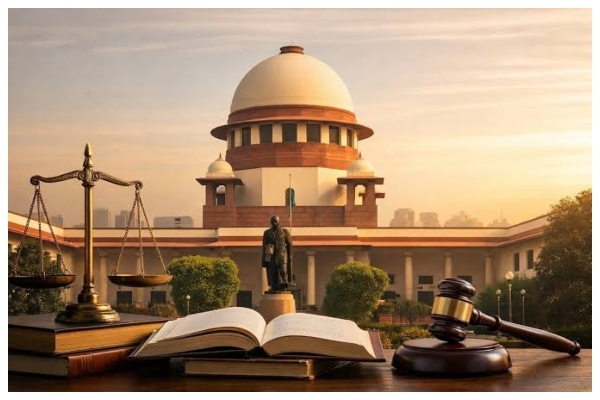 The court's observations are rooted in the constitutional protections guaranteed under Articles 21 and 19(1)(a). Article 21 states, “No person shall be deprived of his life or personal liberty except according to procedure established by law,” while Article 19(1)(a) guarantees citizens the right to freedom of speech and expression.
The observations underline the need to balance children's digital rights with effective safeguards against online exploitation and abuse. The court's approach places responsibility on platforms and safety mechanisms while recognising that children must retain access to information and opportunities available through the internet.
A bench comprising Justice J. B. Pardiwala and Justice K. Vinod Chandran made the observations while issuing directions to strengthen mechanisms for detecting and removing child sexual exploitation and abuse material (CSEAM) from social media platforms and other online services,
The bench emphasised that children enjoy fundamental rights and that denying them internet access altogether would undermine their freedom of speech and expression.
“The safety of our children and their freedom are not at odds with each other. Our children are entitled to both,” the court observed.
The bench highlighted that children's rights to personal liberty, information and expression must be protected alongside effective measures to ensure their safety online.
#BREAKING #SupremeCourt declares that right to access and use the internet is a fundamental right of every individual, including children.
— Amit Bhardwaj (@AmmyBhardwaj) October 17, 2026
Children, irrespective of their age, enjoy the same right to access and use the internet. pic.twitter.com/t4hJSCHU3b
The Supreme Court acknowledged that the internet poses significant safety risks to children in its present form. However, it stated that restricting children's access because online platforms have failed to detect and remove harmful content would mean treating the victims as the problem.
The bench suggested strengthening online safety measures, including introducing a ‘child mode’ for social media accounts, rather than completely denying children access to the internet.
The court also highlighted that Article 19(1)(a) protects freedom of speech and expression, which includes the right to receive, know and share information and ideas.
Describing the internet as a marketplace of ideas, creative expression and information, the bench noted that its importance extends beyond online content to learning, communication and access to knowledge.
The court observed that the internet is particularly important for children living in remote areas, where it may be their only source of learning and information.
It also highlighted the role of online platforms in helping children with special needs connect with others facing similar circumstances and find companionship.