“Ensure SP candidates victory”: UP Madrasa Managers Association issues political ‘Fatwa’, backs party nominees
A registered association of Arabic madrasa managers in Uttar Pradesh has issued a political appeal, described as a ‘fatwa’ by many, urging teachers and graduate voters to ensure the victory of Samajwadi Party candidates in the October 23 Legislative Council elections. The endorsement has raised questions over political mobilisation by an association representing managers of state-recognised and government-aided madrasas.
Total Views |


The Manager Association Arabic Madaris U.P. has formally extended its support to Samajwadi Party (SP) candidates contesting the October 23 Uttar Pradesh Legislative Council elections from teachers’ and graduates’ constituencies.
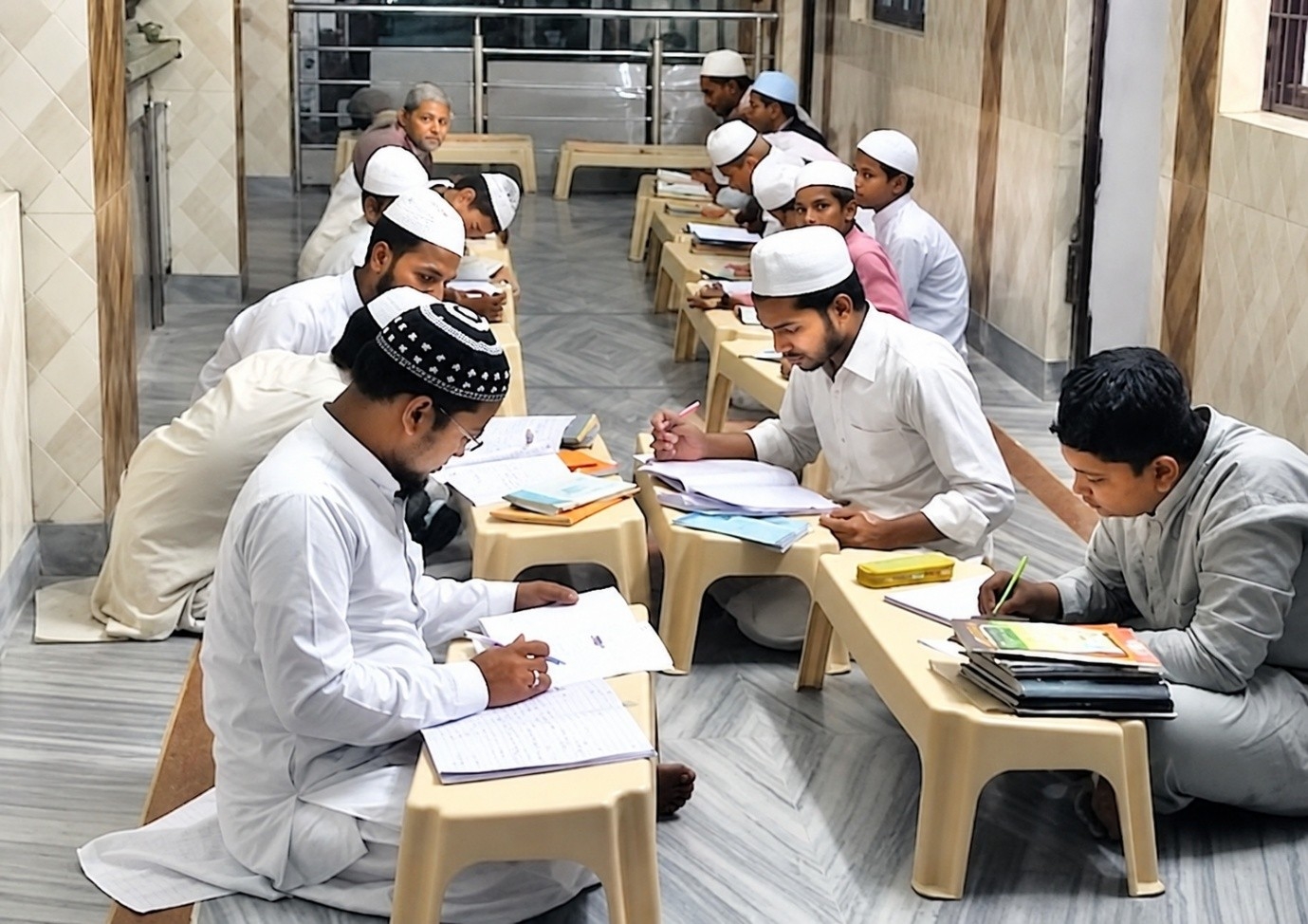
(A representative image, Source: The New Indian Express)
In a resolution dated October 16, the association recorded a unanimous decision to back nine candidates across the two categories. The document was signed by its provincial president, Ayaz Mustafa Khan, following a meeting attended by madrasa managers from several districts of the state.
The association, registered under number 00517, has its headquarters at Vinayak City in Lucknow and a camp office in Balrampur. It has appealed to teachers and graduate voters, particularly young voters, to participate in the electoral process and ensure the victory of its preferred candidates.
The endorsement has raised questions about the extent to which associations representing educational institutions should participate in organised political mobilisation.
समाजवादी पार्टी एक राजनैतिक दल है जिसको उत्तर प्रदेश के मदरसा टीचर-मैनेजर के एसोसिएशन ने आगामी चुनाव में समर्थन का यह फतवा दिया है।
— प्रियंक कानूनगो Priyank Kanoongo (@KanoongoPriyank) October 17, 2026
सरकारी तनख़्वाह से पलने वाले सरकार के नौकरों का संगठन चुनाव में पोलिटिकल पार्टी को समर्थन देने की राजनीति कैसे कर सकता हैं ?
उत्तर प्रदेश में… pic.twitter.com/fevaGvAhDK
Nine SP candidates receive support
The resolution names six candidates for teachers’ constituencies and three for graduates’ constituencies.
The candidates backed for teachers’ constituencies are Dr Sanjay (Sanjayan) Tripathi from Gorakhpur-Faizabad, Lal Bihari Yadav from Varanasi, Sushil Kumar from Lucknow, Dr Akash Agrawal from Agra, Danish Akhtar from Moradabad-Bareilly and Nitin Tomar from Meerut.
For graduates’ constituencies, the association has endorsed Kanti Singh from Lucknow, Dr Man Singh Yadav from Allahabad-Jhansi and Shashank Yadav from Agra.
The Legislative Council elections are scheduled for October 23, with counting due on October 27. The electorate is limited to eligible registered teachers and graduates in the respective constituencies, rather than the general public.
Public funding brings institutional neutrality into focus
The endorsement has brought renewed attention to the relationship between madrasa management bodies, state regulation and public funding.
Uttar Pradesh has thousands of recognised madrasas operating under the state’s madrasa education framework, including government-aided institutions whose teachers and staff receive salaries and allowances from public funds.
The association represents madrasa managers, including those connected with institutions operating within this regulatory framework. However, the extent of its membership among government-aided institutions and the funding status of the institutions represented have not been independently established in the information accompanying the resolution.
Many argue that associations representing publicly supported educational institutions should exercise caution when endorsing political candidates. They contend that public funding and state recognition bring a responsibility to maintain transparency and distinguish educational activities from partisan campaigning.
Education reforms add to the debate
The endorsement comes amid continuing debate over madrasa education, curriculum modernisation, recruitment transparency and accountability in Uttar Pradesh.
\
Successive governments have pursued measures concerning educational standards, attendance monitoring and the administration of recognised institutions. These reforms have also fuelled wider discussions about balancing religious instruction with mainstream educational requirements.
Following the political ‘fatwa’ endorsing Samajwadi Party candidates, demands have emerged for the Registrar of Firms and Societies to examine whether the association’s activities comply with its registration conditions.
The endorsement has also raised questions about whether the SP is seeking to consolidate Muslim voter support through organised mobilisation by religious and educational networks, particularly amid its political confrontation with the Yogi Adityanath government in Uttar Pradesh.
The development puts the SP’s minority outreach under renewed scrutiny, with many likely to view the association’s appeal as an attempt to bring madrasa-linked networks into electoral mobilisation.
The larger question is whether an association representing managers of state-recognised and government-aided institutions should issue a political ‘fatwa’ backing one party’s candidates while invoking its educational network to mobilise voters. The SP and the association should clarify the nature of their engagement, while the relevant authorities should examine any credible evidence of improper use of public resources or official positions.