Chak De, India! Women’s Hockey Team Ends 44-Year Wait for Asian Games Gold
Women"s hockey made its Asian Games debut in New Delhi in 1982, and India won the gold. The side led by Eliza Nelson and Rajbir Rai looked set to dominate the continent for years. It did not turn out that way. What followed was a four-decade drought.


October 2 will forever be etched in the annals of Indian sports history. On a evening defined by high drama, unwavering resilience, and sheer grit, the Indian women’s hockey team ended a 44-year wait to claim the gold medal at the Asian Games 2026. Facing off against Paris Olympics silver medallists China in a high-stakes final, India emerged victorious with a tight 1–0 scoreline, reclaiming top spot on the Asian podium for the first time since 1982.
The triumphs reach far beyond the podium: this monumental victory secures India an automatic spot at the Los Angeles Olympics 2028.
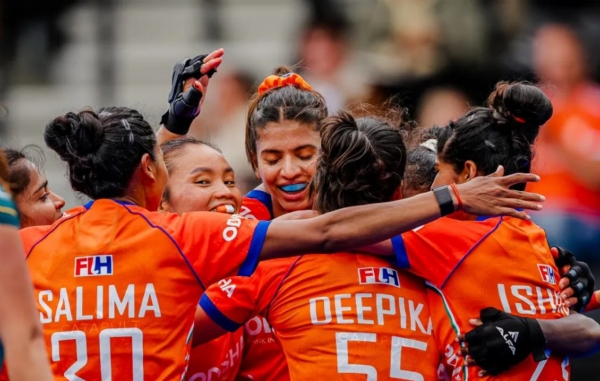
Women's hockey made its Asian Games debut in New Delhi in 1982, and India won the gold. The side led by Eliza Nelson and Rajbir Rai looked set to dominate the continent for years. It did not turn out that way. What followed was a four-decade drought.
𝗧𝗛𝗘 𝟰𝟰-𝗬𝗘𝗔𝗥 𝗪𝗔𝗜𝗧 𝗜𝗦 𝗢𝗩𝗘𝗥, 𝗧𝗛𝗘 𝗜𝗡𝗗𝗜𝗔𝗡 𝗪𝗢𝗠𝗘𝗡'𝗦 𝗧𝗘𝗔𝗠 𝗜𝗦 𝗔𝗦𝗜𝗔𝗡 𝗚𝗔𝗠𝗘𝗦 𝟮𝟬𝟮𝟲 𝗚𝗢𝗟𝗗 𝗠𝗘𝗗𝗔𝗟𝗟𝗜𝗦𝗧𝗦! 🇮🇳🥇
— Hockey India (@TheHockeyIndia) October 2, 2026
A 1-0 victory over World No. 4 China in the final seals a historic gold medal for the Indian Women’s Team, securing… pic.twitter.com/ZiQP1PSYaD
Funding stayed thin and administrative support was patchy. When the game moved from grass to fast astroturf, Indian women were slow to get the surfaces and structures that change demanded. European teams and Asian rivals such as China, Japan and South Korea adapted quickly, bringing in sports science and modern training methods. The Indian players were often left to manage with whatever resources they could find.
The finals brought their own pain. India took silver in Bangkok in 1998 and again in Jakarta in 2018, losing the title matches to South Korea and Japan. Those results left scars in the dressing room.
The slow turnaround
The real shift came over the last ten years. After a historic fourth-place finish at the Tokyo Olympics, the team changed its culture, raised its fitness levels and tightened its defensive discipline. Friday's final was where that work showed.
An hour's delay
The day had its drama before a ball was hit. A local accident caused a traffic jam that trapped both teams' buses, and the push-back was delayed by an hour. Neither side had much time to settle, but once the match began India looked focused and sharp.
The goal
The decisive moment came in the first quarter. Sakshi Rana won the ball in midfield and noticed a small gap in the Chinese defence. She sent a pass into the striking circle, where Lalremsiami Hmarzote was waiting. Lalremsiami turned quickly and slapped the ball into the net. India led 1-0, and that was the only goal of the match.
Savita's stop
From there the final turned into a test of defensive nerve. China pushed forward again and again, and India refused to give ground. The biggest scare came in the second quarter, when China were awarded a penalty stroke.
Veteran goalkeeper Savita Punia faced the striker. She dived to her right and kept the shot out, denying China the equaliser. For a team that had waited so long, it was the save that kept the lead alive and the game within reach.
Holding on
China threw everything at India after the break. Late in the fourth quarter they removed their goalkeeper to bring on an extra attacker, a gamble that put even more pressure on the Indian backline. Captain Salima Tete anchored the defence, and the players around her blocked shots and cleared every dangerous ball. India stayed compact and calm until the final siren.
It was not a flowing, high-scoring final. It was won by a single well-built move and a defence that would not break, which says a good deal about how far this group has come since Tokyo.
What the gold means
The medal ends a long wait, but its value goes past that. By winning, India avoid the demanding qualification route for the Los Angeles Olympics in 2028 and book a direct place. That gives the squad time to prepare for the Games without the pressure of qualifiers.
It also closes a chapter that began in 1982. The pioneers of that year stood on the podium in New Delhi and were meant to start a golden era. Forty-four years later, a new generation has finally delivered on that promise, and Indian women's hockey is back at the top of Asia.
The wait is over. Chak De!
GOLDEN GLORY FOR BHARAT! 🇮🇳🏑
— Rohan Gupta (@rohanrgupta) October 2, 2026
A historic triumph for the Indian Women’s Hockey Team as they clinch GOLD at the #AsianGames2026, ending a 44-year wait for an Asian Games gold in women’s hockey!
A phenomenal performance marked by grit, skill and incredible teamwork.… pic.twitter.com/tei2mwkHRE
44 YEARS LONG DROUGHT ENDS!!!
— A Regular Indian (@Regular__Indian) October 2, 2026
Indian Women hockey team wins gold, defeating the defending Asian Games champion and Olympic Silver Medalist China by 1-0.
16th GOLD MEDAL FOR INDIA 🥇
They have booked tickets for LA olympics 2028.
After 1982, it's first time the women's team… pic.twitter.com/npxTtx9yhh
#WATCH | Gwalior | A family member of Indian field hockey player Ishika Chaudhary says, "She has made the entire nation proud...I am proud of her...We congratulate the entire team..." pic.twitter.com/Ynx4XpIaPD
— ANI (@ANI) October 2, 2026
Golden Glory after 44 years 🇮🇳
— Satnam Singh Sandhu (@satnamsandhuchd) October 2, 2026
INDIA WOMEN’S HOCKEY TEAM WINS ASIAN GAMES GOLD! 🥇
India defeated China 1-0 to win the women’s hockey gold medal at the Asian Games.
The victory ends a 4 decade wait for India, whose women’s team last won Asian Games gold in 1982. India also… pic.twitter.com/j6LcP8M46U