The mechanics of anarchy: Inside CJP’s Jantar Mantar crowd mobilisation
By attempting to mobilise specific communities using financial inducements, CJP sought to create a pressure cooker environment capable of triggering a full-scale law-and-order crisis in Central Delhi.


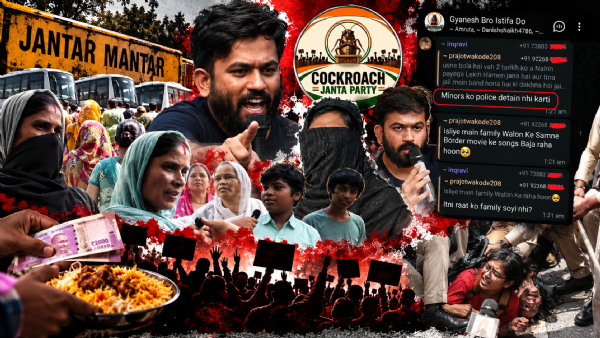
Why is CJP trying to create violence and instability in the national capital? Going door to door in Muslim majority areas, offering ₹2,000 and biryani to bring people to Jantar Mantar is not a genuine protest.This looks like a deliberate attempt to create chaos in Delhi.
— CAP ( CHAPPAL ALLIANCE PARTY ) (@ChappalAlliance) October 2, 2026
They… pic.twitter.com/1DjziHW6y7
If independently established, such a mobilisation model would raise an important distinction between a spontaneous public demonstration and a centrally coordinated crowd assembled through organised incentives. The political significance of the protest would then have to be assessed alongside the methods used to generate its visible numbers.
The question becomes sharper when reports from the protest site are examined.
Videos circulating online showed journalists speaking to participants about how they had reached Jantar Mantar. Some participants reportedly said they had been brought from neighbouring states, including Punjab. Again, travelling from another state is not evidence of wrongdoing. Political demonstrations routinely attract participants from outside the city or state where they are held.
Gen Z? NO!
— Office Of Vijay Patel (@VijayGajeraO) October 2, 2026
Paid goons of Kejriwal's party from Punjab! pic.twitter.com/rjjhdC2tWB
But if ordinary voters were supposedly pouring onto the streets against the Election Commission, why did organisers need people arriving in buses from neighbouring states? Who arranged those buses? Who paid for the journey? Who coordinated the groups? Why don't they know the topic of the protest?
Women from Punjab brought for Protest at Jantar Mantar
— Ankur Singh (@AnkurSingh) October 2, 2026
"Laaye hain toh aaye hain" pic.twitter.com/oJHodRBmsl
That last question gained attention after footage circulated showing journalists asking participants about the subject of the demonstration. Some appeared unable to clearly explain the issue. That does not establish that the entire crowd was uninformed, nor does it prove that participants were paid.
But when a protest is being presented as a major expression of public anger, a visible disconnect between the stated issue and some participants’ understanding of it naturally raises questions about the nature of the mobilisation. If organisers were planning the mobilisation so carefully, did they also think about how to shield themselves from police action?
Minors were brought into the protest with the idea that their presence could act as a shield against police action.
Videos from the protest site also showed minors among the protesters. The plan came under scrutiny after WhatsApp chats circulated online, appearing to discuss the use of minors in the mobilisation.
Minors को Protest में कौन लाया?#JantarMantar pic.twitter.com/wM6nI7cCkE
— The Pamphlet (@Pamphlet_in) October 2, 2026
Leaked WhatsApp chats linked directly to the mobilisation uncovered messages discussing the intentional inclusion of school-aged children and students.
One participant explicitly wrote, "Me toh bach jaunga minor hu" (I will be saved, I am a minor). This was not an offhand remark. It was a clear blueprint showing how the organisers intended to operate. They knew law enforcement officers face strict statutory restrictions against detaining minors during crowd control.
By pushing children to the front lines, the leadership aimed to create an untouchable barrier. If police acted, the cameras would record "violence against children." If police hesitated, the mob would overrun the barricades.
🚨 VERY SHOCKING! Are MINORS being roped in for the October 2 protest?
— Megh Updates 🚨™ (@MeghUpdates) September 29, 2026
Alarming WhatsApp chats linked to the CJP’s Oct 2 agitation raise grave concerns about mobilizing SCHOOL-AGE CHILDREN and MADRASA students.
AAP’s Ajinkya Shinde is reportedly active in the same group.
=>… pic.twitter.com/DXxM7yKueB
Visuals from Jantar Mantar confirmed that this strategy moved beyond chatrooms and onto the streets. Young children were spotted standing among the crowds, holding placards against constitutional authorities. They perhaps had no understanding of electoral revision rules, internal administrative notes, or constitutional procedures. They were brought in to use them as a shield and as ‘legal leverage’.
The organisers did not build a genuine movement. They engineered a tactical operation that relied on paid crowds, imported buses and innocent children as defensive armour.
When a movement relies on cash envelopes, free biryani, imported crowds and minors as human shields, it isn't exercising democracy, it is staging a riot to spread anarchy.
CJP's exposed tactics serve as a sharp reminder: citizens must remain vigilant against manufactured outrage designed purely to subvert democratic institutions from within.