NRC: India Must Know Who Its Citizens Are
NewsBharati 02-Oct-2026 11:44:15 AM
Total Views |


RSS prachar pramukh Sunil Ambekar’s call for a nationwide National Register of Citizens (NRC) ought to be taken seriously. He has raised a fundamental question that no serious sovereign nation can afford to evade indefinitely: Who is an Indian citizen, and can the Indian State establish that fact with reasonable certainty?
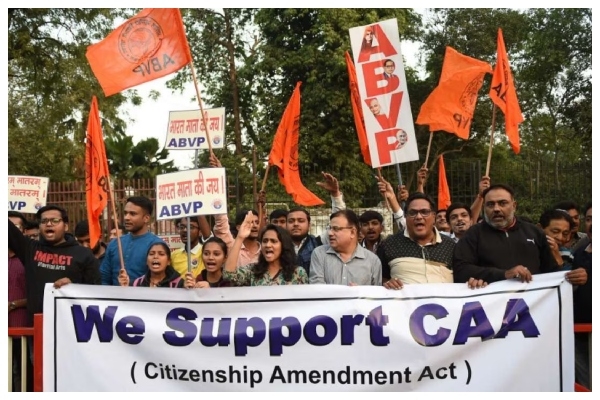 Ambekar’s timing is significant. His demand comes when India is preparing for the Census and when the Election Commission’s Special Intensive Revision (SIR) of electoral rolls has generated an intense political debate. He has argued that persons wrongly included in electoral rolls should be identified, while those eligible for citizenship under the Citizenship Amendment Act should have their citizenship properly established. He has also linked demographic change with national security, national unity and cultural identity.
This is where the debate needs to become more serious. An electoral roll is not a citizenship register. The two have different purposes. SIR concerns the preparation and verification of electoral rolls. NRC concerns establishing who is an Indian citizen. A person may be a citizen without being an elector at a particular point of time, while only eligible citizens can ordinarily exercise the franchise.
India therefore has a legitimate interest in both clean electoral rolls and a reliable citizenship database. The argument that an NRC is inherently discriminatory does not follow from the principle itself. The real issue is how it is implemented. There must be transparent rules, uniform standards, adequate documentation, notice, hearings, appeals and judicial remedies. No genuine Indian citizen should lose citizenship because of bureaucratic arbitrariness, an innocent documentation gap or an administrative mistake.
Those safeguards are not arguments against an NRC. They are arguments for doing it properly. The Assam experience demonstrates the complexity of such an exercise. The Assam NRC was conducted under a special legal framework and under Supreme Court monitoring. Its final list, published in 2019, included more than 3.11 crore people and excluded about 19.06 lakh. Those excluded were provided legal avenues to challenge the decision.
Assam should therefore neither be romanticised nor demonised. It should be studied for the lessons it offers in documentation, verification, appeals and administrative capacity.
There is another aspect of Ambekar’s argument that deserves greater attention: demography is not merely arithmetic. Population composition can influence land, housing, employment, public services and political representation. In sensitive border regions, uncontrolled illegal migration can also raise security concerns. Rapid and geographically concentrated demographic changes can affect social relations and cultural confidence.
None of this means that demographic change itself is proof of wrongdoing. But the opposite extreme is equally untenable: pretending that demographic change can never have social, political or security consequences.
Every modern State needs mechanisms to establish nationality and citizenship. India's own legal framework already recognises the importance of maintaining a register of citizens. The Supreme Court has also examined the statutory provisions governing preparation and verification of such a register. The issue, therefore, should be procedure, safeguards and implementation not whether citizenship itself should be established.
The CAA must also be viewed separately. Ambekar has pointed out that people who qualify for citizenship under the CAA should have their status established. The NRC, in this context, is about identifying citizens; the CAA provides a statutory route to citizenship for specified categories meeting its conditions. They need not be treated as inherently contradictory propositions. The larger principle is straightforward - citizenship cannot become a vote-bank commodity.
If a person is entitled to citizenship under Indian law, the State must recognise that entitlement. If a person is not a citizen, citizenship cannot be conferred merely for political convenience. The same legal standard must apply irrespective of religion, caste, region or political affiliation.
Opposition parties may describe an NRC in different political terms. Those arguments deserve to be heard. But political rhetoric cannot replace the fundamental question: Should India know who its citizens are? The answer should not depend on whether the proposal comes from the RSS, the BJP, the Congress or any other political organisation.
A confident constitutional democracy should have no reason to fear a transparent citizenship register. Indian citizens themselves have an interest in ensuring that citizenship is not diluted through fraudulent claims, illegal entry or political manipulation. The answer to illegal immigration cannot be suspicion. It must be law. The answer to demographic anxiety must be reliable data and policy. The answer to doubtful citizenship cannot be political bargaining. It must be due process. And the answer to the question “Who belongs to India as a citizen?” cannot forever remain politically inconvenient.
Ambekar has reopened that question at an important moment when India is undertaking the Census and debating the integrity of electoral rolls. The country should not shut down the discussion merely by attaching a political label to it.
India needs facts before fears, citizenship before vote-bank arithmetic, and law before political convenience. A nationwide NRC, conducted fairly and with rigorous safeguards, deserves a serious national debate not a political boycott.
The answer should be unequivocal. Citizenship is not a political slogan. It is the legal foundation of the relationship between an individual and the state. India has constitutional and statutory provisions governing citizenship, and the Citizenship Rules, 2003 provide a framework for preparation of a National Register of Indian Citizens. Asking the State to implement a credible citizenship register is therefore not an extraordinary proposition. It is a demand for administrative clarity.
This is where the debate needs to become more serious. An electoral roll is not a citizenship register. The two have different purposes. SIR concerns the preparation and verification of electoral rolls. NRC concerns establishing who is an Indian citizen. A person may be a citizen without being an elector at a particular point of time, while only eligible citizens can ordinarily exercise the franchise.
India therefore has a legitimate interest in both clean electoral rolls and a reliable citizenship database. The argument that an NRC is inherently discriminatory does not follow from the principle itself. The real issue is how it is implemented. There must be transparent rules, uniform standards, adequate documentation, notice, hearings, appeals and judicial remedies. No genuine Indian citizen should lose citizenship because of bureaucratic arbitrariness, an innocent documentation gap or an administrative mistake.
Those safeguards are not arguments against an NRC. They are arguments for doing it properly. The Assam experience demonstrates the complexity of such an exercise. The Assam NRC was conducted under a special legal framework and under Supreme Court monitoring. Its final list, published in 2019, included more than 3.11 crore people and excluded about 19.06 lakh. Those excluded were provided legal avenues to challenge the decision.
Assam should therefore neither be romanticised nor demonised. It should be studied for the lessons it offers in documentation, verification, appeals and administrative capacity.
There is another aspect of Ambekar’s argument that deserves greater attention: demography is not merely arithmetic. Population composition can influence land, housing, employment, public services and political representation. In sensitive border regions, uncontrolled illegal migration can also raise security concerns. Rapid and geographically concentrated demographic changes can affect social relations and cultural confidence.
None of this means that demographic change itself is proof of wrongdoing. But the opposite extreme is equally untenable: pretending that demographic change can never have social, political or security consequences.
India has already experienced the most traumatic possible demonstration of the relationship between demography, territory, political identity and security. Partition remains part of the country's historical experience. Ambekar’s reference to that history may invite political disagreement, but it should not make demographic questions taboo.
Indeed, there is something intellectually strange about a country that counts its population, maintains electoral rolls, issues passports and identity documents, records births and deaths, collects tax information and yet finds the question “Who is an Indian citizen?”
Every modern State needs mechanisms to establish nationality and citizenship. India's own legal framework already recognises the importance of maintaining a register of citizens. The Supreme Court has also examined the statutory provisions governing preparation and verification of such a register. The issue, therefore, should be procedure, safeguards and implementation not whether citizenship itself should be established.
The CAA must also be viewed separately. Ambekar has pointed out that people who qualify for citizenship under the CAA should have their status established. The NRC, in this context, is about identifying citizens; the CAA provides a statutory route to citizenship for specified categories meeting its conditions. They need not be treated as inherently contradictory propositions. The larger principle is straightforward - citizenship cannot become a vote-bank commodity.
If a person is entitled to citizenship under Indian law, the State must recognise that entitlement. If a person is not a citizen, citizenship cannot be conferred merely for political convenience. The same legal standard must apply irrespective of religion, caste, region or political affiliation.
Opposition parties may describe an NRC in different political terms. Those arguments deserve to be heard. But political rhetoric cannot replace the fundamental question: Should India know who its citizens are? The answer should not depend on whether the proposal comes from the RSS, the BJP, the Congress or any other political organisation.
A confident constitutional democracy should have no reason to fear a transparent citizenship register. Indian citizens themselves have an interest in ensuring that citizenship is not diluted through fraudulent claims, illegal entry or political manipulation. The answer to illegal immigration cannot be suspicion. It must be law. The answer to demographic anxiety must be reliable data and policy. The answer to doubtful citizenship cannot be political bargaining. It must be due process. And the answer to the question “Who belongs to India as a citizen?” cannot forever remain politically inconvenient.
Ambekar has reopened that question at an important moment when India is undertaking the Census and debating the integrity of electoral rolls. The country should not shut down the discussion merely by attaching a political label to it.
India needs facts before fears, citizenship before vote-bank arithmetic, and law before political convenience. A nationwide NRC, conducted fairly and with rigorous safeguards, deserves a serious national debate not a political boycott.

Editor's Desk
Editor's Desk