CJP Calls Protest Break Until Diwali; Dipke Faces Questions Over Das-Ranka Remarks
Founder appeals to supporters to prioritise families amid mounting legal troubles; later defends jailed colleagues and distances movement from regime-change politics
Total Views |


New Delhi, October 21: The Cockroach Janata Party (CJP) has announced a temporary halt to its protests until Diwali, with founder Abhijeet Dipke urging supporters to spend the festive period with their families as the movement faces mounting pressure following the detention of two of its prominent leaders, Saurav Das and Ashutosh Ranka.
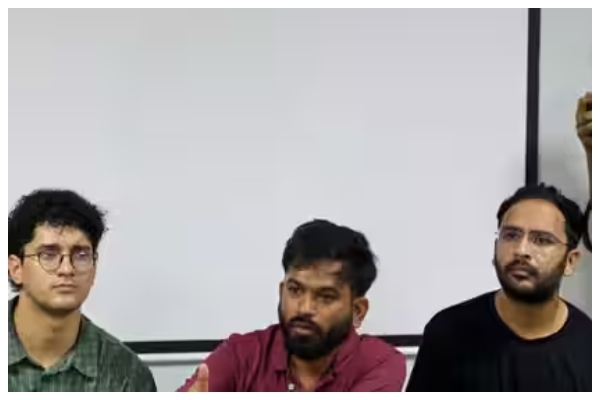
In a video message released on October 20, Dipke said the agitation had placed considerable strain on supporters and their families, who were worried about the consequences of continued protests and the possibility of further arrests. He appealed to the party’s supporters, whom he calls “cockroaches”, to take a break from demonstrations and devote time to their loved ones.
The announcement comes after weeks of sustained agitation by the CJP, which has campaigned against Chief Election Commissioner Gyanesh Kumar and opposed changes to the status of the Jantar Mantar protest site. The organisation has also faced repeated police action, including the detention of Dipke and the subsequent judicial custody of Das and Ranka.
The detention of the two leaders has created an immediate organisational difficulty for the CJP. With key figures behind bars and Dipke himself having faced detention, the movement’s ability to sustain demonstrations has been affected. An India Today report suggested that the leadership vacuum and the need to plan its next course of action may have contributed to the decision to suspend protests temporarily.
Dipke’s remarks on Das and Ranka trigger controversy
In his initial video message, Dipke said the two colleagues were the real leaders behind the agitation and that he had followed their instructions. He described them as better leaders and individuals than himself, prompting criticism from some social media users who interpreted the remarks as an attempt to shift responsibility onto colleagues who remain in custody.
Dipke subsequently issued a clarification, rejecting the suggestion that he was distancing himself from the two leaders. He said he was proud to work with people he considered better leaders and described the CJP as a collective rather than an organisation dominated by one individual. He called Das and Ranka his brothers and insisted that their detention would not divide the movement.
The episode has brought the CJP’s leadership structure into focus at a time when the organisation is trying to maintain its political campaign despite the absence of two prominent figures.
Message to all cockroaches pic.twitter.com/9e5yI9Nst0
— Abhijeet Dipke (@abhijeet_dipke) October 20, 2026
Rejects comparisons with unrest abroad
In a video statement on October 20, Dipke rejected comparisons between the movement and violent unrest in France, Nepal and Bangladesh. He characterised the CJP’s protests as peaceful and non-violent, invoking Mahatma Gandhi’s Satyagraha and pointing to the conduct of Das and Ranka in custody.
The renewed clarification followed his earlier distancing from the regime-change narrative. It comes amid political criticism that such rhetoric could associate domestic protests with attempts to destabilise governments through unrest.
Dipke has maintained that the CJP’s campaign should be understood as a peaceful protest movement rather than an effort to replicate violent upheavals abroad.
Saurav and Ashu are not just better leaders than me but also better people. When I say this, I am not throwing them under the bus but rather taking pride in the fact that I have better people by my side. pic.twitter.com/j6UXSvgoH9
— Abhijeet Dipke (@abhijeet_dipke) October 20, 2026
Legal uncertainty clouds the next phase
The CJP’s decision to pause demonstrations until Diwali gives the organisation time to assess its position as the legal proceedings continue. Dipke has presented the break as an opportunity for supporters to reconnect with their families, rather than as an abandonment of the movement or its jailed leaders.
The immediate question is whether the CJP can resume its agitation after the festival with its leadership and strategy intact. For now, its public messaging has shifted from mobilisation on the streets to family concerns, solidarity with detained colleagues and an insistence that its campaign remains peaceful.