Sarsanghchalak’s Clarion Call: A Strong Society, an Unstoppable India
His message is both a reminder of India"s civilisational inheritance and a call to action.
NewsBharati 21-Oct-2026 13:06:37 PM
Total Views |


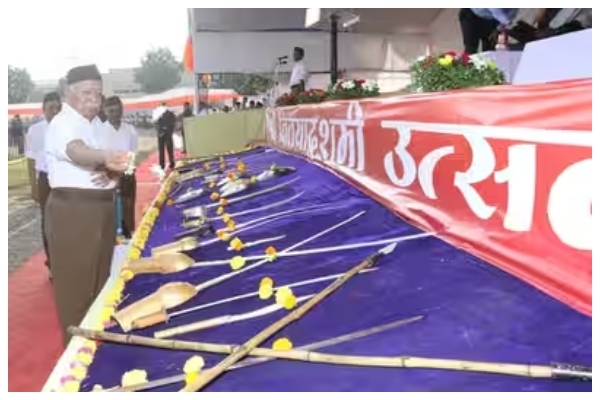
The message delivered by Sarsanghchalak Dr Mohan Bhagwat on Vijayadashami deserves serious attention. As the RSS completes its centenary year and enters its 101st year, Bhagwat has outlined a vision that looks beyond organisational milestones towards the making of a strong, united and self-confident India.
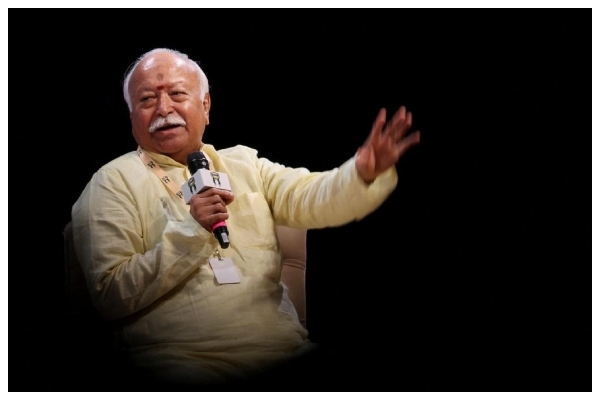 The RSS began its journey in 1925 under Dr Keshav Baliram Hedgewar. It was founded during a period when India was struggling against colonial rule and confronting the consequences of social divisions. Hedgewar believed that political freedom, essential as it was, would remain incomplete without a cohesive and organised society.
A hundred years later, the question of social cohesion remains central to India's future. The Sangh's journey has been marked by expansion, criticism and sustained grassroots work. Its centenary is therefore an occasion to examine not merely its organisational growth but also its continuing emphasis on individual character, social responsibility and national consciousness.
Bhagwat's address carries forward this tradition. The RSS's fundamental proposition is that nation-building cannot be outsourced to governments. The state can provide infrastructure, security and public services, but the moral and social foundations of the nation must be built by its own people.
One of Bhagwat's central themes is the importance of Hindu consciousness. His argument is that India's civilisational identity cannot be reduced to a narrow definition based solely on religious practice, food habits or political affiliation.
India's civilisation has historically accommodated diverse languages, customs, philosophies, traditions and forms of worship. Its unity has not depended on making every individual culturally identical. It has depended on the ability to recognise differences while retaining a deeper sense of belonging.
His reference to the conduct of Flydubai pilot Captain Smit Machchhar illustrates the argument that cultural values can shape individual conduct during moments of crisis. The larger point is that civilisational inheritance becomes meaningful when expressed through courage, responsibility and concern for others.
For the RSS, Hindu consciousness represents an inclusive civilisational framework that can provide India with a sense of continuity and purpose. RSS believes that a society confident in its own identity is better equipped to engage with the world without insecurity or cultural dependence.
This warning deserves examination in a world where geopolitical competition increasingly extends beyond conventional military and diplomatic confrontation. Information warfare, disinformation, external influence operations and the deliberate amplification of social divisions can undermine public confidence and weaken a nation's capacity to act collectively.
India's social diversity makes vigilance particularly important. Differences of religion, caste, language, region and ideology are part of democratic life. But when legitimate grievances are deliberately converted into mutual hostility, the resulting fragmentation can damage the very society that democratic institutions are intended to serve.
The distinction between dissent and destabilisation is crucial. Peaceful protest, criticism of government and demands for accountability are legitimate features of democracy. They cannot automatically be labelled anti-national. Equally, no democratic society should ignore credible evidence of organised attempts to promote violence, spread deliberate falsehoods or exploit social divisions for hostile purposes.
India's strength lies not in suppressing disagreement but in ensuring that disagreement does not destroy national solidarity. The country must remain alert and confident without becoming complacent.
History repeatedly demonstrates the consequences of internal divisions. India has experienced invasions, colonial domination and prolonged struggles over political power. Its civilisational continuity survived because its cultural and social foundations proved stronger than successive political disruptions. Yet history also shows how divisions have made the country vulnerable.
Bhagwat's appeal for unity is therefore not merely a sentimental invocation of patriotism. It is a strategic argument. A divided society finds it difficult to sustain long-term development, defend its interests or respond effectively to external challenges.
National unity must be reflected in everyday conduct. Caste prejudice, social exclusion, communal hostility and regional antagonism weaken the bonds that hold the country together. Patriotism must be demonstrated through respect, service and a willingness to place the common good above narrow interests.
This is where the RSS's emphasis on social organisation becomes significant. Its vision places responsibility on individuals and communities to build trust through sustained engagement. National integration is not achieved by declarations alone. It emerges when people experience cooperation and solidarity in their daily lives.
RSS's emphasis on Panch Parivartan, or five transformations, provides a practical framework for this social vision. These transformations concern social harmony, family values, environmental responsibility, civic duties and Swadeshi or self-reliance.
Social harmony demands the removal of prejudices that prevent people from recognising one another as equal members of the national community. Family values help transmit responsibility, discipline and respect across generations. Environmental responsibility reminds citizens that development cannot be separated from the protection of natural resources.
Civic duties require respect for public property, constitutional institutions and the obligations of citizenship. Swadeshi encourages confidence in domestic capabilities, indigenous enterprise and economic self-reliance.
These are not isolated concerns. Together, they address the relationship between individual conduct and national development. A country cannot become genuinely powerful if its citizens neglect their social responsibilities, disregard public resources or remain dependent on others for essential capabilities.
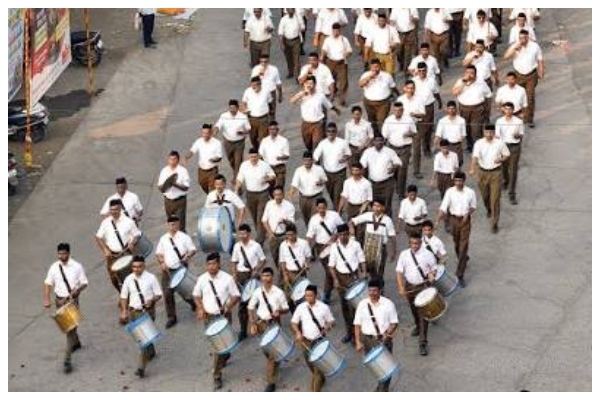 The importance of Panch Parivartan lies in making national transformation a continuous social process rather than a temporary political campaign. The future of India will be shaped as much by what happens in homes, neighbourhoods and local communities as by decisions taken in New Delhi.
Bhagwat's concern about young people, digital technology and drug addiction points to another dimension of national development. India possesses an enormous demographic resource, but a young population becomes an advantage only when its energy is channelled towards constructive purposes.
Technology offers unprecedented opportunities for education, innovation, entrepreneurship and public participation. But social media can also accelerate misinformation, deepen polarisation and expose young people to destructive influences. Artificial intelligence adds to these possibilities, making the ability to verify information and exercise independent judgement increasingly important.
The answer is not to reject modernity. It is to combine technological progress with ethical responsibility. Young Indians must be equipped to question falsehoods, resist manipulation and use digital platforms productively.
The campaign against drug addiction is equally important. Addiction can destroy individual potential, devastate families and undermine communities. Preventing it requires social awareness, supportive families, effective public action and opportunities that give young people a constructive sense of purpose.
The RSS vision places character formation alongside material progress. This is a necessary reminder that a nation's human capital is not measured only by educational qualifications or employment statistics, but also by discipline, integrity and responsibility.India's Responsibility to the World
Bhagwat's vision of India as Vishwaguru must be understood as a responsibility rather than a ceremonial title. India cannot claim global leadership merely because of its ancient civilisation, population or economic potential. It must demonstrate that its experience and values can contribute to solving contemporary problems.
The world faces conflicts, environmental crises, social alienation and competing models of development. India's traditions of coexistence, its philosophical diversity and its experience of sustaining unity across differences offer resources for engaging with these challenges.
As the RSS enters its 101st year, Bhagwat's message is ultimately a call to responsibility. The organisation's centenary is not the culmination of its mission but a transition to the next phase of its work.
The warning against destabilisation must therefore be accompanied by a positive national agenda. India must remain vigilant against hostile interference while preserving democratic freedoms. It must protect its cultural inheritance while respecting the diversity of its people. It must pursue economic and technological advancement while strengthening the moral foundations of society.
The greatest tribute to a century of nation-building would be a society that is more united, more self-reliant, more compassionate and more confident in its civilisational identity.
The journey towards Vishwaguru status will not be completed through declarations or shortcuts. It demands the everyday contribution of millions of Indians. That is the enduring challenge in Bhagwat's message - the future of India cannot be built by spectators. It requires citizens who understand that the nation's destiny and their own responsibilities are inseparable.
India's next century must be defined not merely by the power it acquires, but by the character it demonstrates. That is the larger vision before the nation as the RSS begins its second century of work.
His message is both a reminder of India's civilisational inheritance and a call to action. India's future cannot be secured merely through economic growth, electoral victories or technological advancement. These are important, but the foundations of national strength lie in the character of its people, their commitment to society and their emotional attachment to the nation.
A hundred years later, the question of social cohesion remains central to India's future. The Sangh's journey has been marked by expansion, criticism and sustained grassroots work. Its centenary is therefore an occasion to examine not merely its organisational growth but also its continuing emphasis on individual character, social responsibility and national consciousness.
Bhagwat's address carries forward this tradition. The RSS's fundamental proposition is that nation-building cannot be outsourced to governments. The state can provide infrastructure, security and public services, but the moral and social foundations of the nation must be built by its own people.
One of Bhagwat's central themes is the importance of Hindu consciousness. His argument is that India's civilisational identity cannot be reduced to a narrow definition based solely on religious practice, food habits or political affiliation.
India's civilisation has historically accommodated diverse languages, customs, philosophies, traditions and forms of worship. Its unity has not depended on making every individual culturally identical. It has depended on the ability to recognise differences while retaining a deeper sense of belonging.
This distinction is essential. National unity does not demand the erasure of diversity; it requires a shared commitment to the country that protects it. Bhagwat's emphasis on respecting diversity while strengthening emotional bonds addresses precisely this challenge.
For the RSS, Hindu consciousness represents an inclusive civilisational framework that can provide India with a sense of continuity and purpose. RSS believes that a society confident in its own identity is better equipped to engage with the world without insecurity or cultural dependence.
Bhagwat's warning about attempts to destabilise India is among the most consequential aspects of his address. Referring to developments in France, Albania, Nepal and Bangladesh, he questioned the assumption that removing an existing government would automatically resolve a country's underlying problems. He argued that similar attempts to create instability were being made in India.
This warning deserves examination in a world where geopolitical competition increasingly extends beyond conventional military and diplomatic confrontation. Information warfare, disinformation, external influence operations and the deliberate amplification of social divisions can undermine public confidence and weaken a nation's capacity to act collectively.
India's social diversity makes vigilance particularly important. Differences of religion, caste, language, region and ideology are part of democratic life. But when legitimate grievances are deliberately converted into mutual hostility, the resulting fragmentation can damage the very society that democratic institutions are intended to serve.
The distinction between dissent and destabilisation is crucial. Peaceful protest, criticism of government and demands for accountability are legitimate features of democracy. They cannot automatically be labelled anti-national. Equally, no democratic society should ignore credible evidence of organised attempts to promote violence, spread deliberate falsehoods or exploit social divisions for hostile purposes.
India's strength lies not in suppressing disagreement but in ensuring that disagreement does not destroy national solidarity. The country must remain alert and confident without becoming complacent.
History repeatedly demonstrates the consequences of internal divisions. India has experienced invasions, colonial domination and prolonged struggles over political power. Its civilisational continuity survived because its cultural and social foundations proved stronger than successive political disruptions. Yet history also shows how divisions have made the country vulnerable.
Bhagwat's appeal for unity is therefore not merely a sentimental invocation of patriotism. It is a strategic argument. A divided society finds it difficult to sustain long-term development, defend its interests or respond effectively to external challenges.
National unity must be reflected in everyday conduct. Caste prejudice, social exclusion, communal hostility and regional antagonism weaken the bonds that hold the country together. Patriotism must be demonstrated through respect, service and a willingness to place the common good above narrow interests.
This is where the RSS's emphasis on social organisation becomes significant. Its vision places responsibility on individuals and communities to build trust through sustained engagement. National integration is not achieved by declarations alone. It emerges when people experience cooperation and solidarity in their daily lives.
RSS's emphasis on Panch Parivartan, or five transformations, provides a practical framework for this social vision. These transformations concern social harmony, family values, environmental responsibility, civic duties and Swadeshi or self-reliance.
Social harmony demands the removal of prejudices that prevent people from recognising one another as equal members of the national community. Family values help transmit responsibility, discipline and respect across generations. Environmental responsibility reminds citizens that development cannot be separated from the protection of natural resources.
Civic duties require respect for public property, constitutional institutions and the obligations of citizenship. Swadeshi encourages confidence in domestic capabilities, indigenous enterprise and economic self-reliance.
These are not isolated concerns. Together, they address the relationship between individual conduct and national development. A country cannot become genuinely powerful if its citizens neglect their social responsibilities, disregard public resources or remain dependent on others for essential capabilities.
Bhagwat's concern about young people, digital technology and drug addiction points to another dimension of national development. India possesses an enormous demographic resource, but a young population becomes an advantage only when its energy is channelled towards constructive purposes.
Technology offers unprecedented opportunities for education, innovation, entrepreneurship and public participation. But social media can also accelerate misinformation, deepen polarisation and expose young people to destructive influences. Artificial intelligence adds to these possibilities, making the ability to verify information and exercise independent judgement increasingly important.
The answer is not to reject modernity. It is to combine technological progress with ethical responsibility. Young Indians must be equipped to question falsehoods, resist manipulation and use digital platforms productively.
The campaign against drug addiction is equally important. Addiction can destroy individual potential, devastate families and undermine communities. Preventing it requires social awareness, supportive families, effective public action and opportunities that give young people a constructive sense of purpose.
The RSS vision places character formation alongside material progress. This is a necessary reminder that a nation's human capital is not measured only by educational qualifications or employment statistics, but also by discipline, integrity and responsibility.India's Responsibility to the World
Bhagwat's vision of India as Vishwaguru must be understood as a responsibility rather than a ceremonial title. India cannot claim global leadership merely because of its ancient civilisation, population or economic potential. It must demonstrate that its experience and values can contribute to solving contemporary problems.
The world faces conflicts, environmental crises, social alienation and competing models of development. India's traditions of coexistence, its philosophical diversity and its experience of sustaining unity across differences offer resources for engaging with these challenges.
As the RSS enters its 101st year, Bhagwat's message is ultimately a call to responsibility. The organisation's centenary is not the culmination of its mission but a transition to the next phase of its work.
India's challenges are substantial: social divisions, economic inequalities, technological disruption, addiction amongyoung people and the possibility of external actors exploiting domestic tensions. None can be overcome through rhetoric alone. Each requires sustained effort, institutional accountability and cooperation across society.
The warning against destabilisation must therefore be accompanied by a positive national agenda. India must remain vigilant against hostile interference while preserving democratic freedoms. It must protect its cultural inheritance while respecting the diversity of its people. It must pursue economic and technological advancement while strengthening the moral foundations of society.
The greatest tribute to a century of nation-building would be a society that is more united, more self-reliant, more compassionate and more confident in its civilisational identity.
The journey towards Vishwaguru status will not be completed through declarations or shortcuts. It demands the everyday contribution of millions of Indians. That is the enduring challenge in Bhagwat's message - the future of India cannot be built by spectators. It requires citizens who understand that the nation's destiny and their own responsibilities are inseparable.
India's next century must be defined not merely by the power it acquires, but by the character it demonstrates. That is the larger vision before the nation as the RSS begins its second century of work.

Editor's Desk
Editor's Desk