Assam reclaims 530 hectares of forest land in Nagaon; CM Himanta Biswa Sarma warns illegal encroachers
Assam Chief Minister Himanta Biswa Sarma has announced the reclamation of 530 hectares of land in the Lutumai and Borpani Reserve Forests in Nagaon district. The latest drive is part of the BJP government’s wider campaign against illegal encroachments, with authorities citing forest conservation and the protection of elephant habitats as key priorities.
Total Views |


Assam Chief Minister Himanta Biswa Sarma has reiterated the state government’s zero-tolerance approach towards illegal encroachments, announcing that the Forest Department has reclaimed 530 hectares of land in the Lutumai and Borpani Reserve Forests in Nagaon district.
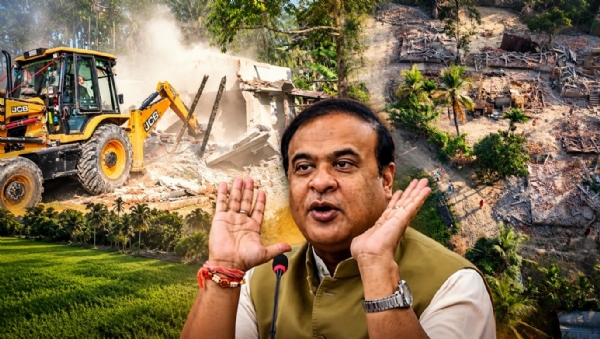
(Assam CM Himanta Biswa Sarma highlights the state’s ongoing drive to clear illegal encroachments and reclaim forest land, Image Source: X)
In a post on X, Sarma said the government had freed up a total of 1,200 acres of forest land in the area through phased operations. He described the reclaimed land as an important elephant habitat and warned that the administration would continue its action against encroachment across the state.
“Illegal Encroachments Tod Diya; Assam me Naya Forest Land Jod Diya,” the chief minister wrote, underlining his government’s stated commitment to restoring forest land. The announcement comes amid a wider series of eviction drives across Assam targeting land classified by authorities as illegally occupied.
Illegal Encroachments Tod Diya; Assam me Naya Forest Land Jod Diya.
— Himanta Biswa Sarma (@himantabiswa) October 21, 2026
Continuing our ZERO TOLERANCE approach towards encroachment, Team @assamforest reclaimed 530 hectares of land at Lutumai & Borpani Reserve Forests in Nagaon.
A total of 1,200 acres of forest land has been phase… pic.twitter.com/wTFbJMdCIR
The latest action is part of the state government’s broader effort to reclaim forest and government land.
Previous major eviction drives across Assam
Assam's latest forest-land reclamation drive is part of a campaign that has expanded across several districts since 2021. Chief Minister Himanta Biswa Sarma said in July 2025 that his government had cleared around 160 square kilometres of forest and government land over four years. The government has argued that the operations are necessary to reclaim public land, protect forests and preserve areas designated for wildlife and community use.
In September 2021, one of the major eviction operations took place in the Dhalpur area of Sipajhar in Darrang district. The administration sought to reclaim government land for a proposed agricultural project. More than 2,000 families were reportedly evicted during operations in June and September, with thousands of people displaced. The September operation turned violent, and two people were killed in police firing.
In January 2023, the Forest Department conducted an eviction drive at Pabha Reserve Forest in Lakhimpur district. Authorities sought to clear approximately 450 hectares of forest land, with around 200 hectares cleared during the initial phase. The operation affected 299 families, who were left facing displacement. In February 2023, the government also launched a major drive in the Burhachapori Wildlife Sanctuary area of Nagaon district, targeting alleged encroachments across approximately 1,900 hectares.
In July 2025, the administration carried out a major eviction drive in the Paikan Reserve Forest in Goalpara district. Officials said around 140 hectares of forest land were cleared and 1,080 families evicted. Approximately 2,500 structures, including permanent and temporary houses, were demolished. Forest officials cited the need to protect the reserve and address human-elephant conflict in the area.
Another large operation began in July 2025 at the Rengma Reserve Forest near Uriamghat in Golaghat district, close to the Nagaland border. The government initially targeted more than 11,000 bighas of land, or roughly 1,500 hectares, for reclamation. Thousands of people were affected as houses and other structures were removed. By August, officials reported that around 10,000 bighas had been freed and announced a plantation drive involving 15,000 guava saplings to restore green cover. In a separate operation in August 2025, authorities evicted 146 families from 132 acres of forest land in the Doyang Reserve Forest area of Golaghat.
The campaign continued into 2026. In January, authorities reported reclaiming 6,200 bighas, or around 830 hectares, inside Burhachapori Wildlife Sanctuary after an operation that affected approximately 710 families. In October, eviction drives across Golaghat, Hojai and Nagaon were reported to have cleared more than 638 hectares of allegedly encroached land. The latest reclamation of 530 hectares in the Lutumai and Borpani Reserve Forests in Nagaon adds to this series of operations. The government says the drives are intended to restore public and forest land, while critics continue to demand transparency, due process and adequate safeguards for displaced families.