CJP’s Retreat: Digital Noise Is Not Democracy
CJP"s experience exposes the limitations of politics that places excessive faith in online amplification.
NewsBharati 22-Oct-2026 14:32:43 PM
Total Views |


The decision by Abhijit Dipke, founder of Cockroach Janta Party (CJP), to suspend protests until Diwali marks a significant moment. CJP attempted to convert digital visibility into political influence. A campaign driven by online messaging, viral content and hashtags has encountered a difficult reality - commanding attention on social media is not the same as commanding genuine public support.
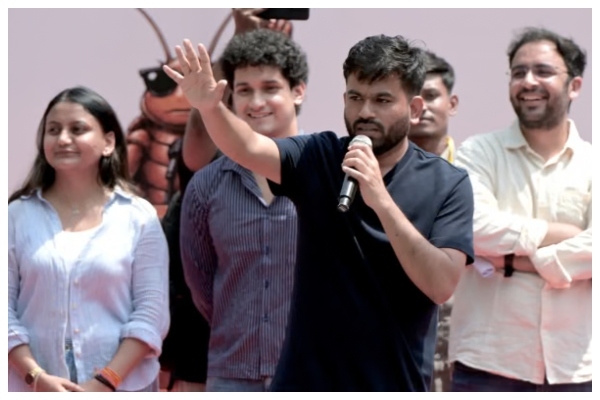
Dipke’s decision exposes a fundamental weakness of contemporary political mobilisation - the assumption that digital amplification can manufacture a popular movement before it establishes public credibility, organisational strength and a demonstrable constituency.
The first lesson from CJP's predicament is that digital visibility must not be mistaken for public endorsement. Social media can spread slogans, create urgency and bring individuals into national conversations. But making a hashtag trend is not equivalent to persuading citizens.
A digital campaign can generate noise without conviction, followers without a durable constituency and the impression of a generational movement without establishing the actual extent of public support.
The real test is whether ordinary citizens identify with a movement's objectives and participate in its political programme. The frequency of slogans online cannot substitute for evidence that people beyond an organisation's immediate digital circle endorse its demands.
CJP's experience exposes the limitations of politics that places excessive faith in online amplification. Attention alone cannot sustain a political movement indefinitely. Neither fashionable political language nor self-proclaimed democratic credentials automatically confer legitimacy.
Democracy rests on citizens exercising independent judgment, not merely reproducing slogans that enjoy temporary visibility.
The absence of demonstrable, broad-based support for CJP's campaign should not automatically be interpreted as public apathy. It reflects the political maturity of citizens who distinguish between substantive national issues and agitation that has yet to establish its wider relevance.
India is not a political laboratory in which any group can manufacture a national mood simply by repeating its message. Its electorate is vast, diverse and politically experienced. Citizens have witnessed governments rise and fall, movements acquire momentum and ambitious political claims encounter public resistance.
Indians can question a government without endorsing every organisation opposing it. They can defend democratic rights without accepting that a particular group represents the entire country. No organisation possesses an exclusive mandate to speak for India's youth or democracy.
CJP's difficulties therefore underline a basic principle- democratic legitimacy cannot be appropriated through branding. It must be earned through sustained public engagement, credible leadership and arguments that withstand scrutiny.
The second weakness is internal. Dipke's statements have drawn attention to his relationship with co-convenors Ashutosh Ranka and Saurav Das. In an emotional message, he described the two as the principal forces behind the movement and said he had followed their instructions. He subsequently clarified that he was neither abandoning them nor shifting responsibility onto their shoulders.
These explanations have raised unavoidable questions about leadership and accountability. Who determines CJP's political direction? Who makes its strategic decisions? And who accepts responsibility when those decisions produce consequences the organisation did not anticipate?
A movement challenging established political institution cannot afford ambiguity at the top. Leadership cannot be presented as a collective triumph when things go well and become a complicated division of responsibility when difficulties arise.
Internal disagreements do not automatically invalidate a political cause. But public confusion over authority and responsibility can undermine confidence in an organisation. A movement demanding accountability from constitutional institutions must demonstrate accountability within its own ranks.
The differences expose questions about CJP's organisational maturity. A temporary pause may provide relief, but it cannot resolve whether the organisation possesses a coherent strategy and leadership capable of implementing it.
Judicial observations surrounding CJP's leadership have added to the pressure. Courts do not determine the popularity of political organisations, and judicial remarks cannot replace public opinion. Nevertheless, pointed questioning can expose weaknesses in activists' arguments and compel them to confront uncomfortable questions.
During recent proceedings involving CJP leaders, the Delhi High Court questioned their claims about their generational identity and examined the purpose and conduct of their agitation. The observations intensified scrutiny of the movement.
For activists presenting themselves as the voice of a new political generation, such scrutiny can be uncomfortable. The language of youth, revolution and democratic resistance does not exempt anyone from questions about purpose, consistency and responsibility.
Constitutional democracy is not a performance in which activists declare themselves its guardians and expect unquestioning acceptance. Their claims must withstand examination, just as the actions of governments and constitutional authorities must withstand scrutiny.
Judicial observations may have demoralised sections of CJP's leadership. The more consequential question, however, is whether the organisation can answer the questions raised
The controversy over the phrase regime change has further complicated CJP's political message.
On October 15, senior advocate Prashant Bhushan publicly described the agitation as a fight for regime change. Dipke subsequently sought to distinguish CJP's stated objective from that broader demand, insisting that the organisation wanted the Chief Election Commissioner removed rather than the government changed.
The distinction matters. Demanding the removal of an office-holder is not the same as seeking a change of government. CJP should be judged by its stated objectives, not automatically held responsible for every statement made by another participant. But when prominent figures associated with an agitation offer different descriptions of its purpose, questions are inevitable.

The question of CJP's possible links with external actors, networks or organisations deserves scrutiny wherever credible grounds exist. A movement operating in the name of democracy must be prepared to answer legitimate questions about its sources of support, funding, organisational connections and the forces that may benefit from its agitation. Transparency is essential, particularly when a campaign seeks to challenge constitutional institutions and influence national political discourse.
The larger issue goes beyond CJP. Foreign interests must not be allowed to exploit India's internal divisions, amplify political agitation or influence its democratic choices for strategic advantage. India's institutions can be criticised, governments challenged and laws debated, but the country's political future belongs exclusively to its citizens.
Those claiming to defend Indian democracy must demonstrate transparency and accountability. Democratic dissent is legitimate; covert external manipulation is not. India's sovereignty is non-negotiable.
Dipke describes the suspension as a temporary break for Diwali. His stated position must be recorded accurately. However, the circumstances surrounding the announcement invite a more searching interpretation.
CJP faces questions about popular support, internal leadership, strategic objectives and credibility. Judicial scrutiny has intensified the pressure, while the regime-change controversy has complicated its messaging. Above all, the gap between online visibility and demonstrable public support remains unresolved.
Is this an honourable retreat, a tactical regrouping or an implicit recognition that the agitation has failed to achieve the momentum its organisers anticipated? The answer will depend on what follows. A genuine pause followed by a clear, constitutionally grounded programme would be one thing; an indefinite retreat without answers would be another.
One lesson is already clear. Indian democracy is neither a toy for political adventurists nor a stage on which digitally amplified groups can manufacture a national mandate. Citizens are entitled to reject political theatrics, question self-appointed representatives and demand evidence for extraordinary claims.
CJP's experience should warn every movement that confuses online applause with national endorsement. Hashtags can attract attention, but they cannot manufacture consent. Digital campaigns can create an impression of momentum, but they cannot substitute for political credibility. Nor can the language of democracy compensate for uncertainty about objectives, leadership and accountability.
India's democracy remains resilient because its people retain the freedom to make up their own minds. They do not need a handful of activists to tell them what the nation thinks, nor will they accept that political factions, external interests or self-appointed guardians possess a superior claim over India's democratic future.
Dipke has appealed to supporters to spend time with their families during the festival and announced that protests would remain suspended until Diwali. The appeal may sound emotional and conciliatory. Yet a pause after sustained mobilisation inevitably raises questions. Is this merely a festival break, a tactical withdrawal or an acknowledgment that the movement has reached the limits of its political appeal?
Dipke’s decision exposes a fundamental weakness of contemporary political mobilisation - the assumption that digital amplification can manufacture a popular movement before it establishes public credibility, organisational strength and a demonstrable constituency.
The first lesson from CJP's predicament is that digital visibility must not be mistaken for public endorsement. Social media can spread slogans, create urgency and bring individuals into national conversations. But making a hashtag trend is not equivalent to persuading citizens.
A digital campaign can generate noise without conviction, followers without a durable constituency and the impression of a generational movement without establishing the actual extent of public support.
The real test is whether ordinary citizens identify with a movement's objectives and participate in its political programme. The frequency of slogans online cannot substitute for evidence that people beyond an organisation's immediate digital circle endorse its demands.
CJP's experience exposes the limitations of politics that places excessive faith in online amplification. Attention alone cannot sustain a political movement indefinitely. Neither fashionable political language nor self-proclaimed democratic credentials automatically confer legitimacy.
Democracy rests on citizens exercising independent judgment, not merely reproducing slogans that enjoy temporary visibility.
The absence of demonstrable, broad-based support for CJP's campaign should not automatically be interpreted as public apathy. It reflects the political maturity of citizens who distinguish between substantive national issues and agitation that has yet to establish its wider relevance.
India is not a political laboratory in which any group can manufacture a national mood simply by repeating its message. Its electorate is vast, diverse and politically experienced. Citizens have witnessed governments rise and fall, movements acquire momentum and ambitious political claims encounter public resistance.
Indians can question a government without endorsing every organisation opposing it. They can defend democratic rights without accepting that a particular group represents the entire country. No organisation possesses an exclusive mandate to speak for India's youth or democracy.
CJP's difficulties therefore underline a basic principle- democratic legitimacy cannot be appropriated through branding. It must be earned through sustained public engagement, credible leadership and arguments that withstand scrutiny.
The second weakness is internal. Dipke's statements have drawn attention to his relationship with co-convenors Ashutosh Ranka and Saurav Das. In an emotional message, he described the two as the principal forces behind the movement and said he had followed their instructions. He subsequently clarified that he was neither abandoning them nor shifting responsibility onto their shoulders.
These explanations have raised unavoidable questions about leadership and accountability. Who determines CJP's political direction? Who makes its strategic decisions? And who accepts responsibility when those decisions produce consequences the organisation did not anticipate?
A movement challenging established political institution cannot afford ambiguity at the top. Leadership cannot be presented as a collective triumph when things go well and become a complicated division of responsibility when difficulties arise.
Internal disagreements do not automatically invalidate a political cause. But public confusion over authority and responsibility can undermine confidence in an organisation. A movement demanding accountability from constitutional institutions must demonstrate accountability within its own ranks.
The differences expose questions about CJP's organisational maturity. A temporary pause may provide relief, but it cannot resolve whether the organisation possesses a coherent strategy and leadership capable of implementing it.
Judicial observations surrounding CJP's leadership have added to the pressure. Courts do not determine the popularity of political organisations, and judicial remarks cannot replace public opinion. Nevertheless, pointed questioning can expose weaknesses in activists' arguments and compel them to confront uncomfortable questions.
During recent proceedings involving CJP leaders, the Delhi High Court questioned their claims about their generational identity and examined the purpose and conduct of their agitation. The observations intensified scrutiny of the movement.
For activists presenting themselves as the voice of a new political generation, such scrutiny can be uncomfortable. The language of youth, revolution and democratic resistance does not exempt anyone from questions about purpose, consistency and responsibility.
Constitutional democracy is not a performance in which activists declare themselves its guardians and expect unquestioning acceptance. Their claims must withstand examination, just as the actions of governments and constitutional authorities must withstand scrutiny.
Judicial observations may have demoralised sections of CJP's leadership. The more consequential question, however, is whether the organisation can answer the questions raised
The controversy over the phrase regime change has further complicated CJP's political message.
On October 15, senior advocate Prashant Bhushan publicly described the agitation as a fight for regime change. Dipke subsequently sought to distinguish CJP's stated objective from that broader demand, insisting that the organisation wanted the Chief Election Commissioner removed rather than the government changed.
The distinction matters. Demanding the removal of an office-holder is not the same as seeking a change of government. CJP should be judged by its stated objectives, not automatically held responsible for every statement made by another participant. But when prominent figures associated with an agitation offer different descriptions of its purpose, questions are inevitable.
India's government changes through constitutional democratic processes. Opposition is legitimate, but an alternative government must establish its mandate through the electorate. CJP has consequently been forced to spend political energy clarifying what it is not seeking instead of persuading citizens about what it is seeking. That is a serious strategic setback.
The question of CJP's possible links with external actors, networks or organisations deserves scrutiny wherever credible grounds exist. A movement operating in the name of democracy must be prepared to answer legitimate questions about its sources of support, funding, organisational connections and the forces that may benefit from its agitation. Transparency is essential, particularly when a campaign seeks to challenge constitutional institutions and influence national political discourse.
The larger issue goes beyond CJP. Foreign interests must not be allowed to exploit India's internal divisions, amplify political agitation or influence its democratic choices for strategic advantage. India's institutions can be criticised, governments challenged and laws debated, but the country's political future belongs exclusively to its citizens.
Those claiming to defend Indian democracy must demonstrate transparency and accountability. Democratic dissent is legitimate; covert external manipulation is not. India's sovereignty is non-negotiable.
Dipke describes the suspension as a temporary break for Diwali. His stated position must be recorded accurately. However, the circumstances surrounding the announcement invite a more searching interpretation.
CJP faces questions about popular support, internal leadership, strategic objectives and credibility. Judicial scrutiny has intensified the pressure, while the regime-change controversy has complicated its messaging. Above all, the gap between online visibility and demonstrable public support remains unresolved.
Is this an honourable retreat, a tactical regrouping or an implicit recognition that the agitation has failed to achieve the momentum its organisers anticipated? The answer will depend on what follows. A genuine pause followed by a clear, constitutionally grounded programme would be one thing; an indefinite retreat without answers would be another.
One lesson is already clear. Indian democracy is neither a toy for political adventurists nor a stage on which digitally amplified groups can manufacture a national mandate. Citizens are entitled to reject political theatrics, question self-appointed representatives and demand evidence for extraordinary claims.
CJP's experience should warn every movement that confuses online applause with national endorsement. Hashtags can attract attention, but they cannot manufacture consent. Digital campaigns can create an impression of momentum, but they cannot substitute for political credibility. Nor can the language of democracy compensate for uncertainty about objectives, leadership and accountability.
India's democracy remains resilient because its people retain the freedom to make up their own minds. They do not need a handful of activists to tell them what the nation thinks, nor will they accept that political factions, external interests or self-appointed guardians possess a superior claim over India's democratic future.

Editor's Desk
Editor's Desk