"Sloppy Research or Direct Bias?" India Rips Into UN Rapporteur over "India-Based" Label for Dawood Ibrahim Network
Taking the floor at the UN General Assembly’s Third Committee, Indian First Secretary Raghoo Puri dismantled the claim line by line, calling out the international organization for allowing sloppy research and glaring inaccuracies to pass through its highest human rights channels.


In a display of institutional carelessness, a fresh counter-terrorism report by UN Special Rapporteur Ben Saul labeled the underworld syndicate D-Company as an "India-based" gang. India called out the blunder at the UN General Assembly, demanding accountability for reports that turn a blind eye to basic geography and history.
Taking the floor at the UN General Assembly’s Third Committee, Indian First Secretary Raghoo Puri dismantled the claim line by line, calling out the international organization for allowing sloppy research and glaring inaccuracies to pass through its highest human rights channels.
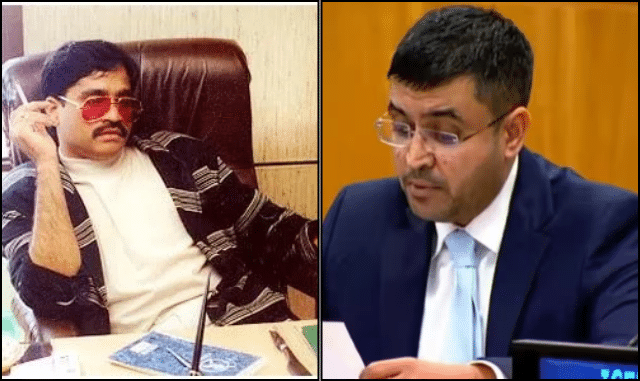
Addressing the delegates, Puri delivered an uncompromising lesson in modern history. He reminded the UN mandate holder that Dawood Ibrahim has been a wanted fugitive in India since he executed the gruesome 1993 Mumbai serial bombings. Taking aim at the rapporteur's selective framing, Puri noted that reading the report's line in isolation presents a warped, dishonest picture of reality.
Setting the record straight, Puri emphasized that Ibrahim fled India long before his 2003 designation under the UN Security Council’s 1267 Sanctions Regime. It was during his exile outside Indian borders that the global body listed him for active ties to Al-Qaeda and Osama bin Laden. Taking a direct jab at Pakistan without explicitly uttering its name, Puri pointed out that the wanted criminal resides in the exact same country where Osama bin Laden was eventually found and gunned down by US Navy SEALs.
INDIA CHALLENGES UN RAPPORTEUR’S DESCRIPTION OF DAWOOD IBRAHIM’S D-COMPANY !!!
— Ravi Prakash Official (@raviprakash_rtv) October 22, 2026
India has objected to UN Special Rapporteur Ben Saul describing Dawood Ibrahim’s D-Company as an “India based” criminal group in a counter terrorism report. Indian diplomat Raghoo Puri said the… pic.twitter.com/exKENzPWkV
India did not stop at highlighting basic mistakes; it openly questioned how special mandate holders operate without oversight. Puri labeled the omission of basic facts as sheer incompetence, warning that such carelessness inflicts immense damage on the UN’s own standing.
Puri issued a broader warning to the international community about the weaponization of international law. He cautioned that human rights frameworks were designed to deliver justice, not to become a comfortable shield for perpetrators of terror or a cover for state-sponsored radicalization. In a sharp rebuke to state actors that harbor fugitives, Puri reiterated that terrorism can never be justified under any pretext.
How does a UN Special Rapporteur manage to label Dawood Ibrahim’s syndicate as an "India-based" enterprise without realizing the absurdity of what he just put on official record? Is this basic research failure, or is the world body deliberately sanitizing Rawalpindi's favorite terrorist safe house? The facts aren't hidden—Dawood Ibrahim fled India decades ago after orchestrating the 1993 Mumbai blasts, operated out of Karachi, and was designated under the UN's own 1267 Sanctions List for funding Al-Qaeda while sheltered in Pakistan, the very nation that hid Osama bin Laden until US Navy SEALs hunted him down. Yet, UN rapporteurs somehow manage to gloss over Islamabad's patronage, issue reports backed by questionable foreign funding, and effectively grant political cover to state sponsors of terror under the guise of human rights. When the United Nations transforms from a global watchdog into an apologist for Pakistan's terror infrastructure, it isn't just compromising its own credibility—it is actively aiding the world’s most dangerous fugitives.