As Naxal Recedes, Rail Network Finally Connects Rowghat to National Grid
Indian Railways completes the ₹1,628-crore Dallirajhara–Rowghat project, ending decades of Naxal isolation in North Bastar. The new line connects Rowghat’s iron ore mines directly to the national grid, driving economic development after 77 years.
Total Views |


For 77 long years, an elder in North Bastar could only point toward the thick forest canopy when his grandchildren asked where the road led. The answer was almost always silence—a land isolated by fear and forgotten by time. Today, that silence has been broken by the echoing rumble of a train whistle.
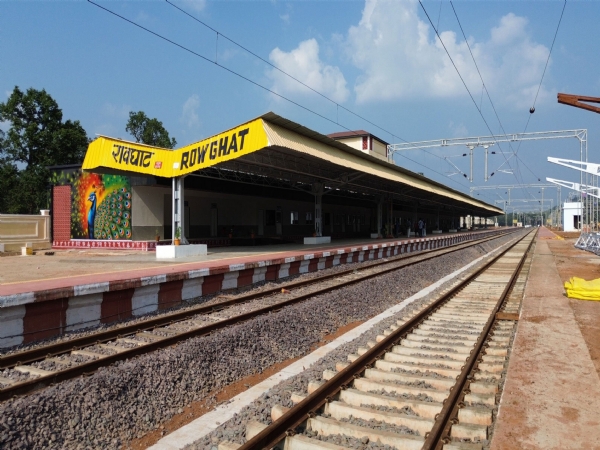
With the final 17.5-kilometer Tadoki–Rowghat stretch clearing its Commission of Railway Safety (CRS) inspection, Indian Railways has officially completed the 95-kilometer Dallirajhara–Rowghat rail corridor at a cost of ₹1,628 crore. What was once an inaccessible border on the map is now connected to the heart of the country.
The Rowghat project received approval about 28 years ago, and only now is the dream coming true. This is not just steel laid over ballast. It is the story of an ideological retreat, an economic turnaround, and an overdue social revolution.
Chhattisgarh moves forward with improved rail connectivity as passenger services expand on the Raipur–Dallirajhara–Rowghat rail section.#RailInfra4Chhattisgarh@RailMinIndia pic.twitter.com/EKwbSn4WmT
— Western Railway (@WesternRly) October 21, 2026
Overcoming a Red Citadel: From Insurgency to Infrastructure
For decades, the Dense forests spanning Kanker and Narayanpur districts were considered part of the red corridor a hotbed of Maoist insurgency. Early attempts to construct the line faced severe hurdles, including frequent sabotage, attacks on construction equipment, security threats to personnel, and dense terrain.
The completion of this project is a testament to the retreat of Left-Wing Extremism in the region. Enhanced security coordination, combined with civic outreach and local support, allowed track layers and engineering crews to work through previously inaccessible zones. Where landmines and roadblocks once dominated, modern broad-gauge electrified rail tracks now stand as symbols of state presence, law, and modern connectivity.
The Antyodaya Principle in Motion
For 77 years, the tribal populations of North Bastar were treated as an afterthought, relegated to political rhetoric while lacking basic connectivity. The new railway section ends generations of geographic and economic marginalization.
With passenger train services extending into these newly connected areas, local residents gain affordable access to tertiary healthcare, higher education, and employment opportunities across Chhattisgarh and beyond. Local agrarian and forest produce can now reach broader regional markets seamlessly.
Powering Industrial & Economic Growth
Beyond its social impact, the Dallirajhara–Rowghat rail corridor is an economic powerhouse. The line serves as a vital logistics lifeline for India’s steel industry. High-grade iron ore reserves from the Rowghat mines will now travel efficiently via rail to feed essential industrial facilities like the Bhilai Steel Plant (SAIL), securing supply chains and cutting freight overheads.
This industrial momentum creates a virtuous economic cycle. Secure logistics attract investment, generate local employment, and replace informal, vulnerable economies with structured economic growth.
Phase I of this ambitious corridor is now live, with Phase II set to forge onward toward Jagdalpur in South Bastar.
When Western observers commentary on developing nations, they often focus on friction, conflict, and internal fractures. Yet the story unfolding in Chhattisgarh is one of democratic resilience.
The weapon that finally dismantled one of the world's longest-running violent insurgencies was not an endless military stalemate, but a broad-gauge railway line built with national resolve.
Bastar is no longer a combat zone on a security map. It is an industrial artery of a rising economic power. The whistle of the train carrying Rowghat’s iron ore is the sound of a sovereign state fulfilling its mandate—bringing its farthest citizens home to growth, dignity, and the future.