Who Is Orchestrating the ‘Chaos’? Congress Must Come Clean
The BJP has sought clarification from Congress leaders on its relationship with Progressive International.
NewsBharati 23-Oct-2026 13:06:00 PM
Total Views |


The Fox News Digital investigation into France’s student unrest has raised questions that India’s political establishment cannot afford to dismiss. Its significance lies not merely in the number of organisations identified across national boundaries, but in the reported connections between international protest networks, ideological mobilisation and efforts to convert public anger into organised political power. When similar messaging appears in France and India, when overseas organisations amplify Indian political protests, and when political leaders meet representatives of international activist networks, the nation is entitled to demand answers.
 The BJP has placed precisely these questions before the nation. Congress cannot escape them by accusing its political opponents of diversion. The issue demands scrutiny because it concerns the relationship between domestic political opposition, international ideological networks and the sovereignty of India’s democratic institutions.
Fox News Digital, in its October 20 report, Global ‘Chaos Inc’ Grows to 101 Groups, said its investigation had identified 101 organisations across nine countries involved in coordinating, organising or amplifying protests in Europe and their wider international network. Its October 9 investigation had identified 50 organisations - its subsequent reporting examined the expanding network of supporters and amplifiers. These organisations included communist and socialist groups, labour unions, activist organisations and international media outlets. The report’s central contention was that a section of these organisations was attempting to turn local grievances into a wider political campaign.
The India connection makes the investigation particularly significant. The report identified Progressive International, a transnational anti-capitalist organisation, and Indian Alliance Paris, a France-based organisation that it described as connecting French and Indian protest messaging.
According to the report, Progressive International grouped protests in France, Spain, India and Albania in an October 16 briefing and asked whether the “new rebellions” could acquire the organised power to change the conditions that produced them. Vijay Prashad, associated with the Singham-funded Tricontinental network, subsequently posted a message linking Paris, New Delhi and Buenos Aires, declaring that anger could become power.
These are not insignificant details. They demonstrate an attempt to place protests in different countries within a common political narrative. The questions raised by the reported connections deserve serious investigation, not reflexive dismissal.
Congress should answer these questions directly. What was the purpose of the meeting? What positions were discussed? Did the Congress leadership subsequently engage with Progressive International over the mobilisation, messaging or organisation of protests in India? Were any commitments made? These are legitimate questions when an international network is reported to be connecting political agitation across countries.
Congress has dismissed the BJP’s allegations as an attempt to divert attention from its own charges of “vote chori”. That response does not resolve the questions about the reported meeting or the international network.
The Fox investigation also identified Indian Alliance Paris as an organisation connecting French and Indian protest messaging and reported its association with The People’s Forum in Manhattan. BJP leaders highlighted the organisation’s social-media amplification of footage involving Rahul Gandhi during his detention at a protest in Delhi, alongside criticism of Indian democratic institutions.
The distinction between amplification and direction is crucial. Sharing a video or supporting a protest does not establish that an organisation organised or financed it. But the pattern of activity is relevant when investigators are examining how political messages travel between countries, how overseas groups frame Indian events, and whether a common campaign structure exists.
The country needs facts about these relationships. Who funds the organisations? What are their institutional connections? Do they coordinate campaigns, or do they merely share political sympathies? Is there documentary evidence of operational cooperation? These questions require investigation. The wider reporting has also discussed organisations associated with Neville Roy Singham, an American-born technology entrepreneur living in Shanghai, whose funding of left-wing activist and media organisations has attracted scrutiny in the United States.
The most consequential question is whether the objective of these activities extends beyond protest to a coordinated attempt to destabilise elected governments. The situation changes fundamentally if credible evidence establishes that political actors are knowingly working with external organisations to manufacture unrest, undermine constitutional institutions or destabilise an elected government outside democratic processes. Such conduct would raise serious questions of legality, democratic integrity and national sovereignty.
Progressive International’s reported language about turning “new rebellions” into organised political power deserves examination in this context. So do the common messages identify by Fox News, the reported connections between activist organisations and the public statements of Indian political figures. The question is whether Indian political actors knowingly participate in that effort. Evidence must answer that question. If coordination is established, the public must know its extent, purpose and participants.
The controversy has acquired another dimension through Shiv Sena (UBT) leader Sanjay Raut’s social-media post referring to unrest in Albania. Raut shared footage of attacks on public institutions and suggested that other countries, particularly India, should learn from those events. A political leader’s reference to unrest abroad is not, by itself, proof of support for violence or a foreign-directed campaign. Context matters. But when attacks on public institutions are presented as a model for political action, the implications deserve clear explanation.
A political movement that seeks electoral change through persuasion, organisation and votes is operating within democracy. A movement that knowingly attempts to intimidate institutions, incite violence or replace constitutional procedures with coercive street power crosses a different line. Whether any Indian political organisation has crossed that line in coordination with foreign networks remains a matter for evidence-based investigation.
Congress and the other Indian political actors named in this controversy have a responsibility to respond with facts. They should explain their relationships with the organisations identified in the reporting, clarify the purpose of relevant meetings, and disclose whether any coordination took place concerning the protests. The government and investigating agencies must also distinguish credible evidence from political rhetoric. Financial records, communications, organisational documents and verifiable accounts of coordination matter far more than slogans or accusations. Any investigation must follow the law and respect due process.
India is not France, nor is it Albania. Its political future must be determined by Indian citizens through constitutional democracy, not by imported ideological templates or external pressure. If evidence establishes deliberate collaboration to undermine India’s constitutional order, the issue would go beyond ordinary partisan rivalry. It would raise grave questions about national sovereignty and the responsibilities of those involved. Such conduct would be not merely undemocratic but potentially anti-national in its consequences.
The Fox News investigation has raised questions. The Congress cannot demand answers from the Election Commission while refusing to answer legitimate questions about its own reported international connections. Nor can any organisation claim democratic legitimacy while treating transparency as optional.
The central question is straightforward- are Indian political actors merely sharing ideological views with international organisations, or is there evidence of coordinated activity intended to destabilise elected institutions? The country deserves a factual answer. If there is no conspiracy, establish that through transparency. If there is evidence of one, investigate it rigorously and hold those responsible accountable under the law. India’s democracy must not become an instrument in anyone’s international political experiment.
Fox News Digital, in its October 20 report, Global ‘Chaos Inc’ Grows to 101 Groups, said its investigation had identified 101 organisations across nine countries involved in coordinating, organising or amplifying protests in Europe and their wider international network. Its October 9 investigation had identified 50 organisations - its subsequent reporting examined the expanding network of supporters and amplifiers. These organisations included communist and socialist groups, labour unions, activist organisations and international media outlets. The report’s central contention was that a section of these organisations was attempting to turn local grievances into a wider political campaign.
The India connection makes the investigation particularly significant. The report identified Progressive International, a transnational anti-capitalist organisation, and Indian Alliance Paris, a France-based organisation that it described as connecting French and Indian protest messaging.
According to the report, Progressive International grouped protests in France, Spain, India and Albania in an October 16 briefing and asked whether the “new rebellions” could acquire the organised power to change the conditions that produced them. Vijay Prashad, associated with the Singham-funded Tricontinental network, subsequently posted a message linking Paris, New Delhi and Buenos Aires, declaring that anger could become power.
These are not insignificant details. They demonstrate an attempt to place protests in different countries within a common political narrative. The questions raised by the reported connections deserve serious investigation, not reflexive dismissal.
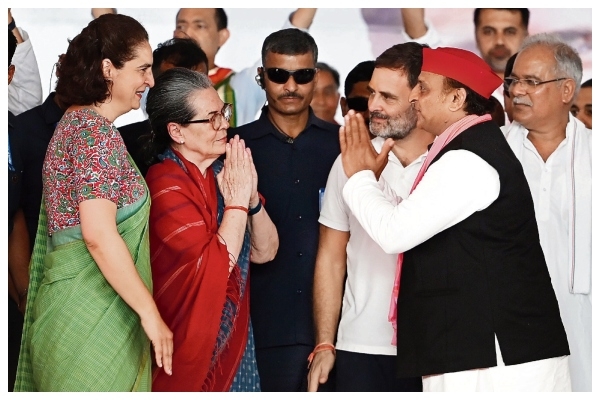
The BJP has sought clarification from Congress leaders on its relationship with Progressive International. BJP spokesperson Gaurav Bhatia referred to a meeting between Rahul Gandhi, Sonia Gandhi and representatives of the organisation at 10 Janpath in April 2025. BJP has asked whether the Congress had coordinated with international organisations during the protests and demanded clarity about the nature of their interactions. The real questions concern what was discussed, whether any political coordination followed, and whether the relationship extended beyond an exchange of views.
Congress has dismissed the BJP’s allegations as an attempt to divert attention from its own charges of “vote chori”. That response does not resolve the questions about the reported meeting or the international network.
The Fox investigation also identified Indian Alliance Paris as an organisation connecting French and Indian protest messaging and reported its association with The People’s Forum in Manhattan. BJP leaders highlighted the organisation’s social-media amplification of footage involving Rahul Gandhi during his detention at a protest in Delhi, alongside criticism of Indian democratic institutions.
The distinction between amplification and direction is crucial. Sharing a video or supporting a protest does not establish that an organisation organised or financed it. But the pattern of activity is relevant when investigators are examining how political messages travel between countries, how overseas groups frame Indian events, and whether a common campaign structure exists.
The country needs facts about these relationships. Who funds the organisations? What are their institutional connections? Do they coordinate campaigns, or do they merely share political sympathies? Is there documentary evidence of operational cooperation? These questions require investigation. The wider reporting has also discussed organisations associated with Neville Roy Singham, an American-born technology entrepreneur living in Shanghai, whose funding of left-wing activist and media organisations has attracted scrutiny in the United States.
The most consequential question is whether the objective of these activities extends beyond protest to a coordinated attempt to destabilise elected governments. The situation changes fundamentally if credible evidence establishes that political actors are knowingly working with external organisations to manufacture unrest, undermine constitutional institutions or destabilise an elected government outside democratic processes. Such conduct would raise serious questions of legality, democratic integrity and national sovereignty.
Progressive International’s reported language about turning “new rebellions” into organised political power deserves examination in this context. So do the common messages identify by Fox News, the reported connections between activist organisations and the public statements of Indian political figures. The question is whether Indian political actors knowingly participate in that effort. Evidence must answer that question. If coordination is established, the public must know its extent, purpose and participants.
The controversy has acquired another dimension through Shiv Sena (UBT) leader Sanjay Raut’s social-media post referring to unrest in Albania. Raut shared footage of attacks on public institutions and suggested that other countries, particularly India, should learn from those events. A political leader’s reference to unrest abroad is not, by itself, proof of support for violence or a foreign-directed campaign. Context matters. But when attacks on public institutions are presented as a model for political action, the implications deserve clear explanation.
India’s constitutional institutions cannot be treated as obstacles to be overcome through street pressure. The Election Commission can be criticised, challenged through lawful processes and held accountable under the Constitution. The same applies to Parliament, the judiciary and other institutions. Their authority rests on constitutional arrangements, not on the approval of any political party.
A political movement that seeks electoral change through persuasion, organisation and votes is operating within democracy. A movement that knowingly attempts to intimidate institutions, incite violence or replace constitutional procedures with coercive street power crosses a different line. Whether any Indian political organisation has crossed that line in coordination with foreign networks remains a matter for evidence-based investigation.
Congress and the other Indian political actors named in this controversy have a responsibility to respond with facts. They should explain their relationships with the organisations identified in the reporting, clarify the purpose of relevant meetings, and disclose whether any coordination took place concerning the protests. The government and investigating agencies must also distinguish credible evidence from political rhetoric. Financial records, communications, organisational documents and verifiable accounts of coordination matter far more than slogans or accusations. Any investigation must follow the law and respect due process.
India is not France, nor is it Albania. Its political future must be determined by Indian citizens through constitutional democracy, not by imported ideological templates or external pressure. If evidence establishes deliberate collaboration to undermine India’s constitutional order, the issue would go beyond ordinary partisan rivalry. It would raise grave questions about national sovereignty and the responsibilities of those involved. Such conduct would be not merely undemocratic but potentially anti-national in its consequences.
The Fox News investigation has raised questions. The Congress cannot demand answers from the Election Commission while refusing to answer legitimate questions about its own reported international connections. Nor can any organisation claim democratic legitimacy while treating transparency as optional.
The central question is straightforward- are Indian political actors merely sharing ideological views with international organisations, or is there evidence of coordinated activity intended to destabilise elected institutions? The country deserves a factual answer. If there is no conspiracy, establish that through transparency. If there is evidence of one, investigate it rigorously and hold those responsible accountable under the law. India’s democracy must not become an instrument in anyone’s international political experiment.

Editor's Desk
Editor's Desk