Europe’s Migration Crisis: Enough Is Enough
People leave their countries for many reasons: war, persecution, poverty, unemployment, political instability and the desire for better opportunities.
NewsBharati 24-Oct-2026 14:01:21 PM
Total Views |


Europe is confronting a political reality that its leaders can no longer afford to ignore - a country's borders cannot be treated as administrative formalities, its immigration laws cannot remain unenforced, and public concerns about migration cannot be dismissed as prejudice. National sovereignty means little if governments cannot determine who enters their territory, who is permitted to remain and under what conditions. The growing demand for tougher migration controls across Europe is a response to this fundamental question of governance.
 Europe is discovering that controlling migration is not an optional political preference. It is a responsibility of the state.
People leave their countries for many reasons: war, persecution, poverty, unemployment, political instability and the desire for better opportunities. But acknowledging human suffering does not mean accepting uncontrolled entry or treating every arrival as automatically entitled to permanent settlement.
A functioning asylum system requires both protection and enforcement. Without credible enforcement, public confidence erodes, lawful applicants can be disadvantaged, and political movements demanding much harsher measures gain support.
The European Union's own figures illustrate the scale of the administrative challenge. In 2025, EU countries issued approximately 3.9 million first-time residence permits to non-EU citizens for employment, family reunification, education and other purposes. Frontex recorded approximately 178,000 detections of irregular external-border crossings that year. These are different measures, but together they demonstrate why the debate must distinguish lawful migration from irregular entry rather than treating all movement across borders as one phenomenon.
Migration policy is not merely a question of compassion. It is also a question of capacity, resources and political accountability. Housing, healthcare, schools, employment, policing and local infrastructure require planning and investment. Rapid population changes can place pressure on services where public provision and integration arrangements fail to keep pace. The effects vary considerably between countries and communities; they cannot be attributed automatically to migrants. Nevertheless, governments have a duty to examine these pressures honestly rather than dismissing residents who raise concerns.
Social cohesion also requires more than physical coexistence. It depends on respect for the law, mutual obligations, language acquisition, economic participation and acceptance of the constitutional order of the host country. Integration cannot be achieved simply by granting legal status, nor can it be demanded successfully without effective public policy.
Where authorities fail to enforce their own rules, the consequences extend beyond immigration administration. Citizens may begin to doubt whether the law applies equally to everyone. Communities may lose confidence in political institutions. Parties that promise decisive action can then gain support from voters who believe established governments have ignored their concerns.
This is why migration has become a major electoral issue across Europe. It is connected to trust in government, the credibility of the state and the public's belief that democratic institutions remain capable of making and enforcing decisions.
The October European Council debate illustrates the change in emphasis. The EU has moved towards stronger screening, faster procedures and more effective returns for people who have no legal right to remain. Ministers have also supported arrangements for return hubs outside the Union, although their implementation raises legal, practical and humanitarian questions.
The enforcement problem is substantial. According to figures cited in an October 2026 Euronews report, EU countries ordered nearly 492,000 people to leave in 2025, but approximately 135,000 were returned. The gap between decisions and actual returns exposes a central weakness: rules that cannot be implemented consistently risk becoming ineffective.
Italy has advocated external processing arrangements, while Denmark has pressed for tighter controls. Poland has emphasised border protection and the deportation of people who violate its laws. The European Commission has sought stronger coordination, common procedures and improved operational capacity.
These approaches are not identical, and European governments remain divided over the details. Spain, for example, has defended its plan to regularise undocumented residents, arguing that legal status can facilitate economic participation and social integration. This disagreement reveals the political choice facing Europe: whether to prioritise regularisation as a tool of integration, or to make stricter enforcement and returns the dominant instruments of migration management.
The answer need not be identical in every circumstance. But the principle of enforceable law cannot be abandoned.
A state does not become hostile to foreigners merely because it insists on controlling entry. Border management is a normal exercise of national sovereignty. Countries routinely determine visa requirements, work permissions, residence conditions and grounds for removal. European governments have the same responsibility.
The distinction between controlling migration and discriminating against people is essential. Nationality or religion alone does not establish that an individual is dangerous, unwilling to integrate or responsible for social problems. Such conclusions require evidence about conduct and circumstances, not assumptions about entire communities.
At the same time, concerns about security screening, identity verification, people-smuggling networks and the enforcement of deportation decisions cannot be dismissed merely because the subject is politically sensitive. Governments must investigate credible risks and apply the law consistently.
The strongest migration policy is therefore neither indiscriminate acceptance nor collective suspicion. It is a system in which entry is regulated, claims are assessed promptly, genuine protection is provided, lawful migration remains possible and decisions to remove people without a legal right to stay are actually implemented.
Europe's experience carries implications for other democracies, including India. Migration pressures do not stop at national boundaries, and decisions made by one country can affect neighbouring states and wider regional arrangements. The lesson is not that every country faces identical circumstances, but that migration policy must be grounded in law, administrative capacity and the interests of citizens as well as the rights of migrants.
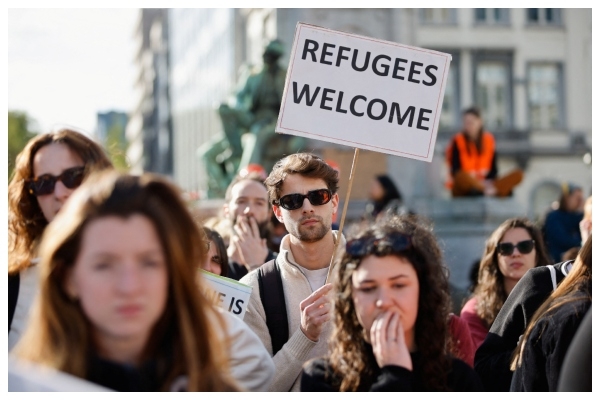 Political parties that ignore public concerns risk losing credibility. Equally, governments that exploit those concerns without producing workable policies will eventually face the same test of performance. Border announcements are not enough. Effective identity checks, functioning asylum tribunals, cooperation with countries of origin and transit, and practical return arrangements are necessary to translate political promises into results.
Countries of origin also bear responsibilities. Governments must address conflict, persecution, corruption and economic conditions that force people to leave. European states cannot resolve every underlying problem abroad, but cooperation on development, anti-smuggling operations and voluntary return can form part of a longer-term response. None of this excuse’s governments from their immediate duty to enforce domestic law.
Europe's migration debate ultimately concerns the relationship between the state and its citizens. People expect governments to protect borders, uphold laws, maintain public order and provide credible answers when existing policies fail. Humanitarian commitments cannot eliminate the state's responsibility to regulate entry and residence.
An immigration system without effective enforcement is unfair to lawful applicants, frustrating for citizens and vulnerable to political backlash. A system that disregards genuine claims to protection is equally incompatible with the rule of law. Durable policy must combine firm controls with clear legal safeguards.
Europe does not need to choose between compassion and sovereignty. It needs to reject the false assumption that compassion requires surrendering control. The right to seek protection is not an unrestricted right to settle anywhere; the right of a sovereign state to regulate entry is not a licence to disregard human rights.
The political message is unmistakable: governments must regain public confidence by demonstrating that their laws mean what they say. That requires controlling irregular entry, processing claims efficiently, returning those who have no legal right to remain and ensuring that legal immigration serves clearly defined national needs.
A country's borders are where its laws begin. If governments cannot enforce those laws, they cannot expect citizens to retain confidence in the institutions responsible for protecting them. Europe must restore that confidence—not through hostility towards migrants as a class, but through firm, fair and enforceable migration policy.
The debate is no longer confined to the political fringes. Italy's Giorgia Meloni, Denmark's Mette Frederiksen, Poland's Donald Tusk and other European leaders have pressed for stronger border protection, more effective deportations and stricter enforcement. At the European Council meeting on October 15–16, leaders discussed stronger emergency arrangements for sudden mass arrivals and more effective implementation of common migration rules. The European Commission reported that irregular border crossings had declined by more than 56 per cent over two years. Yet the political pressure for tougher action continues.
People leave their countries for many reasons: war, persecution, poverty, unemployment, political instability and the desire for better opportunities. But acknowledging human suffering does not mean accepting uncontrolled entry or treating every arrival as automatically entitled to permanent settlement.
A functioning asylum system requires both protection and enforcement. Without credible enforcement, public confidence erodes, lawful applicants can be disadvantaged, and political movements demanding much harsher measures gain support.
The European Union's own figures illustrate the scale of the administrative challenge. In 2025, EU countries issued approximately 3.9 million first-time residence permits to non-EU citizens for employment, family reunification, education and other purposes. Frontex recorded approximately 178,000 detections of irregular external-border crossings that year. These are different measures, but together they demonstrate why the debate must distinguish lawful migration from irregular entry rather than treating all movement across borders as one phenomenon.
Migration policy is not merely a question of compassion. It is also a question of capacity, resources and political accountability. Housing, healthcare, schools, employment, policing and local infrastructure require planning and investment. Rapid population changes can place pressure on services where public provision and integration arrangements fail to keep pace. The effects vary considerably between countries and communities; they cannot be attributed automatically to migrants. Nevertheless, governments have a duty to examine these pressures honestly rather than dismissing residents who raise concerns.
Social cohesion also requires more than physical coexistence. It depends on respect for the law, mutual obligations, language acquisition, economic participation and acceptance of the constitutional order of the host country. Integration cannot be achieved simply by granting legal status, nor can it be demanded successfully without effective public policy.
Where authorities fail to enforce their own rules, the consequences extend beyond immigration administration. Citizens may begin to doubt whether the law applies equally to everyone. Communities may lose confidence in political institutions. Parties that promise decisive action can then gain support from voters who believe established governments have ignored their concerns.
This is why migration has become a major electoral issue across Europe. It is connected to trust in government, the credibility of the state and the public's belief that democratic institutions remain capable of making and enforcing decisions.
The October European Council debate illustrates the change in emphasis. The EU has moved towards stronger screening, faster procedures and more effective returns for people who have no legal right to remain. Ministers have also supported arrangements for return hubs outside the Union, although their implementation raises legal, practical and humanitarian questions.
The enforcement problem is substantial. According to figures cited in an October 2026 Euronews report, EU countries ordered nearly 492,000 people to leave in 2025, but approximately 135,000 were returned. The gap between decisions and actual returns exposes a central weakness: rules that cannot be implemented consistently risk becoming ineffective.
Italy has advocated external processing arrangements, while Denmark has pressed for tighter controls. Poland has emphasised border protection and the deportation of people who violate its laws. The European Commission has sought stronger coordination, common procedures and improved operational capacity.
These approaches are not identical, and European governments remain divided over the details. Spain, for example, has defended its plan to regularise undocumented residents, arguing that legal status can facilitate economic participation and social integration. This disagreement reveals the political choice facing Europe: whether to prioritise regularisation as a tool of integration, or to make stricter enforcement and returns the dominant instruments of migration management.
The answer need not be identical in every circumstance. But the principle of enforceable law cannot be abandoned.
A state does not become hostile to foreigners merely because it insists on controlling entry. Border management is a normal exercise of national sovereignty. Countries routinely determine visa requirements, work permissions, residence conditions and grounds for removal. European governments have the same responsibility.
The distinction between controlling migration and discriminating against people is essential. Nationality or religion alone does not establish that an individual is dangerous, unwilling to integrate or responsible for social problems. Such conclusions require evidence about conduct and circumstances, not assumptions about entire communities.
At the same time, concerns about security screening, identity verification, people-smuggling networks and the enforcement of deportation decisions cannot be dismissed merely because the subject is politically sensitive. Governments must investigate credible risks and apply the law consistently.
The strongest migration policy is therefore neither indiscriminate acceptance nor collective suspicion. It is a system in which entry is regulated, claims are assessed promptly, genuine protection is provided, lawful migration remains possible and decisions to remove people without a legal right to stay are actually implemented.
Europe's experience carries implications for other democracies, including India. Migration pressures do not stop at national boundaries, and decisions made by one country can affect neighbouring states and wider regional arrangements. The lesson is not that every country faces identical circumstances, but that migration policy must be grounded in law, administrative capacity and the interests of citizens as well as the rights of migrants.
Countries of origin also bear responsibilities. Governments must address conflict, persecution, corruption and economic conditions that force people to leave. European states cannot resolve every underlying problem abroad, but cooperation on development, anti-smuggling operations and voluntary return can form part of a longer-term response. None of this excuse’s governments from their immediate duty to enforce domestic law.
Europe's migration debate ultimately concerns the relationship between the state and its citizens. People expect governments to protect borders, uphold laws, maintain public order and provide credible answers when existing policies fail. Humanitarian commitments cannot eliminate the state's responsibility to regulate entry and residence.
An immigration system without effective enforcement is unfair to lawful applicants, frustrating for citizens and vulnerable to political backlash. A system that disregards genuine claims to protection is equally incompatible with the rule of law. Durable policy must combine firm controls with clear legal safeguards.
Europe does not need to choose between compassion and sovereignty. It needs to reject the false assumption that compassion requires surrendering control. The right to seek protection is not an unrestricted right to settle anywhere; the right of a sovereign state to regulate entry is not a licence to disregard human rights.
The political message is unmistakable: governments must regain public confidence by demonstrating that their laws mean what they say. That requires controlling irregular entry, processing claims efficiently, returning those who have no legal right to remain and ensuring that legal immigration serves clearly defined national needs.
A country's borders are where its laws begin. If governments cannot enforce those laws, they cannot expect citizens to retain confidence in the institutions responsible for protecting them. Europe must restore that confidence—not through hostility towards migrants as a class, but through firm, fair and enforceable migration policy.

Editor's Desk
Editor's Desk