Yet another episode of Congress’s credibility crisis over amplification of Deepfake jeopardizing national security
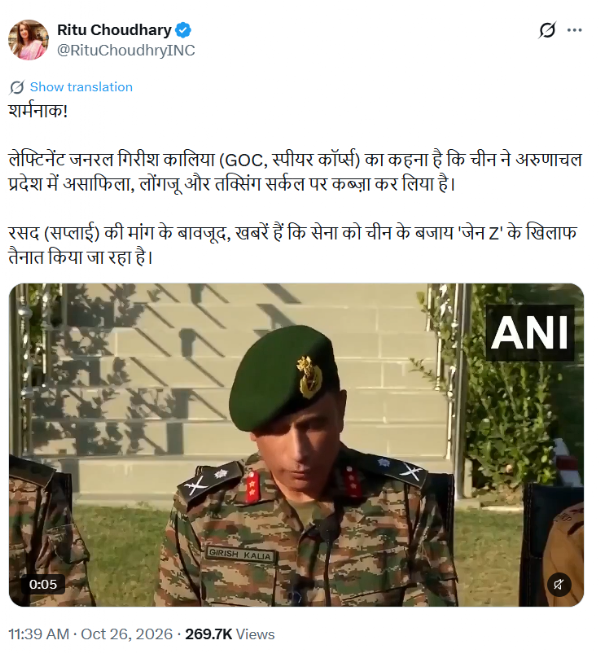
Despite the military"s swift intervention to contain public panic, the disinformation was widely amplified across social media platforms, with political figures like Congress National Spokesperson Ritu Choudhary actively sharing the manipulated post.
Total Views |


New Delhi, Oct 26: Congress is facing severe criticism over its credibility after prominent party members amplified a highly sensitive, AI-generated deepfake video targeting the Indian Army’s leadership. The controversy erupted following a formal clarification by the Indian Army Fact Check wing, which debunked a digitally altered clip that falsely attributed fabricated national security admissions to Lieutenant General Girish Kalia.
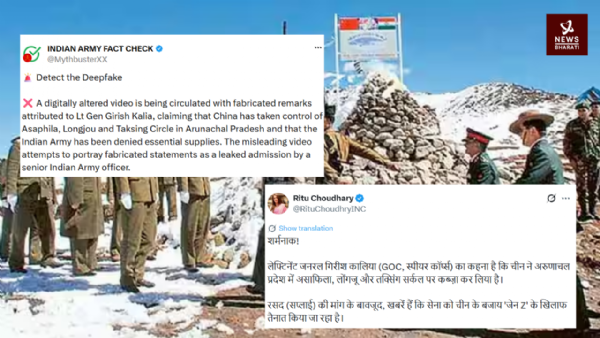
Read for more details: Indian Army Debunks Deepfake Video Claiming China Captured Arunachal Pradesh Areas
Despite the military's swift intervention to contain public panic, the disinformation was widely amplified across social media platforms, with political figures like Congress National Spokesperson Ritu Choudhary actively sharing the manipulated post. This is part of a troubling pattern where a major national party, tasked with acting as a responsible opposition, prioritizes political leverage over verified facts. By validating a sophisticated cyber-propaganda tool designed to fabricate an incursion scenario in Arunachal Pradesh, the party's standard for information sharing has been severely compromised.
This is not an isolated event. There have been instances earlier where the party amplified unverified narratives concerning military operations and border security. During high-stakes legislative debates earlier this year, senior leadership faced intense pushback for citing non-existent military accounts regarding the Indo-China border status, forcing public institutions to continually divert resources to counter domestic political narratives.
In a democracy, the principal opposition party is expected to serve as a check on governance using authentic data. But when institutional figures engage with synthetic media targeting national security infrastructure, it raises deep concerns about accountability. The incident underscores a growing vulnerability where partisan optics erode the strict distinction between domestic political friction and vital sovereign security interests.