DRDO’s recent testing of Indigenous radar-absorbing paint on ‘Tejas’, empowers stealth in the sky
DRDO’S tested technology could help reduce radar reflections, complicate enemy tracking and support the development of low-observable capabilities for India"s future fighter aircraft.
Total Views |


New Delhi, Oct 26: The Defence Research and Development Organisation ( DRDO ) has recently flight-tested an indigenous Radar-Absorbing Paint (RAP) on the Light Combat Aircraft (LCA) Tejas, marking progress in India's efforts to improve aircraft survivability and develop advanced low-observable technologies.
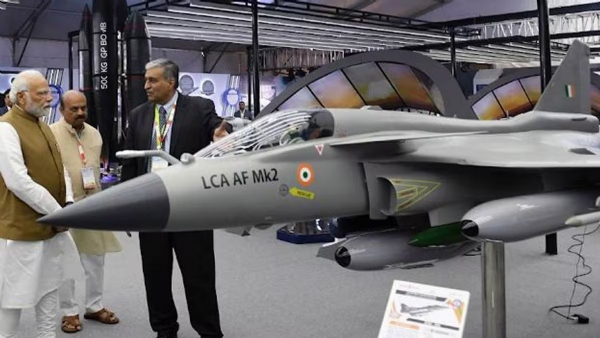
The trials, conducted by DRDO's Defence Laboratory Jodhpur, involved a two-component coating evaluated under real aerodynamic and environmental conditions. The development is significant as radar-absorbing materials could help reduce an aircraft's radar reflections, potentially making it more difficult for adversary radar systems to detect and track it under certain conditions.
The testing also provides an opportunity to assess how indigenous materials perform during actual flight, supporting further research into their possible use on India's current and future combat aircraft.
How Radar-Absorbing Paint Can Improve Aircraft Survivability
Radar systems detect aircraft by transmitting electromagnetic waves and analysing the energy reflected towards the radar receiver. The amount of energy an aircraft reflects, known as its radar cross-section (RCS), influences how easily it can be detected.
Radar-Absorbing Paint is designed to absorb a portion of incoming radar energy, reducing the amount reflected towards the radar source. If the coating performs as intended, it could contribute to lowering the Tejas's radar cross-section.
A reduced radar signature could complicate an adversary's efforts to detect, track and maintain radar contact with an aircraft. This may offer operational advantages in environments where aircraft face modern air-defence systems. However, the extent of any advantage depends on the coating's demonstrated performance, radar frequency, viewing angle and the capabilities of the opposing detection system.
The paint does not make the Tejas a stealth aircraft. Radar visibility also depends on an aircraft's shape, structural design, surface joints, materials and external equipment. Radar-absorbing coatings are one component of the broader approach to reducing an aircraft's detectability.
India’s Tejas Takes a Step Towards Lower Radar Visibility! 🇮🇳✈️
— Netram Defence Foundation (@NetramDefence) October 23, 2026
DRDO’s Defence Laboratory Jodhpur has reportedly flight-tested an indigenous Radar-Absorbing Paint (RAP) on the LCA Tejas, marking progress in India’s efforts to develop low-observable aircraft technologies.
The… pic.twitter.com/lsceTxhPfl
Real-World Testing and Technical Challenges
The reported flight trials are important because developing an effective radar-absorbing material requires more than demonstrating its performance in laboratory conditions.
Aircraft coatings must withstand aerodynamic forces, temperature changes, moisture and other environmental stresses. They must also maintain their performance over time without compromising the aircraft's operational requirements.
System-level flight trials help researchers evaluate the coating under realistic conditions and gather information needed for further development. Such testing can help identify technical challenges related to durability, application, maintenance and performance across different flight environments.
The reported development could therefore contribute to building domestic expertise in advanced aerospace materials. However, detailed information on the radar cross-section reduction achieved, the coating's durability and its operational readiness has not been provided in the available information. Further testing would be required before drawing conclusions about its effectiveness in combat conditions.
Significance for Tejas Mk2 and AMCA
The trials could also contribute to India's longer-term efforts to develop low-observable technologies for future fighter aircraft, including the LCA Tejas Mk2 and the Advanced Medium Combat Aircraft (AMCA).
The Tejas Mk2 is intended to build on the capabilities of the existing Tejas platform, while the AMCA programme is aimed at developing an indigenous fifth-generation fighter aircraft. Low-observable technologies are an important area of research for advanced combat aircraft, particularly as air-defence systems and radar capabilities continue to evolve.
Experience gained from testing indigenous radar-absorbing materials could help researchers understand their performance and integration requirements. However, applying the coating to other aircraft would require additional evaluation and validation according to each platform's design and operational needs.
Strengthening India's Defence Self-Reliance
The reported trials reflect India's broader efforts to develop critical defence technologies domestically. Indigenous radar-absorbing materials could reduce dependence on foreign technologies while strengthening the country's research capabilities in aerospace engineering and advanced materials.
The long-term significance of the development will depend on further testing, demonstrated performance and successful integration into operational aircraft.
While the trials do not establish that the Tejas has acquired stealth capabilities, they represent a step towards improving India's understanding of radar-signature management. The experience could provide valuable technical inputs for future aircraft programmes and support the country's efforts to develop more advanced indigenous combat aviation technologies.