Reverse Revolution in France
A reverse revolution, in its most constructive sense, would not be the repudiation of 1789.
NewsBharati 26-Oct-2026 11:26:33 AM
Total Views |


France gave the modern world one of its most consequential political revolutions. The events of 1789 challenged the authority of monarchy, dismantled inherited privilege and proclaimed liberty, equality and fraternity as principles capable of transforming society. The French Revolution did not remain a French affair. Its ideas travelled across borders, influenced political movements and altered the way people understood citizenship, sovereignty, rights and the relationship between the individual and the state.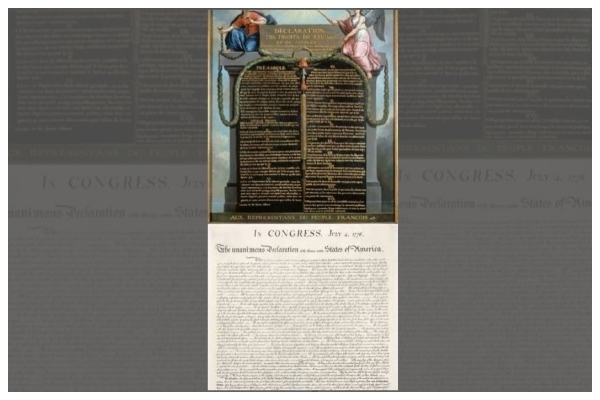
The idea of a reverse revolution need not imply the rejection of liberty or equality, much less a return to the ancient regime. It suggests a historical reckoning - a society reassessing the promises, limitations and consequences of the political ideas that helped shape its modern identity.
1789: The Revolution That Reimagined Politics
The French Revolution emerged from a combination of fiscal crisis, social inequality, political exclusion and enlightenment thought. The monarchy struggled with mounting debts, while a privileged social order placed disproportionate burdens on the common people. Thinkers such as Voltaire, Montesquieu and Rousseau had challenged established assumptions about authority, law and political legitimacy, although they differed considerably in their philosophies.
The Declaration of the Rights of Man and of the Citizen, adopted in August 1789, articulated principles that became central to modern political thought - liberty, equality before the law, national sovereignty and the protection of individual rights. Authority could no longer claim unquestioned legitimacy merely through birth or tradition. The nation, rather than the monarch alone, became the source of political sovereignty.
This was a genuine historical transformation. Hereditary privilege could be challenged; citizenship could become the basis of political participation; laws could be judged against principles broader than the interests of a ruling class.
The Revolution's global significance lay partly in this shift. It helped establish a vocabulary through which people elsewhere could challenge arbitrary government, demand equal treatment and question inherited hierarchies. Its influence extended into subsequent European revolutions, republican movements and debates about constitutional government.
But the Revolution also raised a question that remains relevant - if an inherited order can be dismantled in the name of universal principles, what prevents those principles from being interpreted so rigidly that they become instruments of coercion themselves?
The Revolution's First Warning: Liberty and Terror
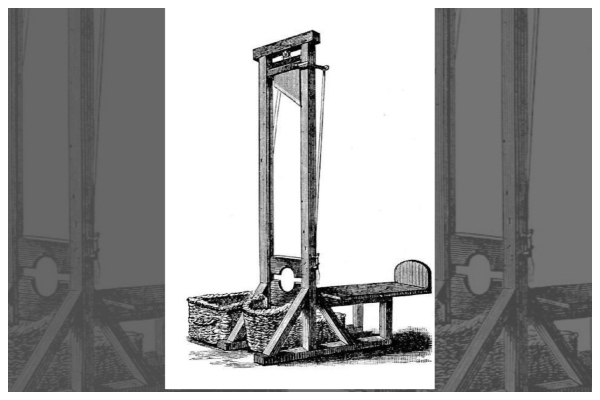
The years following 1789 provide the most revealing test of the revolutionary promise. The monarchy fell, the republic was proclaimed and Louis XVI was executed in January 1793. War with European powers, internal rebellion and fierce political rivalries intensified the struggle over who had the right to represent the nation.
During the Reign of Terror of 1793–94, the revolutionary government executed thousands of people officially tried and condemned, while many others died in prison or without trial. Robespierre, who had justified extraordinary measures in defence of the republic, was himself executed in July 1794. In November 1799, Napoleon Bonaparte seized power, bringing the revolutionary decade to an end and beginning a new authoritarian phase.
This sequence is not proof that liberty inevitably leads to tyranny. It demonstrates something more subtle: when political actors claim that their cause embodies the people's true interests, opponents can be transformed from legitimate adversaries into enemies who must be eliminated.
The revolution's experience also exposed the fragility of institutions. Destroying an old system does not automatically create a stable constitutional order. Nor does a declaration of rights guarantee that those rights will survive political emergencies, war or the ambitions of leaders.
France's revolutionary experience therefore offers a warning that transcends its own history. Principles need institutions, restraints on power and a willingness to recognise legitimate disagreement. Without them, even an emancipatory project can become coercive.
The French Revolution's influence extended far beyond Europe. It helped reshape debates about republicanism, citizenship, national sovereignty and the legitimacy of political authority. Its wars spread revolutionary institutions across parts of Europe, while the upheaval in the French Caribbean intersected with the struggle against slavery and the emergence of independent Haiti.
But the universal language of rights coexisted with exclusions. Women were denied equal political citizenship, and colonial slavery was not consistently abolished or permanently ended by the revolutionary settlement. Napoleon restored slavery in certain French colonies in 1802. These contradictions reveal the distance that can separate a universal principle from its application.
At the same time, the language of universal rights gave excluded people a powerful basis for challenging their exclusion. The legacy was therefore neither a simple triumph nor a straightforward failure. Its ideals could be used to justify authority, but they could also be turned against those who denied their promises to others.
This dual legacy matters. An ideology's consequences depend not only on the words in its founding declarations, but also on how political institutions interpret them, who is included in their protection and how power is restrained.
The Revolution's worldwide impact also helped establish a lasting expectation that political arrangements could — and should be judged against universal standards. That expectation remains central to modern democracy. The challenge begins when universalism becomes detached from the historical, cultural and institutional conditions in which political communities must function.
When an Ideology Becomes a Blueprint for Society
The deeper question is whether the revolutionary impulse to reconstruct society can become a permanent source of political instability. Every generation inherits institutions, traditions and social relationships that are imperfect. Reform is necessary. But there is a difference between correcting injustice and treating the entire inherited order as an obstacle to human progress.
Political ideologies become dangerous when they claim that society can be perfected through the comprehensive application of a single set of principles. Human communities are more complicated than ideological blueprints. They contain competing loyalties, historical memories, religious convictions, economic interests and different understandings of the common good.
The French Revolution did not invent this temptation, and liberalism itself contains traditions that emphasise constitutional restraint and limited government. Nevertheless, the revolutionary experience demonstrates the risks of allowing ideological certainty to override institutional safeguards.
Liberty requires law. Equality requires impartial institutions. Fraternity requires a sense of mutual obligation that cannot simply be decreed. A society that concentrates exclusively on individual rights may struggle to articulate the responsibilities that sustain a political community; a society that invokes collective unity to suppress individual rights commits the opposite error.
The challenge is to maintain these principles together rather than allowing one to destroy the others.
Contemporary France: A Historical Reckoning?
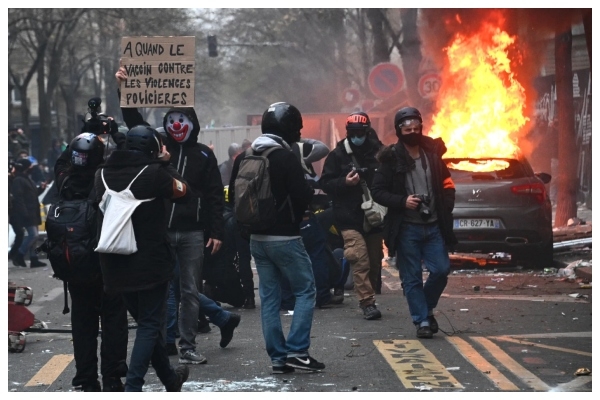
France's present difficulties make these questions particularly relevant. Political fragmentation, public discontent, immigration debates, disputes over secularism and national identity, and pressure on public finances have contributed to a wider crisis of political confidence. Reporting in October 2026 has highlighted the government's difficulties in restoring order amid unrest and a fractured parliament.
It would be simplistic to attribute these developments directly to the Revolution. Contemporary France has been shaped by two centuries of industrial and economic transformation, colonial history, migration, European integration and changing political choices. But the country's present tensions invite a reassessment of how its republican principles operate under modern conditions.
French republicanism traditionally emphasises a common citizenship rather than the formal recognition of separate communal identities. Its secular principle, laïcité, seeks to protect freedom of conscience while maintaining the neutrality of the state. But disputes over religious expression, integration and the boundaries of public secularism show how difficult it can be to translate universal principles into policy without generating new conflicts.
The question is whether France can preserve its commitment to equal citizenship while maintaining social cohesion and public confidence in the state's authority. Neither an indiscriminate rejection of cultural differences nor an unwillingness to address genuine integration problems offers an adequate answer.
The issue is not whether France should abandon its republican inheritance. It is whether that inheritance can adapt to changing realities without losing the principles that give it legitimacy.
External Interference and the Vulnerability of a Divided Society
A further dimension deserves attention - the relationship between domestic divisions and foreign influence.
France has documented attempts at foreign digital interference. In June 2026, the French government's VIGINUM service reported four foreign interference operations targeting the March municipal elections. The government has also documented Russia-linked information operations. These findings establish that foreign actors have sought to manipulate French public debate; they do not establish that such actors created the country's underlying political and social problems.
The distinction matters. External powers can exploit existing grievances, amplify mistrust and deepen polarisation. A divided society may consequently become more vulnerable to manipulation, especially when citizens lose confidence in institutions or regard fellow citizens as enemies rather than political opponents.
But foreign interference should not become a convenient explanation for every domestic failure. Political leaders and institutions must accept responsibility for their own decisions. The more fundamental defence against outside manipulation is a society capable of debating disagreements openly, verifying information and maintaining confidence in constitutional processes.
France's predicament thus raises a question extending beyond its borders: can a country defend its sovereignty effectively if its internal political consensus has become too fractured to sustain common action?
 The Meaning of a Reverse Revolution
The expression reverse revolution captures a possible historical turning point: the moment when a society begins reassessing the assumptions through which it once understood political progress.
Such a reassessment need not reject the achievements of 1789. Liberty, equality before the law and popular sovereignty remain indispensable democratic principles. But their survival depends on institutions, civic responsibility, public order and a credible sense of common purpose.
The French Revolution demonstrated the power of ideas to transform a nation and influence the world. Its aftermath also showed that revolutionary promises cannot abolish political conflict, eliminate human ambition or guarantee institutional stability. History does not permit any generation to assume that its preferred ideology has permanently resolved the problems of governance.
France may therefore be approaching a broader test of its revolutionary inheritance. Can it reconcile individual freedom with collective responsibility, universal principles with national continuity, and openness with the defence of democratic sovereignty?
The answer will matter far beyond France. The nation that helped give modern politics its revolutionary vocabulary now faces the task of demonstrating how those ideals can endure amid the complexities of contemporary society.
A reverse revolution, in its most constructive sense, would not be the repudiation of 1789. It would be a reassessment of what 1789 promised, what history actually delivered and what must be preserved, corrected or reconsidered. The ultimate test of a political idea is not the grandeur of its declaration, but its capacity to sustain a free, cohesive and resilient society across generations.
But history rarely follows the script written by revolutionaries. The revolution that promised liberty descended into terror; the struggle against absolute authority eventually produced another authoritarian ruler. More than two centuries later, France continues to debate national identity, secularism, immigration, social cohesion and the authority of the state. These problems cannot all be traced to 1789, but they invite a larger question - is France confronting the unintended consequences of some of the ideological assumptions that emerged from its own revolution?
The idea of a reverse revolution need not imply the rejection of liberty or equality, much less a return to the ancient regime. It suggests a historical reckoning - a society reassessing the promises, limitations and consequences of the political ideas that helped shape its modern identity.
1789: The Revolution That Reimagined Politics
The French Revolution emerged from a combination of fiscal crisis, social inequality, political exclusion and enlightenment thought. The monarchy struggled with mounting debts, while a privileged social order placed disproportionate burdens on the common people. Thinkers such as Voltaire, Montesquieu and Rousseau had challenged established assumptions about authority, law and political legitimacy, although they differed considerably in their philosophies.
The Declaration of the Rights of Man and of the Citizen, adopted in August 1789, articulated principles that became central to modern political thought - liberty, equality before the law, national sovereignty and the protection of individual rights. Authority could no longer claim unquestioned legitimacy merely through birth or tradition. The nation, rather than the monarch alone, became the source of political sovereignty.
This was a genuine historical transformation. Hereditary privilege could be challenged; citizenship could become the basis of political participation; laws could be judged against principles broader than the interests of a ruling class.
The Revolution's global significance lay partly in this shift. It helped establish a vocabulary through which people elsewhere could challenge arbitrary government, demand equal treatment and question inherited hierarchies. Its influence extended into subsequent European revolutions, republican movements and debates about constitutional government.
But the Revolution also raised a question that remains relevant - if an inherited order can be dismantled in the name of universal principles, what prevents those principles from being interpreted so rigidly that they become instruments of coercion themselves?
The Revolution's First Warning: Liberty and Terror
The years following 1789 provide the most revealing test of the revolutionary promise. The monarchy fell, the republic was proclaimed and Louis XVI was executed in January 1793. War with European powers, internal rebellion and fierce political rivalries intensified the struggle over who had the right to represent the nation.
During the Reign of Terror of 1793–94, the revolutionary government executed thousands of people officially tried and condemned, while many others died in prison or without trial. Robespierre, who had justified extraordinary measures in defence of the republic, was himself executed in July 1794. In November 1799, Napoleon Bonaparte seized power, bringing the revolutionary decade to an end and beginning a new authoritarian phase.
This sequence is not proof that liberty inevitably leads to tyranny. It demonstrates something more subtle: when political actors claim that their cause embodies the people's true interests, opponents can be transformed from legitimate adversaries into enemies who must be eliminated.
The revolution's experience also exposed the fragility of institutions. Destroying an old system does not automatically create a stable constitutional order. Nor does a declaration of rights guarantee that those rights will survive political emergencies, war or the ambitions of leaders.
France's revolutionary experience therefore offers a warning that transcends its own history. Principles need institutions, restraints on power and a willingness to recognise legitimate disagreement. Without them, even an emancipatory project can become coercive.
From France to the World: The Promise and the Contradiction
The French Revolution's influence extended far beyond Europe. It helped reshape debates about republicanism, citizenship, national sovereignty and the legitimacy of political authority. Its wars spread revolutionary institutions across parts of Europe, while the upheaval in the French Caribbean intersected with the struggle against slavery and the emergence of independent Haiti.
But the universal language of rights coexisted with exclusions. Women were denied equal political citizenship, and colonial slavery was not consistently abolished or permanently ended by the revolutionary settlement. Napoleon restored slavery in certain French colonies in 1802. These contradictions reveal the distance that can separate a universal principle from its application.
At the same time, the language of universal rights gave excluded people a powerful basis for challenging their exclusion. The legacy was therefore neither a simple triumph nor a straightforward failure. Its ideals could be used to justify authority, but they could also be turned against those who denied their promises to others.
This dual legacy matters. An ideology's consequences depend not only on the words in its founding declarations, but also on how political institutions interpret them, who is included in their protection and how power is restrained.
The Revolution's worldwide impact also helped establish a lasting expectation that political arrangements could — and should be judged against universal standards. That expectation remains central to modern democracy. The challenge begins when universalism becomes detached from the historical, cultural and institutional conditions in which political communities must function.
When an Ideology Becomes a Blueprint for Society
The deeper question is whether the revolutionary impulse to reconstruct society can become a permanent source of political instability. Every generation inherits institutions, traditions and social relationships that are imperfect. Reform is necessary. But there is a difference between correcting injustice and treating the entire inherited order as an obstacle to human progress.
Political ideologies become dangerous when they claim that society can be perfected through the comprehensive application of a single set of principles. Human communities are more complicated than ideological blueprints. They contain competing loyalties, historical memories, religious convictions, economic interests and different understandings of the common good.
The French Revolution did not invent this temptation, and liberalism itself contains traditions that emphasise constitutional restraint and limited government. Nevertheless, the revolutionary experience demonstrates the risks of allowing ideological certainty to override institutional safeguards.
Liberty requires law. Equality requires impartial institutions. Fraternity requires a sense of mutual obligation that cannot simply be decreed. A society that concentrates exclusively on individual rights may struggle to articulate the responsibilities that sustain a political community; a society that invokes collective unity to suppress individual rights commits the opposite error.
The challenge is to maintain these principles together rather than allowing one to destroy the others.
Contemporary France: A Historical Reckoning?
France's present difficulties make these questions particularly relevant. Political fragmentation, public discontent, immigration debates, disputes over secularism and national identity, and pressure on public finances have contributed to a wider crisis of political confidence. Reporting in October 2026 has highlighted the government's difficulties in restoring order amid unrest and a fractured parliament.
It would be simplistic to attribute these developments directly to the Revolution. Contemporary France has been shaped by two centuries of industrial and economic transformation, colonial history, migration, European integration and changing political choices. But the country's present tensions invite a reassessment of how its republican principles operate under modern conditions.
French republicanism traditionally emphasises a common citizenship rather than the formal recognition of separate communal identities. Its secular principle, laïcité, seeks to protect freedom of conscience while maintaining the neutrality of the state. But disputes over religious expression, integration and the boundaries of public secularism show how difficult it can be to translate universal principles into policy without generating new conflicts.
The question is whether France can preserve its commitment to equal citizenship while maintaining social cohesion and public confidence in the state's authority. Neither an indiscriminate rejection of cultural differences nor an unwillingness to address genuine integration problems offers an adequate answer.
The issue is not whether France should abandon its republican inheritance. It is whether that inheritance can adapt to changing realities without losing the principles that give it legitimacy.
External Interference and the Vulnerability of a Divided Society
A further dimension deserves attention - the relationship between domestic divisions and foreign influence.
France has documented attempts at foreign digital interference. In June 2026, the French government's VIGINUM service reported four foreign interference operations targeting the March municipal elections. The government has also documented Russia-linked information operations. These findings establish that foreign actors have sought to manipulate French public debate; they do not establish that such actors created the country's underlying political and social problems.
The distinction matters. External powers can exploit existing grievances, amplify mistrust and deepen polarisation. A divided society may consequently become more vulnerable to manipulation, especially when citizens lose confidence in institutions or regard fellow citizens as enemies rather than political opponents.
But foreign interference should not become a convenient explanation for every domestic failure. Political leaders and institutions must accept responsibility for their own decisions. The more fundamental defence against outside manipulation is a society capable of debating disagreements openly, verifying information and maintaining confidence in constitutional processes.
France's predicament thus raises a question extending beyond its borders: can a country defend its sovereignty effectively if its internal political consensus has become too fractured to sustain common action?
The expression reverse revolution captures a possible historical turning point: the moment when a society begins reassessing the assumptions through which it once understood political progress.
Such a reassessment need not reject the achievements of 1789. Liberty, equality before the law and popular sovereignty remain indispensable democratic principles. But their survival depends on institutions, civic responsibility, public order and a credible sense of common purpose.
The French Revolution demonstrated the power of ideas to transform a nation and influence the world. Its aftermath also showed that revolutionary promises cannot abolish political conflict, eliminate human ambition or guarantee institutional stability. History does not permit any generation to assume that its preferred ideology has permanently resolved the problems of governance.
France may therefore be approaching a broader test of its revolutionary inheritance. Can it reconcile individual freedom with collective responsibility, universal principles with national continuity, and openness with the defence of democratic sovereignty?
The answer will matter far beyond France. The nation that helped give modern politics its revolutionary vocabulary now faces the task of demonstrating how those ideals can endure amid the complexities of contemporary society.
A reverse revolution, in its most constructive sense, would not be the repudiation of 1789. It would be a reassessment of what 1789 promised, what history actually delivered and what must be preserved, corrected or reconsidered. The ultimate test of a political idea is not the grandeur of its declaration, but its capacity to sustain a free, cohesive and resilient society across generations.

Satyajit Shriram Joshi
Satyajit Shriram Joshi is Pune based senior journalist.