India Calls for Equal Veto Rights for All Permanent Members in Reformed UN Security Council
Total Views |


New Delhi , October 27 : India has reiterated that any reform of the United Nations Security Council (UNSC) must ensure equal rights and responsibilities for all permanent members, including veto powers, as long as the provision continues to exist.
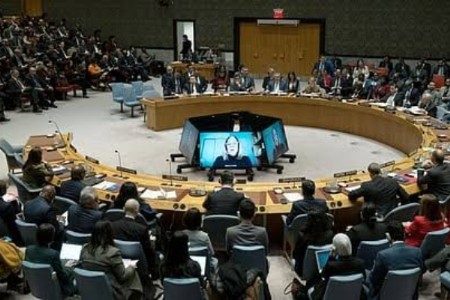
Addressing the Intergovernmental Negotiations (IGN) plenary on the question of the veto at the UN General Assembly on Monday, October 26, India's Permanent Representative to the United Nations, Ambassador Harish Parvathaneni, said creating a new category of permanent members without veto powers would effectively make them “second-class” members.
He argued that such a reform would leave the existing five permanent members, China, France, Russia, the United Kingdom and the United States, in control of the Council's decision-making process.
Parvathaneni said creating another category of long-term members without veto powers would not fundamentally change the existing power structure. He added that introducing new categories of permanent membership, with or without veto rights, could complicate negotiations and reinforce existing inequalities.
India calls for veto power for new members of UNSC.
— Sidhant Sibal (@sidhant) October 27, 2026
"New long-term seats without veto powers would create second-class members and perpetuate inequity. All permanent members, including new ones, must enjoy equal rights", Indian envoy to UN @AmbHarishP pic.twitter.com/Ltvs6PJRoR
Recalling the Security Council's expansion in 1965, he noted that the number of non-permanent members increased from six to 10, while the five permanent members retained their positions. This changed the ratio of permanent to elected members from 5:6 to 5:10 without altering the privileges of the permanent five.
India has consistently called for expanding both permanent and non-permanent membership to reflect contemporary geopolitical realities.
India maintains that the Security Council, established in 1945, needs structural changes to reflect the political and economic realities of the 21st century. New Delhi has also maintained that it deserves a permanent seat on the Council.
India is seeking a non-permanent seat for the 2028–29 term, with elections scheduled for June 2027. It will contest the Asia-Pacific Group's allocated seat against Tajikistan.
Parvathaneni stressed that veto powers should be exercised with great restraint, particularly on matters concerning international peace and security, and should not become instruments of narrow political interests.
He also highlighted the use of consensus in the Security Council's working methods, arguing that it could allow individual members to block presidential statements, press statements and sanctions committee decisions.
Criticising the Intergovernmental Negotiations process for its lack of progress, he called for text-based negotiations to begin at the earliest, supported by clear timelines and milestones.