Kochi Mercedes Horror EXPLAINED: VVIP Judicial Privilege vs. Common Man
The incident, which occurred at 2:20 AM on Kochi’s Container Road, has sparked intense public anger, drawing sharp focus toward systemic bias, police leniency, and the rapid release of the elite accused while a middle-class family mourns.
Total Views |


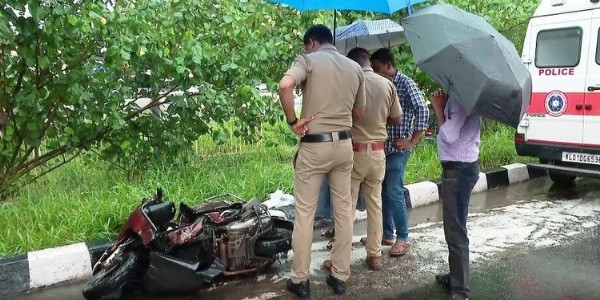
Kochi, Oct 27: A harrowing hit-and-run case has triggered widespread outrage across India, exposing a deeply entrenched VVIP culture within the state. A 55-year-old local street food vendor, Jayabalakrishnan, was tragically killed when a speeding Mercedes-Benz, owned by an Additional District and Sessions Judge, rammed into his scooter from behind.
The incident, which occurred at 2:20 AM on Kochi’s Container Road, has sparked intense public anger, drawing sharp focus toward systemic bias, police leniency, and the rapid release of the elite accused while a middle-class family mourns.
What exactly happened?
Jayabalakrishnan was a dedicated citizen, a local eatery owner, and the sole breadwinner for his family. He was returning home after a grueling shift to sustain his household and support his three children when the tragedy struck.
The contrasting reality of the accused has fueled the national outcry. The vehicle involved was a luxury Mercedes-Benz driven by the judge’s 17-year-old minor son. According to investigation reports, the minor was driving at a reckless speed of 104 km/h. During interrogation, the teenager reportedly claimed he took the high-end vehicle for a "leisure drive" and had no formal training, asserting he learned to drive entirely from YouTube videos. Witnesses further alleged the vehicle was being steered with just one hand at the time of the fatal impact.
How is this a case of systemic bias?
The core of the public fury stems from the immediate aftermath of the crash, which highlights how the state machinery is shielding the influential. According to reports, within 45 minutes of the collision, the accused's father, a sitting judge, arrived at the police station.
A 51-year-old scooter rider was killed in a road accident at Cheranalloor on Container Road in #Kochi in the early hours of Sunday after a #MercedesBenz allegedly driven by a 17-year-old, reportedly son of a judge, collided with his two-wheeler. Police took the minor into custody… pic.twitter.com/2Orc8rrv98
— Ashish (@KP_Aashish) October 25, 2026
The minor was granted station bail within three hours of the fatality, long before the victim’s family could even comprehend the tragedy. While the well-connected minor walked free almost instantly, Jayabalakrishnan’s family faced bureaucratic hurdles, waiting nearly 12 hours just to receive his body from the hospital. Following intense protests by local residents and the victim's family, the police produced the minor before a magistrate late at night. However, the Juvenile Justice Board promptly granted him bail once again.
Bhadrakeerthi, the grieving daughter of the deceased, publicly questioned the double standards of the system, asking whether the law operates differently for the children of judicial officers compared to ordinary citizens.